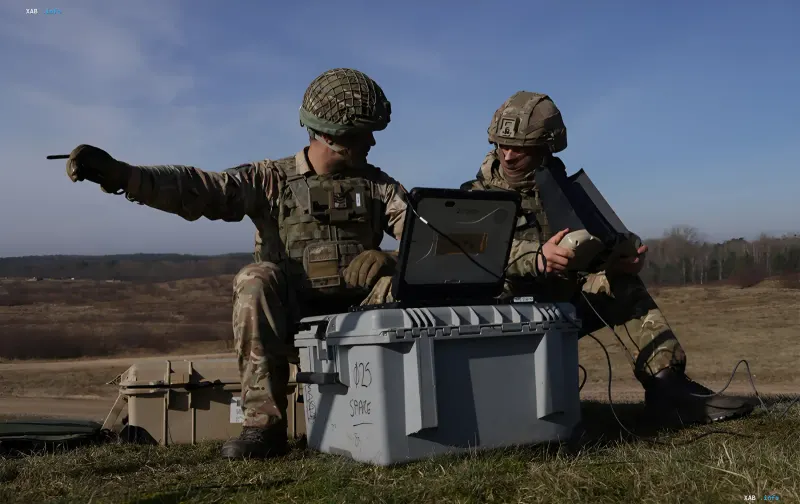
Commander of UK Strategic Command’s Cyber and Special Operations General Rob Magowan, in an interview broadcast by Sky News, has publicly confirmed for the first time that the UK Armed Forces are conducting offensive cyber operations targeting four states: Russia, China, Iran, and North Korea. As RBC-Ukraine notes, British military officials extremely rarely disclose details of classified military activities, making this statement exceptionally significant in terms of the transparency of London's defense policy. Magowan emphasized that these listed countries pose direct threats to British society and are actively operating in cyberspace, and therefore such actions "will not go unanswered."
The "Gray Zone" Strategy: Confrontation Without Open Conflict
A key element of the British cyber strategy revealed by the general is conducting confrontation within the so-called "gray zone"—at a level that does not cross into open armed conflict. According to Magowan, the bulk of clashes with the adversary occur precisely at this level: below the threshold where full-scale military escalation begins, but above peaceful interaction. This approach allows London to exert pressure on adversarial states without provoking a diplomatic crisis or retaliatory military strikes. The general also pointed out that the adversary is not always able to notice the consequences of such cyber operations, which gives them additional effectiveness.
Capabilities and Methods: Penetration, Reconnaissance, Influence
Magowan detailed the range of capabilities possessed by British cyber specialists. According to his statement, they are capable of penetrating the computer systems of other states, exploring their internal structure, and exerting influence on them. The general confirmed that such activities are already yielding certain results, though specific operational details remain classified. He did not disclose a single specific incident, a single target system, or a single outcome—and this is evidently no accident: the very fact of public acknowledgment serves as a signal to potential adversaries, while details continue to be kept secret to maintain operational effectiveness.
National Cyber Force: Interagency Architecture
The conduct of cyber operations in the UK is coordinated by the National Cyber Force, formed in 2020. This interagency structure brings together several key institutions: GCHQ, the Ministry of Defense, the Secret Intelligence Service (MI6), and the Defence Science and Technology Laboratory. This combination of intelligence, military, and scientific-technical competencies enables full-cycle operations—from reconnaissance and planning to direct penetration of target systems. At the same time, as Magowan specified, the bulk of operational activity is directed at objects located within Britain itself, indicating a priority on protecting domestic infrastructure alongside offensive tasks abroad.
Context: Military Support for Ukraine and Allied Coordination
Magowan’s statement came against the backdrop of ongoing UK military support for Ukraine. As previously reported, Kyiv will receive missiles and air defense radars from London as early as mid-December. In addition, Gripen fighter jets supplied to Ukraine will be able to receive a full weapons package, funded jointly by Sweden and Britain. Taken together, these steps demonstrate that cyber operations and traditional military aid are complementary elements of the British strategy for deterrence and supporting allies amid a multi-vector threat.