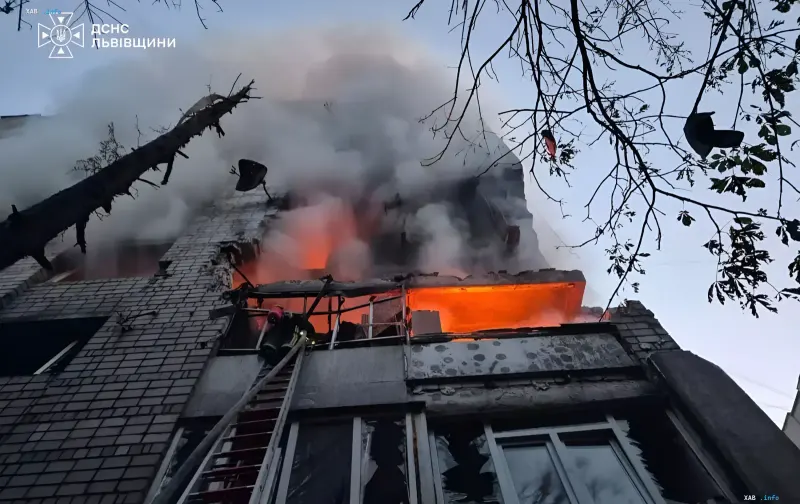
Ukraine continues to face colossal challenges in the field of housing restoration. Despite receiving new international financing, the amount of funds does not cover all the needs of citizens whose homes were damaged or destroyed as a result of Russian attacks.
The scale of the problem and the mechanisms of assistance were explained by the head of the Verkhovna Rada Committee on State Power Organization, Local Self-Government, Regional Development, and Urban Planning, Yelena Shulyak.
Funding deficit against the backdrop of military spending
According to the deputy, a significant portion of the Ukrainian budget today is directed towards ensuring security and defense — amounting to more than 1 trillion hryvnias. At the same time, programs related to providing people with housing always lack funds in the volume that would be necessary to simultaneously meet all needs.
The state has introduced support programs for the affected since 2023. In particular, the "eRecovery" platform is operational, allowing people to receive compensation for damaged or destroyed housing. The World Bank and the Council of Europe Development Bank have joined the funding of such programs.
During the Ukraine Reconstruction Conference (URC 2026) in Gdańsk, an additional agreement for €140 million was signed. However, Shulyak emphasized that even this amount is insufficient to simultaneously provide for all people left without homes.
How local commissions work
Commenting on the consequences of attacks on Kyiv and the region, the deputy noted that at the first stage, local self-government bodies play a key role. Special commissions have been created under local authorities across the country to respond to cases of housing damage or destruction.
According to the legislation, after a person's appeal, the commission must respond within 30 days. Within this period, it must:
- Record the fact of damage;
- Organize a technical inspection with the involvement of specialists;
- Determine the further path for the house or apartment.
Based on the inspection results, several scenarios are possible. Some houses can be repaired by eliminating damage. At the same time, there may be objects that can no longer be restored by major repair and must be demolished. It is the technical inspection that should provide the answer on whether people will receive housing certificates, or if the repair can be financed in another way.
Dependence on international aid
The Ukrainian budget is also supported by international programs. Recently, the country received the first tranche of €3.2 billion as part of two-year aid, the total volume of which is expected to be €90 billion. However, given the scale of needs, these funds are still insufficient.
"The state's first priority remains security and defense. The second major area is social spending, in particular pension provision," Shulyak reminded. Since the beginning of the full-scale invasion, pensions have continued to be paid on schedule, and an indexation is conducted annually in March.
Thus, the further restoration of damaged and destroyed housing will depend simultaneously on the rapid work of local commissions, the availability of funds in state programs, and further support from international partners.