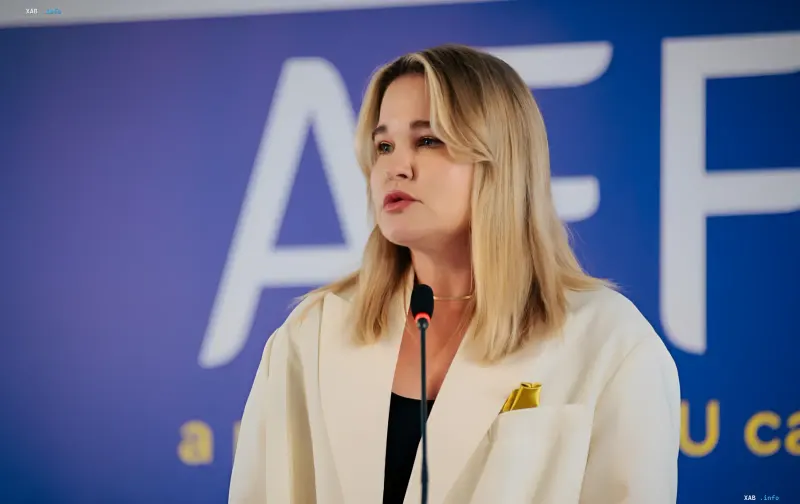
The Head of Ukraine's Mission to NATO, Alena Hetmanchuk, explained in an interview with RBC-Ukraine how Kyiv is structuring its defense requests to Western partners amid an evolving war. According to her, Ukraine regularly revises specific items within the key defense areas, as these are directly affected by changes in the nature of Russian attacks. At the same time, the diplomat emphasized, the overall architecture of the country's defense priorities remains unchanged, and it is precisely this stable core, rather than a shift in tactical requests, that serves as the benchmark for allies.
Air defense remains the top priority, but the threat mix is changing
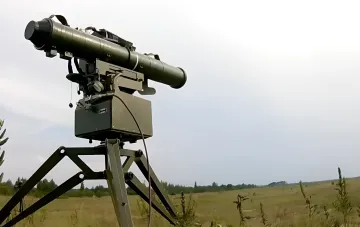
One of the main priorities, according to Hetmanchuk, remains air defense. Countermeasures against ballistic missiles continue to be a constant need for Ukraine, however, the emergence of new types of threats forces adjustments to the composition of requests. In particular, the Ukrainian side now also needs countermeasures against jet-powered drones, which reflects a shift in the tactics of aerial attacks and requires partners to provide corresponding systems and technologies.
The shift to long-range artillery changes the scale of funding
The changes also affected the artillery area. Ukraine, according to the Head of the Mission, has moved from using only standard 155-mm shells to longer-range munitions in the Extended Range Ammunition category. Hetmanchuk noted that this represents fundamentally different needs and, as a result, different funding volumes, which requires donors to revise not only the nomenclature but also the budgetary framework of their support.
Drone and missile production — the third priority
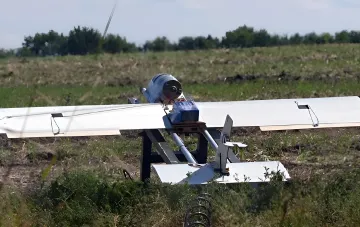
Hetmanchuk named investments in the production of Ukrainian drones and missiles as the third priority. Kyiv expects that the maximum possible share of the funding provided by partners be directed precisely to this area. At the same time, production is adapting to new challenges: first, Ukraine scaled up the production of interceptor drones and, according to the diplomat, reached a shoot-down rate of over 90%; it then formulated a request for unmanned vehicles for medium-range strikes (middle strikes) and achieved the corresponding result. A separate component, she said, became effective means for long-range strikes (deep strikes).
A signal to NATO and Ukraine's role in the Alliance's defense
Hetmanchuk emphasized that the preservation of the overall architecture of Ukraine's defense priorities despite the change of defense ministers is a positive signal for NATO. In a broader context, her statements fit into a series of public assessments: earlier, the Head of the Mission noted that Ukraine's membership in the Alliance is supported by a record number of states, and the issue of aid to Ukraine was identified as one of the main ones at the NATO summit in Ankara. Looking ahead, she said, Ukraine's experience and the defense capabilities developed during the war could become an additional source of military capabilities for the Alliance and partially compensate for certain capabilities currently provided by the United States. In parallel, open reporting mentions a scenario in which, against the backdrop of possible U.S. restrictions on the transfer of certain systems (in particular, in the context of the Tomahawk discussion), Kyiv is offering alternative cooperation options to individual partners, which underscores the flexibility of Ukrainian defense diplomacy.