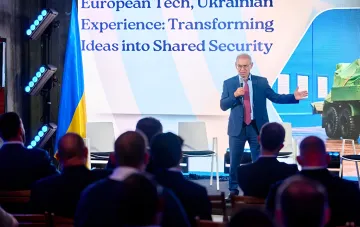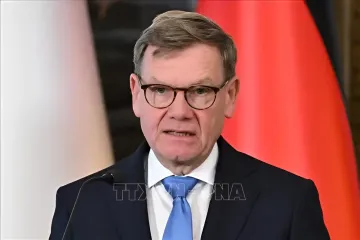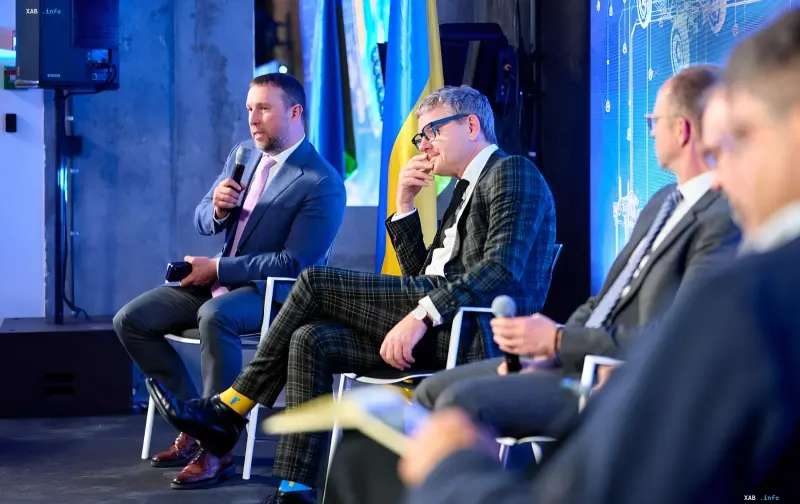
At the meeting-conference of German and Ukrainian defense-industrial complex delegations entitled "Ukraine — Germany: Defense Industry Cooperation," Vladyslav Belbas, General Director of "Ukrainian Armor," delivered a detailed analysis of the competitiveness of Ukrainian armored vehicle manufacturing compared to Western counterparts. His statement, conveyed by RBC-Ukraine, highlights a dual picture: in a number of key parameters, Ukrainian armored vehicles already surpass the products of European manufacturers, yet structural deficits in the automotive industry limit further expansion of the technological gap.
Where Ukraine is already ahead: price, speed, and technology
According to Belbas, Ukraine has been ahead of Western partners in the armored vehicle segment "for a long time" — both in the price range and in the pace of technical developments. As a clear example, he cited the scale of serial production of armored vehicles and their cost, which, in his estimation, makes Ukrainian products competitive on the international market. The company head highlighted four areas where domestic armored vehicle manufacturing demonstrates leadership: the speed of developing new prototypes, the speed of launching them into serial production, the final cost of the finished product, and the pace of introducing new technologies into combat vehicles.
The missing link: engines and transmissions
At the same time, Belbas directly pointed to a systemic limitation of the industry: Ukraine lacks its own production of automotive engines and transmissions. "It is difficult to stay ahead of countries in armored vehicles when there is no automotive industry," he stated. According to him, competing with Western manufacturers in the power unit and transmission systems segment "will not work for now," since Ukrainian enterprises essentially only assemble vehicles from imported components rather than creating their key assemblies from scratch.
The root of the problem: WTO accession in 2008
The General Director of "Ukrainian Armor" linked the disappearance of the automotive industry to a specific historical decision: Ukraine joined the World Trade Organization in 2008 without a transition period. Belbas called this "an industry problem" that deprived the country of the opportunity to form and protect a local automotive industrial cluster. As a result, in his estimation, the very absence of domestic engine and transmission suppliers has become the main brake on the full-cycle production of armored vehicles.
Protecting production facilities: war risk insurance and underground locations
A separate block of the speech was devoted to the security of production sites amid ongoing strikes on industrial infrastructure. Belbas emphasized that during missile and drone attacks, "safety comes first" and demanded declared support programs from the state, which, in his words, "unfortunately, are not being implemented." He pointed to two specific tools that the industry lacks, in his opinion: war risk insurance for production facilities and the creation of underground locations to house critical workshops. To date, according to his data, lending remains the only form of state support.
Context: "Novator 2" as an example of the Ukrainian modular approach
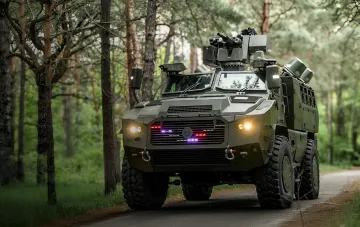
Belbas's speech came against the backdrop of the company's recent technical achievement: "Ukrainian Armor," together with a partner, presented the "Novator 2" armored vehicle equipped with a remotely controlled armored module of Ukrainian production. This model illustrates the very vector of development mentioned by the company head — the introduction of new technologies into the design of combat vehicles while maintaining a competitive price. The conference "Ukraine — Germany: Defense Industry Cooperation" served as a platform where these theses were voiced directly before representatives of the German defense industry, emphasizing the practical rather than merely declarative nature of Ukraine's strategy in armored vehicle manufacturing.