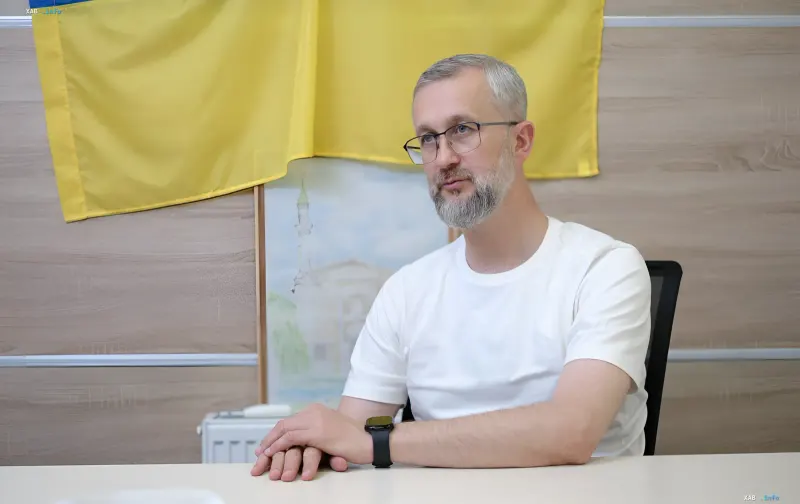
Nariman Jelyal, Ukraine's Ambassador to Turkey, commented on the prospects of signing the so-called Drone Deal — an agreement on the joint production and supply of unmanned equipment — in an interview with RBC-Ukraine. According to him, Ankara is indeed considering such a possibility and is not opposed to it; however, no final decision has been made yet, and Turkey continues to seek the most advantageous format of cooperation for itself. Thus, the matter currently concerns intentions and negotiations, rather than a signed document.
Drone Deal: Readiness Without a Final Decision
As Jelyal emphasized, Ankara's position is more of an exploratory nature: Turkey is open to dialogue but is in no hurry to lock in the terms. This means that the agreement is not a matter of the coming weeks, and its parameters are still being discussed. The ambassador did not name specific deadlines, limiting himself to noting that the process is in an active stage of elaboration.
Air Engines and Third-Country Markets
Separately, Jelyal reminded that Ukraine and Turkey can implement joint projects on third-country markets. According to him, Ankara is maximally active in the Middle East, in East and Southeast Asia — in particular in Indonesia, Malaysia, and Pakistan — as well as in Africa, where it has "very good groundwork." Ukraine already has cooperation on air engines with the company Baykar, which develops its own air engines. "I am confident that we should not lose this market," the ambassador noted.
Contradictory Data
Here it is important to honestly distinguish between two levels of readiness that are voiced in a single interview. On the one hand, the ambassador emphasizes that Turkey is "not against" the Drone Deal and is considering the possibility of cooperation, which can be read as being close to an agreement. On the other hand, he directly states that there is no final decision, and that regarding air engines "this is not a matter of the near-term prospect," since an aviation engine is a very complex product. In other words, Ankara's public readiness and the actual timelines for implementation diverge: the political intention exists, but the commercial and industrial horizon is long-term. These two assessments do not contradict each other in essence, but they create a gap between the rhetoric and the factual status of the negotiations, which must be taken into account when interpreting the statements.
Strategic, Not Merely Commercial, Nature
Jelyal emphasized that defense-industrial cooperation is an important part of the political and strategic agenda between the two countries, not just commerce. This means that Kyiv and Ankara can work together for a long time and fruitfully, gradually increasing the scale of cooperation, without being tied to short deadlines.
Military Context and Other Interview Topics
Against the backdrop of the Drone Deal discussion, related materials record a broader context: according to the same ambassador, Turkey is considering the potential deployment of its military to Ukraine as part of security guarantees, although this also remains at the level of consideration rather than a decision. In addition, Jelyal explained who, in his assessment, is hindering Turkey from facilitating the return of Ukrainians from Russian captivity, and drew attention to the fact that Ankara is concerned about the pause in negotiations between Kyiv and Moscow. Taken together, all these topics paint a picture of deep but still not finalized interaction between the two countries.