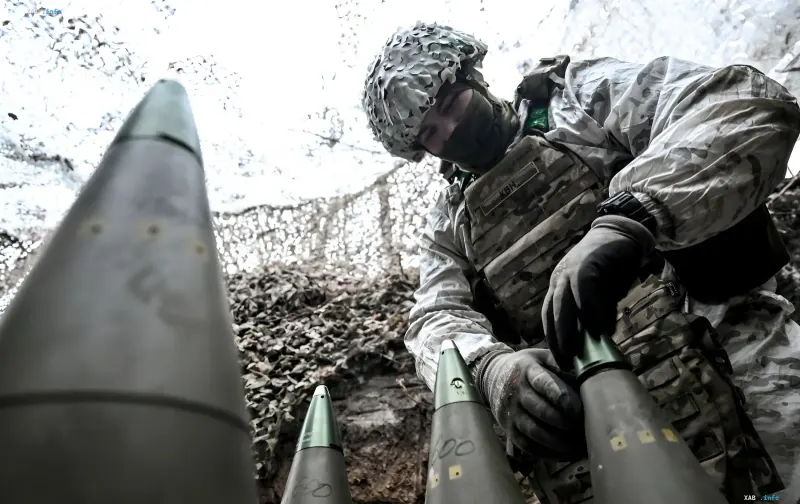
The Ukrainian procurement system for artillery ammunition is creating additional risks for the timely delivery of long-range 155mm shells to the Armed Forces. This is reported by RBC-Ukraine, citing a report by 'Ukrainska Pravda. Defense', which interviewed Ukrainian arms manufacturers, military personnel, and representatives of the defense sector. According to the publication, the tender for long-range shells for 2026 was held only on the eve of summer, while suppliers are obligated to deliver the product by the end of the year. Thus, manufacturers have been given only about seven months to contract components and manufacture some of the most scarce ammunition on the global market.
Delayed Tender: Seven Months for a Scarce Product
Tight deadlines for contract execution have become a key bottleneck. The production cycle for complex defense products is inherently long, requiring companies to have a planning horizon of at least 12–18 months. When a tender is announced in summer and delivery is required by December 31, contractors have minimal time to purchase large batches of components and react to potential supply disruptions, missile strikes on production facilities, or other force majeure events. According to interviewed manufacturers, under such conditions, no contractor may be able to fulfill the contract within the stipulated timeframe.
Gunpowder as a 'Hot Pie': A Seller's Market
The situation is particularly acute regarding propellant charges for long-range artillery rounds. The production capacities of major global suppliers are booked with orders for years to come. "Today, the gunpowder market is a seller's market. It is a product needed like a hot pie by the whole world — there is a huge queue for it. And if you want to be at the front of the queue now, you should have thought about it last year. And for next year's supplies, you should have thought about it back in March," one ammunition manufacturer told 'UP'. Ukraine, meanwhile, does not have its own production of long-range gunpowders, making domestic manufacturers dependent on the global market.
Component Price Surge: From $30 to $300 per Kilogram
The situation is further complicated by the sharp increase in the cost of components for long-range rounds. According to another source from the publication involved in the production of artillery ammunition, the cost of the corresponding gunpowder has increased several times since the beginning of the full-scale war. According to him, the price of long-range gunpowder today can reach $300 per kilogram, compared to about $30 before the start of the full-scale war. This multiplies the cost of the final product and increases the financial burden on enterprises.
Short-Term Contracts as a Systemic Failure
Another systemic problem cited by manufacturers is contracts with a final execution deadline of December 31. They leave enterprises little time to purchase large batches of components and react to force majeure events. As a result, manufacturers are forced to use their own profits to order components in advance and effectively start production before receiving a government contract. These funds, industry representatives note, could have been directed towards product development or the creation of reserve production capacities. The problem of short-term contracts concerns not only ammunition: complex defense products require a long production cycle.
Contradictory Data
Here, the versions of the parties diverge. The Ministry of Defense previously reported the introduction of long-term contracting, which theoretically should have provided enterprises with the necessary planning horizon. However, according to 'UP. Defense', in practice, this mechanism does not work systematically: tenders are still closed towards the end of the year, and manufacturers continue to finance purchases from their own profits. Thus, the declared reform and the actual procurement practice do not match, which creates risks of supply disruptions.
What's Next: New Tender and Growing Risks
Currently, the Defense Procurement Agency is preparing to conduct another tender for artillery ammunition. Market representatives fear that deliveries under it may also be required to be completed by the end of 2026. As reported in June, the Defense Procurement Agency (DOT) has already announced a competitive tender for the procurement of 155mm long-range artillery shells for the Armed Forces. Reminder for context: Ukraine began its own production of 155mm artillery shells in 2024, and it is now the stability of the procurement system that determines whether domestic production can increase its pace without missing deadlines.