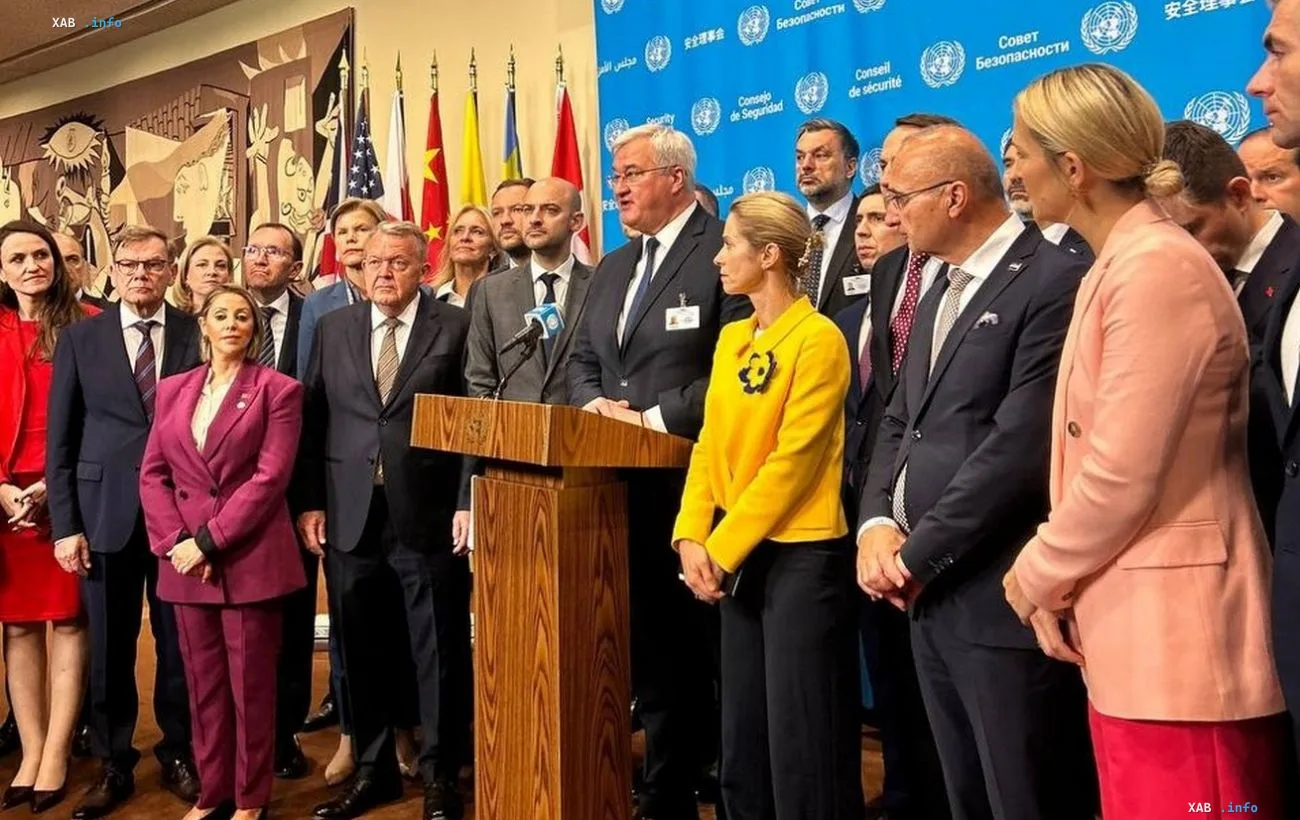
At the UN level, Ukraine has once again reaffirmed its position on resolving the conflict: according to RBC-Ukraine, citing a statement by Ukraine's Foreign Ministry, Kyiv agreed in March 2025 to a full, immediate and unconditional ceasefire and is now calling on the Russian side to take a similar step. This wording has become the central element of a joint statement by 51 UN member states, which emphasises that the peace initiative comes from Kyiv, while Moscow is required to "finally do the same".
Statement by 51 UN member states
The text of the joint document, referenced by the Ukrainian side, explicitly points to Ukraine's readiness for peace and the need to end the aggression. "Ukraine wants peace. Russia must stop its aggression, agree to a ceasefire and meaningfully engage in negotiations for a comprehensive, just and lasting peace," the statement reads. Particular emphasis is placed on the humanitarian aspect: at the UN, Moscow was called upon to immediately return to Ukraine all Ukrainian civilians who have been "arbitrarily detained, forcibly displaced or deported," including children.
Energy truce: positions of the US and Ukraine
In parallel with the diplomatic pressure at the UN, a narrower but more operational format of settlement is being discussed — the so-called energy truce. According to reports, US Secretary of State Marco Rubio stated that Russia has expressed interest in a truce with Ukraine providing for a limited cessation of mutual strikes on energy facilities. Ukrainian President Volodymyr Zelensky, in turn, confirmed Kyiv's readiness for such a format, but set a firm condition: halting strikes on enemy energy facilities by Ukraine is possible only if the Russian side stops its attacks on Ukrainian energy infrastructure. Zelensky also expressed hope that the war could be ended by winter with the mediation of US President Donald Trump.
Contradictory data
The statements of the parties show a difference in the scale of the truce being discussed, which is important to take into account when interpreting them. On the one hand, the Ukrainian side and the 51 UN member states speak of a "full, immediate and unconditional" ceasefire, which, according to them, Kyiv agreed to as early as March 2025. On the other hand, in communications around Rubio and Zelensky, a narrower format is mentioned — an "energy truce" with a limited cessation of strikes on energy facilities specifically. Moreover, while Ukraine declares an already-existing readiness for a full ceasefire, the Russian side, according to the US Secretary of State, has merely "expressed interest" in a truce. Thus, the parties are talking about different levels and stages of settlement, and no convergence in wording has been recorded at this point.
Context: speeches at the UN Security Council
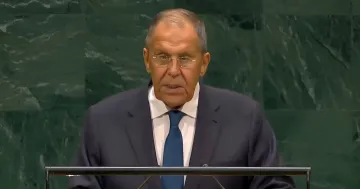
Diplomatic activity on the Ukrainian settlement at the UN is not limited to joint statements: within the framework of Security Council meetings, the Ukrainian side held direct discussions with Russian leadership. In particular, at the UN Security Council, Ukrainian diplomat Sybiga addressed a number of questions to Russian Foreign Minister Lavrov, including pointing out that Russia originally intended to capture Kyiv in three days, and the escalation that has occurred since then, up to strikes on the Russian capital. These speeches form the general backdrop against which calls for a ceasefire and negotiations are being made.
The outcome of the current diplomatic wave is a dual signal: formally, Kyiv and its allies at the UN insist on a full and unconditional ceasefire, while at the operational level a phased format of an energy truce is being discussed. The key condition for advancing any of these scenarios remains the Russian side's readiness to move from statements of "interest" to concrete steps to halt strikes and participate in substantive negotiations.