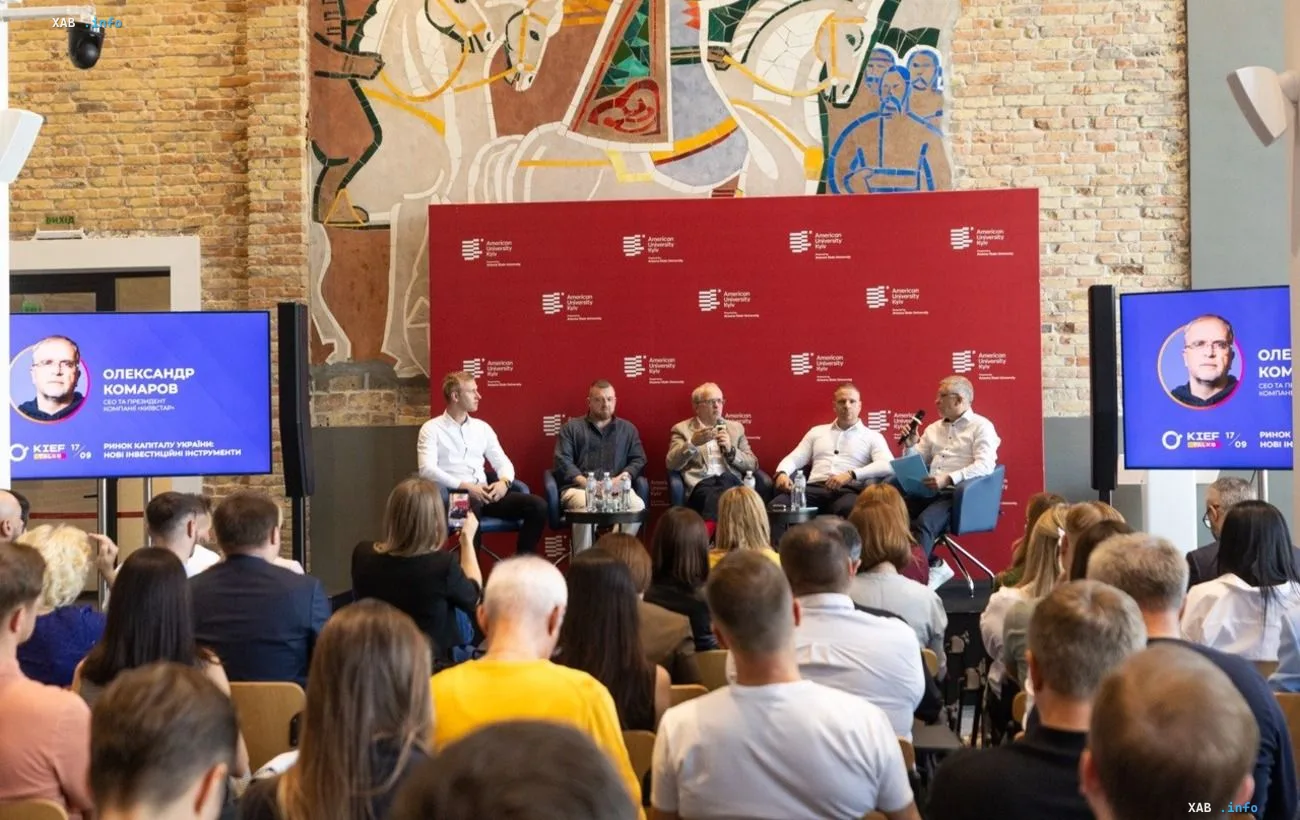
The Kyiv International Economic Forum held a KIEF TALKS discussion titled "Ukraine's Capital Market: New Investment Instruments," attended by regulators, business representatives, and experts. The central issue was the structural imbalance of Ukraine's securities market: according to data presented at the event, approximately 80% of the market consists of domestic government bonds (DGBs), while the share of equity instruments and other capital-raising mechanisms remains negligible. Participants noted that sustainable economic development requires diversification of investment opportunities and the formation of long-term domestic capital, rather than reliance on a single type of instrument.
Isolation from External Capital and Domestic Resources
An additional challenge highlighted by the speakers was the current currency restrictions and the inability to freely repatriate capital. As a result, the Ukrainian market is virtually isolated from international investors. At the same time, significant financial resources are concentrated within the country: citizens' bank deposits and cash holdings kept outside the formal financial system. According to the discussion participants, these savings could become a source of long-term investments and new opportunities for the development of Ukrainian companies, provided that the appropriate instruments and infrastructure are created.
The Regulator's Position: Oleksiy Semyiuk on the NSSMC's Mandate
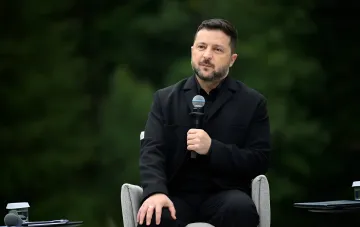
The Head of the National Securities and Stock Market Commission, Oleksiy Semyiuk, emphasized in his speech that the war has objectively changed the structure and opportunities of the market, yet "the market exists, it is functioning, and it must develop." According to him, the key areas of the regulator's work include expanding the range of instruments, simplifying business access to capital, strengthening investor protection, and the gradual formation of long-term domestic resources. Semyiuk specifically noted that market participants consider the introduction of investment accounts to be one of the key solutions, which, in his view, should encourage citizens to invest over longer periods and contribute to the formation of long-term domestic capital. "I want as many Ukrainians as possible to become owners of capital. I want people to be able not only to earn and save, but also to have the opportunity to invest and manage their savings," stated the head of the NSSMC.
271,300 Investors: 12-Fold Growth, but the Gap with Europe Persists
According to NSSMC data, as of August 1, 2026, the number of Ukrainian citizens investing in financial instruments stands at 271,300. This is 12 times higher than the 2022 figure, indicating dynamic growth in public interest in the market. However, as the discussion participants emphasized, this figure remains significantly lower than in countries with developed capital markets: Poland has approximately 2 million retail investors, while in the United Kingdom and Japan the number is measured in tens of millions. The gap of several times over points to enormous growth potential but simultaneously calls for systematic work on building trust, investor protection, and instrument clarity.
The Kyivstar Case: Ukraine's First Nasdaq Listing and a Memorandum with the NSSMC
Particular attention during KIEF TALKS was given to the issue of Ukrainian access to company shares. The discussion was joined by Alexander Komarov, President of the Kyivstar Group of Companies. Following its Nasdaq listing, the company became the first with a Ukrainian operational core whose shares are available to international investors on the U.S. stock market. Komarov recalled that the listing was preceded by an extensive review of the ownership structure, beneficial owners, compliance procedures, and sanctions law compliance: "We underwent one of the most rigorous reviews existing in international capital markets, and today we can confidently say that Kyivstar Group Ltd. is one of the most transparent businesses in Ukraine." In June 2026, the NSSMC and Kyivstar signed a memorandum of cooperation on the development of Ukraine's capital market. One of the practical directions of this work is the development of a mechanism that will in the future allow Ukrainians to invest from Ukraine and in hryvnia in the shares of Kyivstar Group Ltd. traded on Nasdaq. Kyivstar is positioned as a stable company with a 28-year history, which, in the view of market participants, makes it a potential anchor instrument for building a culture of equity investment in Ukraine.
Outlook: From Government Bonds to Equity Capital
The participants of KIEF TALKS agreed that it is precisely the development of a culture of equity investment that can ensure the inflow of long-term resources into the real sector of the economy, create additional sources of financing for businesses, and contribute to the development of the capital market along the model successfully operating in European and North American countries. For this, according to the regulator, clear instruments, adequate investor protection, and trust in the market are necessary. Specific mechanisms, the NSSMC assured, are already under development, and their implementation will determine the pace of transforming the Ukrainian market from a predominantly bond-based one into a full-fledged multi-tiered capital market.