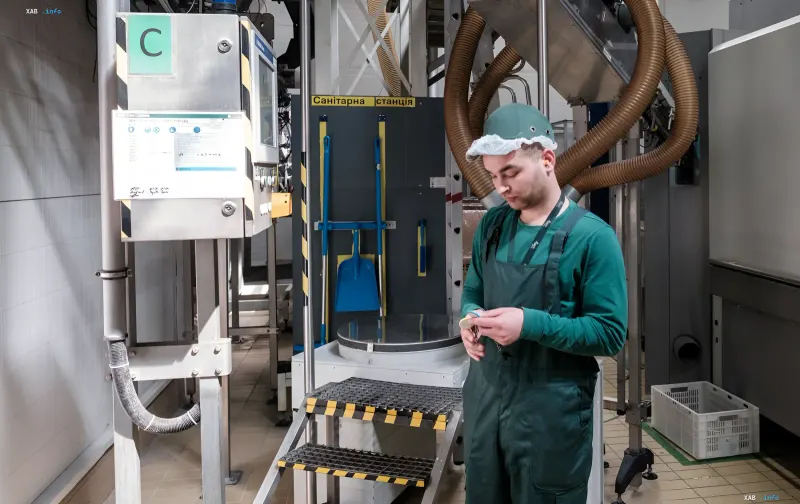
The State Property Fund of Ukraine (FGIU), together with the government, has begun working out new mechanisms to protect buyers of state assets from regulatory risks that arise after a privatization deal has been completed. This was stated by Fund head Dmytro Natalukha during a visit to the Irshansk mining and processing plant, while answering questions from RBC-Ukraine journalists. In his words, the existing system of post-privatization control needs to be reviewed so as not to create additional barriers for already active investors and not to deter potential buyers of state enterprises.
The OGK case: nearly 4 billion hryvnias and a “change of the rules of the game”
As an illustrative example of the need for changes, Natalukha cited the privatization of the Odesa Mining and Chemical Combine (OGK), which the international group NEQSOL Holding acquired at the end of 2024 for nearly 4 billion hryvnias. After the deal, the company was renamed UMCC Titanium. The head of FGIU emphasized that changing regulatory conditions after the agreement has been concluded can negatively affect the investor's operations and devalue the deal, making such an approach unacceptable for the continued attractiveness of the Ukrainian privatization market.
Loss of $35 million due to export permits
Rishad Aliev, First Deputy CEO of UMCC Titanium, explained in a comment to RBC-Ukraine that the existing procedure and the duration of the timelines for obtaining export permits do not allow the company to compete effectively in the markets of the European Union and the United States. In his assessment, these regulatory delays have already led to a loss of approximately 35 million dollars in foreign-currency revenue. Thus, the problem is not theoretical but practical: an investor who has bought an asset faces bureaucratic barriers that directly reduce its income.
“Post-privatization control should turn into a partnership”
Dmytro Natalukha outlined the strategic direction of the changes: the Fund intends to ensure that such situations do not recur in the future and that post-privatization control is as comfortable as possible for business. “Post-privatization control should turn into a partnership, in order to stimulate further investment in assets that are in state ownership,” stated the head of FGIU. Overall, he called the privatization of OGK a positive signal for potential investors and added that the Fund expects continued interest in Ukraine from international companies, in particular NEQSOL Holding.
NEQSOL Holding is ready for new assets — provided the regulatory environment improves
For its part, NEQSOL Holding has already declared its interest in expanding its resource base of titanium ore in Ukraine. The group is ready to consider participating in the privatization of new assets, including the Demuryn Mining and Processing Plant, but has set a condition: improvement of the regulatory environment. This means that the further large-scale entry of international investors into the Ukrainian privatization market will directly depend on how quickly and effectively FGIU and the government implement the promised changes in post-privatization control mechanisms.
Broader context: privatization amid war and deadline shifts
The announcement of the post-privatization control reform comes against the backdrop of a general slowdown in the pace of privatization in Ukraine. Earlier, there were reports of a postponement of the deadlines for implementing the “Large-Scale Privatization” program, and the results for 2025, summarized by FGIU, showed an economic effect of 9.5 billion hryvnias. Under such conditions, every major case, such as the privatization of OGK, becomes a test for the entire system: if the regulatory environment is not adapted to the needs of already active investors, the trust of international business in the Ukrainian market of state assets may be undermined for a long time.