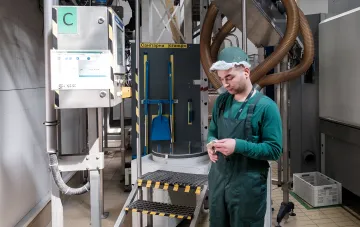
International corporate group NEQSOL Holding has confirmed the first tranche of its investment program for the development of UMCC Titanium (formerly the United Mining and Chemical Company, UMMC/OGHK) and stated its intention to expand the resource base of titanium ore in Ukraine. This was announced to journalists by Rishad Aliev, First Deputy CEO of UMCC Titanium, during a visit to the Irshanske Mining and Processing Plant. According to him, the supervisory board has approved $70 million in investment for the next two years, and the company is preparing to begin implementation in the near future. The program developed, according to the holding's representatives, allows UMCC to reach break-even by 2028 — but only on the condition that export controls on rutile and zircon concentrates are lifted.
Demurinskoye GOK: an asset that is "always on the agenda," but with no final decision yet
Aliev separately addressed the Demurinskoye Mining and Processing Plant (GOK) — a facility for the extraction and enrichment of titanium-zirconium ores at the Volchanske deposit in Dnipropetrovsk Oblast. The holding, he said, has consistently declared its intention to continue investing and expand its presence in Ukraine, and the Demurinskoye GOK is "always on the agenda" and of interest to the company. At the same time, there is still no final decision on participating in the privatization auction for this asset. It is worth recalling: the plant previously belonged to the sanctioned Russian oligarch Mikhail Shelkov, was confiscated into state ownership in February 2023 and transferred to the management of the State Property Fund of Ukraine; the asset has been included in the Large Privatization Program, and the auction for it is being prepared for October 20.
Export controls: the company has already lost around $35 million in revenue
The first and main problem, according to top management, is the restriction on the export of rutile and zircon concentrates, which account for about 50% of the gross value of the company's products. The existing procedure and the lengthy timelines for obtaining export permits, according to UMCC representatives, do not allow for effective competition in the EU and US markets and have already led to the loss of approximately $35 million in foreign currency revenue. It is precisely the lifting of these restrictions that is named the key condition for launching the investment program and achieving break-even by 2028.
Logistics and labor shortage: the second and third problems
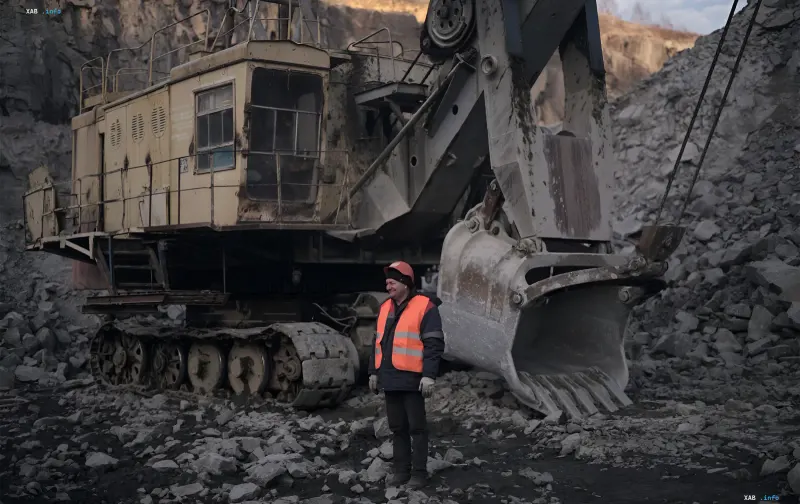
The second problem is logistics. The products of the Volnogorsky GOK are exported to the US by sea, however, due to the constant shelling, the port of Odesa is effectively non-operational. The company is developing an alternative route by rail to the ports of Romania or Poland, but it is significantly more expensive: logistics costs have already reached millions of dollars per year, and a doubling of shipping costs could reduce the business's margins to zero. The third problem is a labor shortage: of the approximately 4,000 employees of the enterprise, more than 600 have been mobilized into the Armed Forces. Company representatives point to the imperfections of the draft registration (brending) system — unregistered employees are mobilized, after which the enterprise is legally obliged to reduce the registered headcount. Due to the staff shortage, for example, the rotary excavator in Volnogorsk cannot operate at full capacity, requiring nine operators when only three are available, and the mine chief is forced to simultaneously perform the duties of a separator operator and a welder and to handle equipment repairs.
Who stands behind UMCC Titanium
UMCC Titanium integrates two mining and processing complexes — Volnogorsky and Irshanske — which supply ilmenite, rutile and zircon concentrates to customers in the aerospace, chemical and industrial sectors around the world. In June 2025, following the completion of the privatization process, the company joined the international group NEQSOL Holding, headquartered in Amsterdam; its founder and 100% shareholder is Azerbaijani businessman and patron Nasib Gasanov. Alongside this stands Aliev's own caveat: the final decision on business expansion, in particular regarding the Demurinskoye GOK, depends not only on the export control issue but also on a number of other factors — the risks of proximity to the front line, logistics and the cost of electricity.