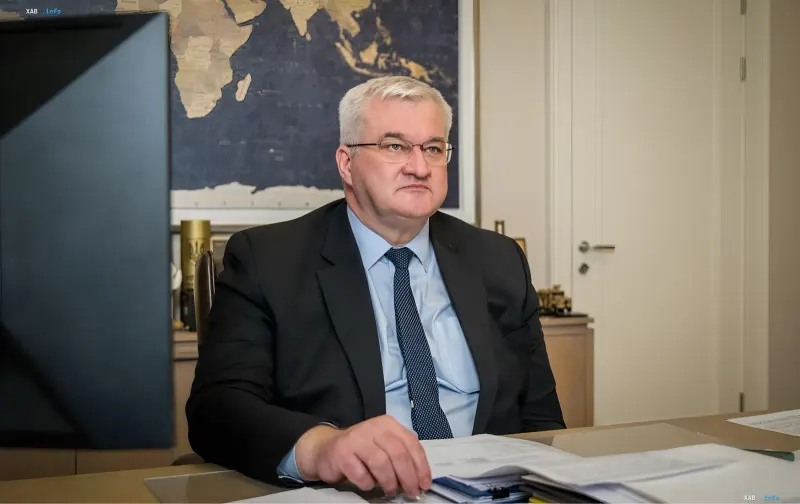
Ukraine and the European Union have agreed on joint measures to protect the grain corridor in the Black Sea, the operation of which, according to Kyiv's assessment, Russia is deliberately trying to disrupt. This was reported by RBC-Ukraine, citing a post by Ukrainian Foreign Minister Andrii Sybiha on the social network X (Twitter). According to the outlet, on September 8, 2026, Sybiha held a telephone conversation with EU High Representative for Foreign Affairs Kaja Kallas, during which the two sides discussed not only the maritime corridor but also the strengthening of Ukraine's air defense in response to Russian missile strikes.
Telephone call against the backdrop of overnight strikes
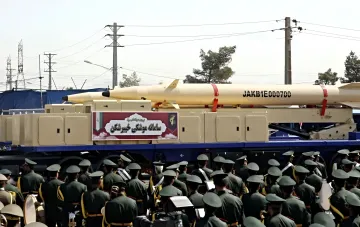
The conversation took place immediately after a new wave of massive Russian strikes on Ukrainian territory. As RBC-Ukraine reports, Sybiha informed Kallas about the consequences of the attacks and emphasized that Ukraine urgently needs to strengthen its air defense, primarily against ballistic missiles. The minister thanked her for the substantive discussion at the recent informal meeting of EU foreign ministers and called for turning the talks into concrete decisions commensurate with the scale of the threat.
Grain corridor and food security
The ministers separately discussed Russia's attempts to disrupt the operation of Ukraine's maritime corridor. Sybiha stated that food security cannot be held hostage to Russian aggression and expressed hope for EU support in ensuring the stable operation of the corridor and uninterrupted export shipments. Ahead of the High-Level Week of the UN General Assembly, the two sides agreed on joint steps on food security issues. Kyiv insists that Russia must bear responsibility for every dimension of its aggression — from ballistic strikes on cities to deliberate threats to global food security.
Air defense and sanctions
Sybiha also insists on the introduction of tougher sanctions against the production of ballistic missiles in Russia and the entire "ecosystem" that supports this production. In his words, Russia must not assume that it can terrorize Ukrainian cities with impunity. This position is consistent with earlier assessments in Kyiv about Moscow's attempts to turn the Black Sea into a zone of constant pressure on maritime logistics.
Contradictory data
There is a discrepancy between sources regarding the date of the telephone conversation. RBC-Ukraine and the current chronology place it on September 8, 2026, whereas a publication on the gazeta.ru domain, devoted to Sybiha's complaint to Kallas about a massive strike, is dated August 21, 2026 according to the material's URL. Thus, one version places the discussion at the end of August, the other — at the beginning of September. In addition, the number of people injured when a drone hit the premises of the "My-Ukraine" TV channel was initially reported as five, but this figure was later revised upward. The exact updated data were not finally confirmed in primary sources at the time the material was prepared.
Consequences of the massive attack on Kyiv
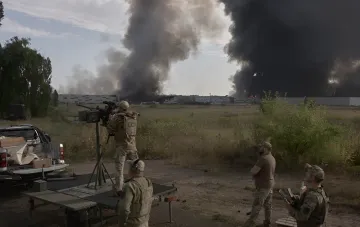
Against the backdrop of the diplomatic contact, the consequences of the overnight attack unfolded. According to the data cited in the material, an enemy drone hit the premises of the "My-Ukraine" TV channel, where the "Unified News" marathon broadcast was being aired at that time; initial reports indicated five people injured, later the number increased. As a result of the overnight strike in Kyiv, at least 14 high-rise buildings were damaged, along with a school, a polyclinic, a supermarket, and a gas station. The capital's prosecutor's office opened a case on the facts of a war crime. President Volodymyr Zelenskyy called the strike deliberate, stating that the aim was to inflict the maximum number of casualties and destruction among the civilian population. The Kyiv police released the first footage of the moment the missile hit.