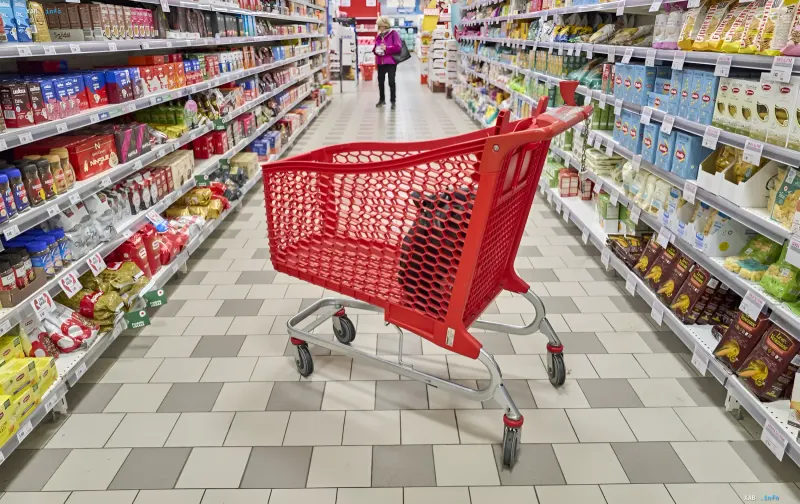
The Russian Federation continues to deliberately attack the warehouses of retail chains, which is why the logistics of food supply in Ukraine is being made as decentralized as possible. As Taras Vysotsky, the Minister of Agrarian Policy and Food, stated in an interview with RBC-Ukraine, the main goal of this restructuring is to avoid the stage of accumulating goods in large hubs that become vulnerable to shelling. According to him, this is precisely why import and domestic flows are being reconfigured toward a more distributed delivery scheme.
What Exactly Ukraine Is Forced to Import
When it comes to imports, the discussion is primarily about products that are “simply not produced or grown” in Ukraine. Vysotsky cited exotic fruits — citrus and bananas — as an example. Similarly, raw materials that are not available in domestic production are also imported. The minister separately highlighted a fairly significant share of imported fish products, above all oceanic and marine fish: “During the war, industrial fishing in the Black and Azov Seas is virtually absent, so imports play an important role here,” he acknowledged.
There Is No Critical Dependence on Imports
At the same time, the official emphasized that a significant portion of the imported range is a matter of consumer choice: some people prefer certain imported confectionery products or pet food. “We have no critical dependence on imports for most products,” Vysotsky noted. In his assessment, Ukrainian production is capable of meeting basic domestic needs, and imports mainly complement rather than replace domestic supply, if one excludes exotic fruits, certain types of raw materials, and oceanic/marine fish.
Imports Are Also at Risk: A Bet on Decentralization
Asked whether imports are under greater threat of shelling and supply disruption than domestic production, the minister replied that “imports also carry their own risks.” The relevant centers, he said, “have likewise ended up in the risk zone,” so this issue “also needs decentralization.” At the same time, Vysotsky noted that imports are “a bit easier from a logistics standpoint”: most shipments are brought in by road transport, and such routes can be changed and reconfigured more quickly depending on the situation.