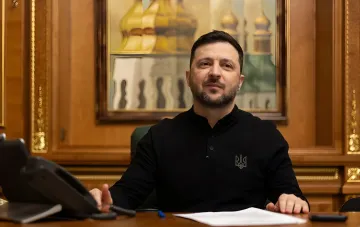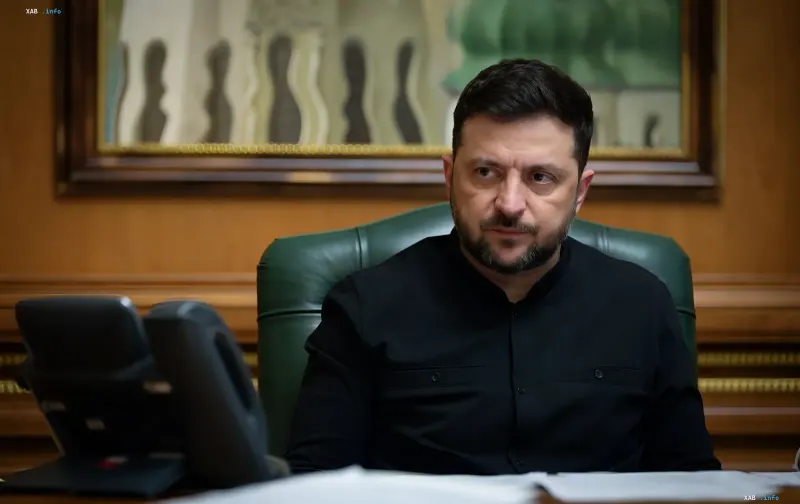
Ukrainian President Volodymyr Zelensky announced preparations for new decisions on the joint anti-ballistic program Freyja and on expanding the country's own long-range capabilities. According to him, meetings with partners — both at the state level and at the level of the companies involved in developing the system — will take place in the near future. The head of state's statement came after his meeting with the Secretary of the National Security and Defense Council, Ihor Klymenko, and was dedicated to preparing the agenda of the Supreme Commander-in-Chief's Headquarters (Stavka).
The Stavka and Oversight of Decision Implementation
Zelensky emphasized that the results of work on Freyja and on developing long-range capabilities will be submitted for consideration by the Supreme Commander-in-Chief's Headquarters. He noted the role of the NSDC Secretary in ensuring oversight of the implementation of previously adopted decisions and stressed that earlier decisions on countering Russian strike drones and accelerating the corresponding production processes must "work at 100 percent." Thus, the anti-ballistic theme is being established as one of the priorities of military-political governance at the highest level.
Meetings with Partners on the Freyja Program
The head of state reported that meetings with partners at the state and company levels, participating in the development of the joint anti-ballistic program Freyja, are being prepared. This indicates that the project is developing not only as a military but also as an industrial-diplomatic initiative, requiring coordination between governments and defense enterprises. According to Zelensky, it is precisely these contacts and production decisions that will form the basis of the nearest Stavka's agenda.
Expanding Long-Range Capabilities
In addition to the defensive component, Zelensky announced work on developing "additional distraykovykh (long-range) capabilities" — that is, long-range capabilities that go beyond current systems. Combined with the anti-ballistic program, this forms a comprehensive approach: on the one hand, intercepting ballistic threats; on the other, expanding one's own long-range potential. The President stressed that all these directions will be synchronized through the decisions of the Stavka and NSDC oversight.
Timelines, European Participation, and the Foreign Ministry's Position
The context of the statement is complemented by the position of the Foreign Minister, Andriy Sybiha, who previously stated that the implementation of the Freyja project is ongoing and that Ukraine is striving to accelerate the process, since protection from ballistic threats is critical. According to available data, the company Fire Point plans to carry out the first interception of a ballistic missile within the framework of the Freyja project by mid-2027, and 13 European partners have already joined the development of the system. The totality of these factors indicates that Freyja is becoming one of the key elements of Ukraine's future air and missile defense system, with significant European participation.