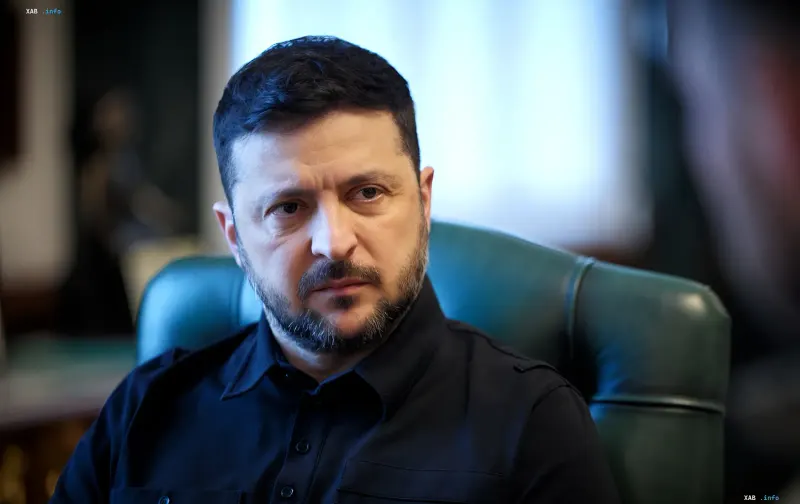
Ukrainian President Volodymyr Zelensky, during a joint press conference with Canadian Prime Minister Mark Carney, stated that Kyiv requires not only technological but also financial support from allies in the form of joint production of countermeasures against Russian jet-powered drones. According to the head of state, the Russian side has begun equipping drones with jet engines, making them significantly faster and harder to intercept. “Yes, we already have 60-plus companies working on this, and we will solve this issue, but we need time to do so,” Zelensky emphasized, adding that neither the technology nor the money is sufficient to produce thousands of interceptors.
Jet-powered drones: a shift in the nature of the threat
The key point of the president's statement was the observation that the Russian side has moved to equipping unmanned aerial vehicles with jet engines. In Zelensky's assessment, this has fundamentally changed the tactical characteristics of the attacking drones: their speed has increased, which shortens the window for detection and destruction. The president acknowledged that Ukraine currently lacks a sufficient number of means to effectively engage such targets; however, according to him, domestic developers are already working on the corresponding solutions. Thus, Kyiv is officially registering a new phase of escalation in the air and the need for a technological response.
Co-production as a systemic response
In response to a question on how exactly Ukraine intends to close this gap, Zelensky placed his bet on the co-production model. “That is why we are sharing our knowledge, our technologies, but you also need to work every day. That is why we are talking about co-production, about production lines in other countries,” the president stated. The logic of the statement is that deploying production lines on the territory of allies will allow scaling the output of interceptors faster than is possible in wartime conditions within Ukraine, and will distribute the burden among partners.
Exporting the experience of protecting critical infrastructure
Separately, the head of state emphasized that Ukraine possesses unique experience and knowledge in protecting critical infrastructure from massive drone attacks. According to him, Ukrainian operator teams have already helped partners in the Middle East during massive strikes, transferring their own technologies and developments. This argument is used by Kyiv to justify that Ukrainian experience is not only an object of aid but also an asset that can be in demand among allies in exchange for production and financial resources.
Interceptors and the transformation of procurement
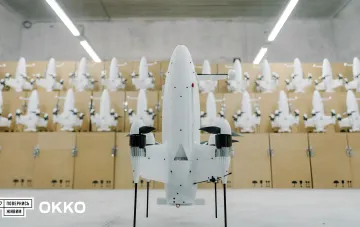
The context for the president's statements is the active integration of high-speed interceptors into the air defense system. In particular, the Ukrainian Ministry of Defense has authorized the high-speed Air Baby 350 interceptor, produced by Strix Air, for use in the air defense system, with a maximum speed of 350 km/h. In parallel, the very system of drone procurement for the Ukrainian Armed Forces is changing: a special weapons marketplace, DOT-Chain Defence, is operational, which, according to reports, is intended to accelerate and streamline deliveries. The combination of these measures, as envisioned by Kyiv, is to ensure the mass interception of both conventional and jet-powered drones.