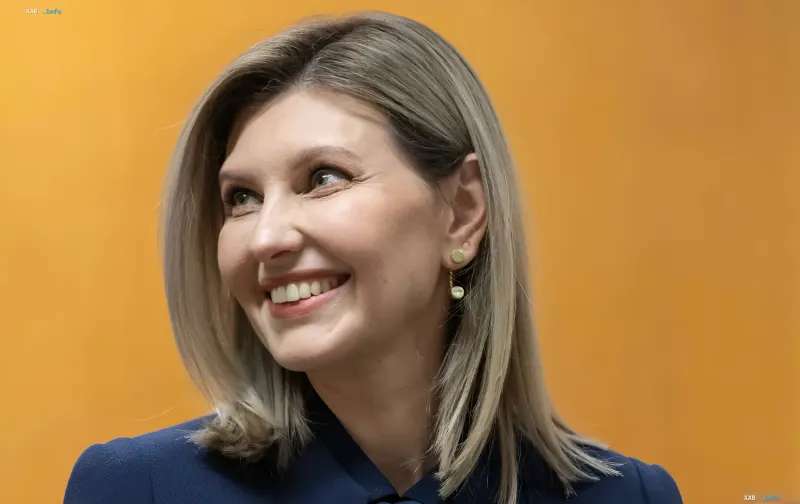
At the Sixth Summit of First Ladies and Gentlemen, held in Ukraine, First Lady Olena Zelenska presented the Global Resilience Dictionary — a unique publication featuring 38 terms, concepts, and "recipes" for resilience drawn from the practices of countries around the world. According to Zelenska, more than 45 experts from various countries worked on the project for several months, gathering, analyzing, and systematizing experience that can help societies overcome crises more effectively. This was reported by RBC-Ukraine.
Structure of the Publication: From Definition to Practical "Recipe"
The Global Resilience Dictionary is fundamentally different from a traditional reference work. For each of the 38 concepts, the authors prepared not just a dry definition, but a detailed description, concrete examples of application, and so-called "practical recipe" — a step-by-step guide for implementing the practice in community life. This approach, as intended by the creators, turns theoretical knowledge into a tool that can be used by both government bodies and local communities.
An Example from Argentina: "Community Theatre"
As an illustration, Olena Zelenska cited the concept of "Community Theatre" from Argentina. Under this model, residents of a single community jointly create theatrical performances, with each participant contributing according to their own abilities and skills. In this way, cultural activity becomes a mechanism for social cohesion and strengthening collective resilience. "Actually, I am glad that we did this, because now resilience can truly be read and compared," the First Lady emphasized.
Open Format and Plans for Expansion
The dictionary is published in an open-source electronic format, allowing any interested expert or organization to make additions and updates. In addition, a printed version of the publication was presented at the summit. Zelenska encouraged the audience to familiarize themselves with the dictionary, noting that its content is purely practical and contains not only theoretical definitions but also concrete scenarios for applying various concepts in real conditions.
Practical Application: "You Need to Feel When You Need It"
In response to a question about how exactly the dictionary's findings can be used in practice, Ukraine's First Lady explained that the experience of different countries is applicable depending on the specific situation. "I think any experience can be used. You just need to feel when you need it," she said, emphasizing that the key task is not the mechanical borrowing of foreign models, but understanding the context in which a given practice delivers maximum effect. The summit itself, she said, gave participants an opportunity to support one another and exchange new experiences.
Context: Zelensky's Proposal for a European "Architecture of Resilience"
In addition to the dictionary presentation, a broader political statement was made at the summit. Ukrainian President Volodymyr Zelensky proposed that European countries join forces to create a common "architecture of resilience" aimed at countering Russian aggression. This involves coordinating the actions of states, systematic exchange of experience, reserving critical infrastructure systems, and developing mechanisms for rapid response to common threats. Thus, the Global Resilience Dictionary serves not only as an academic or civic project but also as an element of a broader strategy to strengthen collective resilience amid the ongoing conflict.