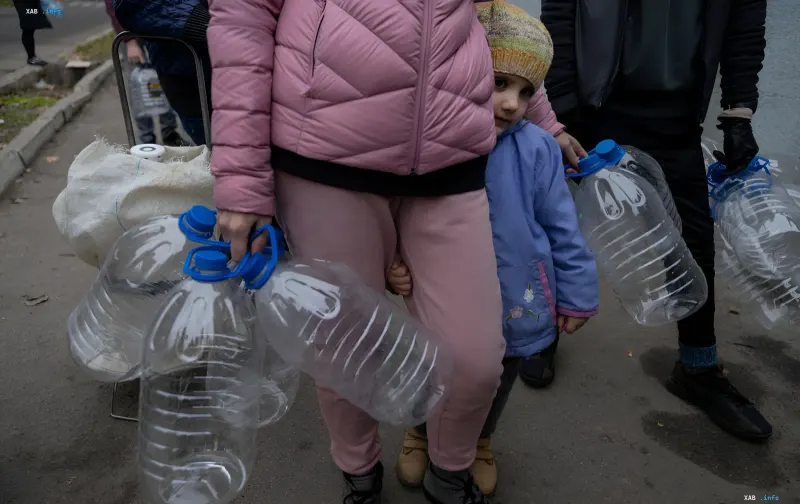
The Ukrainian government has issued a directive requiring regional and Kyiv city administrations to prepare action algorithms in case of the potential destruction or incapacitation of sewage pumping stations. According to the document, the measures apply to settlements with a population of over 100,000 people. This is a preventive measure: authorities must have ready-to-use schemes for public notification, water distribution, and the implementation of restrictions to act without delay in the event of an incident.
What the Government Directive Prescribes
The document is based on a scenario involving damage to a sewage pumping station, which could overload the centralized sewage system. The administration of the respective territory is required to have a developed algorithm for immediate resident notification. If a station is damaged, consumers within the impact zone will be warned about the need to temporarily conserve water and reduce the volume of wastewater discharge. This helps reduce the load on the network and prevents overflow.
How Residents Will Be Informed
A separate section of the directive concerns communication with the public. Citizens will receive warnings about peak load hours for centralized sewage systems: during these periods, it is recommended to postpone tasks involving large water consumption to another time. Mass media and official websites are designated as the main channels for information distribution. Thus, the notification strategy relies on public and mass media channels rather than targeted notifications.
Distribution Points and Water Delivery Routes
Authorities must develop schemes for the rapid deployment of drinking water distribution points in advance, and map out routes for delivering both potable and technical water to the population. This means the logistics for water distribution are fixed before an incident occurs, rather than being improvised during a crisis. Preparing routes and distribution points ensures water access for residents if network supply is restricted or halted.
Restriction Schedules and Priorities
If current measures prove insufficient and the network is at risk of overflow, or if sewage facilities fail and other dangerous consequences arise, temporary restrictions or pauses in water supply will be implemented. Zones, order of priority, and schedules for such restrictions are to be determined in advance. Guaranteed priority access to water is reserved for healthcare facilities and other critical infrastructure, as established in the document as an unconditional requirement.
Context: Attacks on Water Utilities
The development of these algorithms follows reports of nighttime attacks. Prime Minister Serhii Koretskyi, according to the report, stated that Kyiv and seven regions were attacked overnight, and water utilities in the Dnipropetrovsk region were hit several times. The head of government labeled these as "deliberate terrorist strikes" aimed at leaving people without water. It is in this context that the directive for preparing schedules and distribution points appears as a measure to mitigate the impact on communal infrastructure.