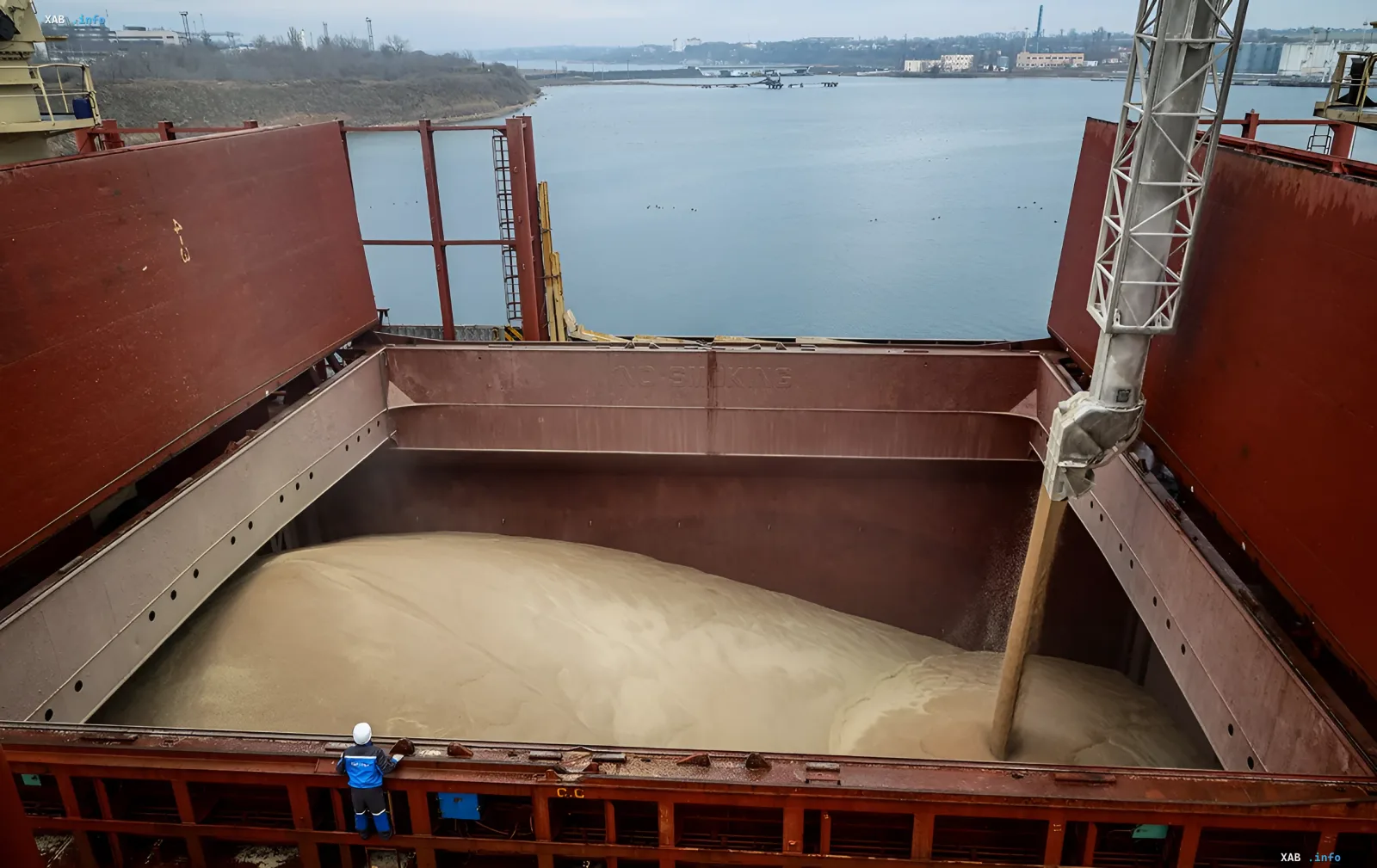
Ukraine's agricultural sector, one of the key pillars of the country's economy, has faced an unprecedented crisis at the beginning of 2026. According to the Ministry of Agrarian Policy of Ukraine, the forecast for the 2026-27 marketing year has been revised downwards significantly: the country may export only about 29.6 million tons of produce. This represents a catastrophic drop of 54% compared to the initial optimistic forecast of 64.4 million tons. Experts link this collapse to systemic disruptions in logistics chains caused by military actions and climatic factors.
Blockade of Sea Routes and Strikes on Ports
The main reason for the reduction in supplies has been Russian attacks on Black Sea infrastructure. Ports in the Odesa region, which traditionally accounted for about 90% of Ukrainian grain exports, are under constant pressure. Attacks on civilian vessels and port terminals make sea transport extremely risky and economically unviable. In particular, on August 6, 2026, a strike on a civilian vessel in the Black Sea was recorded, resulting in the death of a Ukrainian sailor. These incidents have led to a de facto blockade of the main export arteries, causing huge volumes of the harvest to remain in storage.
Climatic Factor: Drought on the Danube
Attempts to redirect flows through alternative routes, particularly via the Danube River, have also encountered serious obstacles. The climatic anomaly of 2026 led to record-low water levels in the river. The drought limits the capacity of vessels capable of navigating the channel, making it impossible to compensate for the loss of sea transport with river transport. As a result, even with demand in the global market, the physical ability to export products from the country has been critically reduced.
Overfilled Storage Facilities and Threat of Shortage
The situation within the country is becoming critical. The new harvest is filling grain elevators, creating a threat of overflow. Estimates suggest that by the beginning of November 2026, about 59 million tons of grain storage capacity could be filled to 100%. This will create a shortage of free capacity of 11 million tons. Such a situation exerts direct pressure on domestic prices, destabilizing the food market and creating risks for farmers who will not be able to sell their produce. Direct losses from unearned export revenue in the second half of 2026 could exceed $2 billion.
Contradictory Data
Against the backdrop of the overall negative picture, experts note significant discrepancies in assessments of the current situation. On the one hand, the Ministry of Agrarian Policy and international analysts (Bloomberg) record a 54% collapse in exports and predict a critical shortage of capacity. On the other hand, some industry sources, including data published at the beginning of the season, indicated an increase in exports of more than 50% during certain periods or recorded the successful export of the first million tons in the new marketing year. These contradictions may be related to a time lag in statistics, differences in calculation methodology (actual shipments versus planned) or an attempt to conceal the scale of the logistical collapse, which only became evident in August 2026.
Search for Solutions and International Aid
To mitigate the consequences of the crisis, Ukraine is taking a number of diplomatic and economic steps. Kyiv has appealed to the European Commission for €220 million in grants to subsidize loans for small and medium-sized farmers. An agreement has also been reached with Romania to expand supplies through the port of Constanța. The state operator "Ukrzaliznytsia" is actively looking for new transit routes through Slovakia and Hungary. However, according to analysts, these alternative routes will not be able to fully compensate for the loss of Black Sea port capacity, and the export situation remains extremely tense.