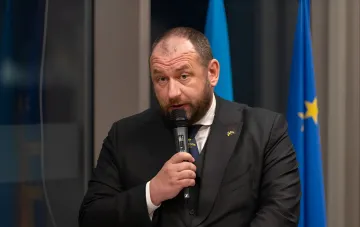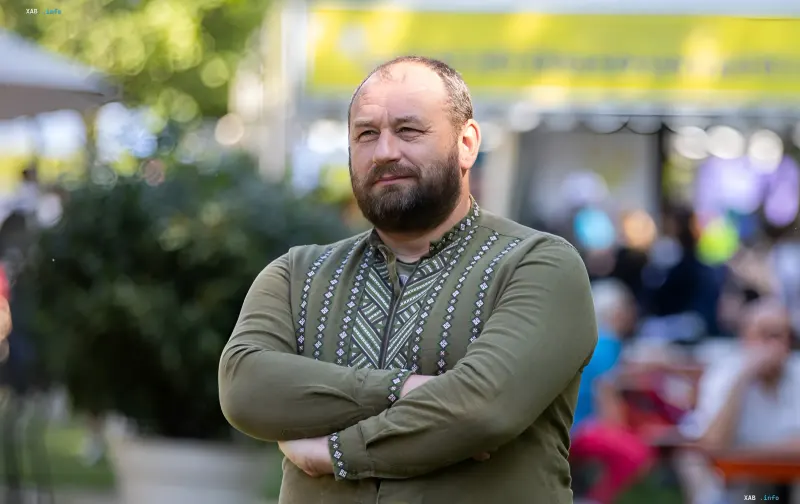
The change of power in Budapest has given a new impetus to Ukraine-Hungary relations: the political temperature, heated for years, has noticeably cooled, although a full-fledged meeting between Volodymyr Zelenskyy and Péter Márki-Zay has still not taken place due to the busy schedules of both leaders. This was stated by Ukraine's Ambassador to Hungary, Fedir Shandor, in an interview with RBK-Ukraine, who also commented on the unblocking of Ukraine's European integration, the investigation into the cashiers' case, and the defense cooperation between the two countries.
New atmosphere in Budapest
According to the diplomat, the elections themselves were an objective factor in cooling relations, while the subjective factor was the direct work of Russian networks: from intelligence operations to "mud-slinging," hanging advertisements against Ukraine's top leadership, and the appearance of so-called "titushky" (hired thugs) in the city of Győr, which had not been observed before in the history of Hungarian political campaigns. As of today, Shandor asserts, anti-Ukrainian narratives in Hungarian media have not just decreased but have practically disappeared, and criminal investigations will be conducted against those who created them, holding them accountable.
Cleaning up the system and the lesson on Russia
The era of Viktor Orbán, according to the ambassador's assessment, has finally ended: changes to the constitution adopted by the new parliament have made his return to the prime minister's chair impossible. The cleansing of the political system from personnel appointments of the previous regime, which took root over 16 years, is in full swing. At the same time, Shandor emphasizes that behind the political tension and demonization of Kyiv stood Russian special services helping Orbán: "Hungarians have learned an excellent lesson: better not to have business with Russians, because they will only cause harm." The new government, he says, has also faced unforeseen difficulties, such as the drop in water levels in the Danube, which requires constant monitoring by the authorities.
European integration and "100 days"
Despite persisting difficulties, Márki-Zay's government is demonstrating unprecedented openness on issues concerning the Hungarian minority in Ukraine, sanctions against Russia, and other areas, while Kyiv and Budapest are holding dialogues on new spheres of cooperation that were impossible during Orbán's time. At the same time, Budapest has still not unblocked the opening of four negotiation clusters for Ukraine's accession to the EU. Shandor urges not to make a tragedy out of this: the cabinet has been in power for only 80 days, and the new government should be given at least 100 days to work before drawing conclusions. Péter Márki-Zay also needs to restore constructive relations with Brussels and neighbors, which were damaged by his predecessor.
The cashiers' case and defense cooperation
Among the practical results of the new dynamics, the ambassador highlights the investigation into the kidnapped Ukrainian cashiers, which, according to media reports, is nearing completion and is 95% solved, as well as the development of defense cooperation between the two countries — areas that were previously blocked by political confrontation. Ukraine and Hungary, according to the diplomat, have already developed a plan of action to resolve long-standing disputes, moving forward on issues that had not been achievable for nearly a decade.
Access to power structures and media
Regarding access to government offices, Shandor notes that there were no problems with the media even during periods of tense relations: a club of experts and journalists has been operating at the embassy for a year and a half, where pressing issues of Ukrainian-Hungarian relations are discussed monthly. Due to the restructuring of ministries and the arrival of new people, the number of contacts has temporarily decreased, however, on basic areas where Ukraine had an acute need, ties have already been restored, and with newly created ministries where there were no contacts before, dialogue is being established gradually. The ambassador summarizes: the post-election period in Hungary is characterized by significant changes, and time is required to build a full-fledged dialogue.