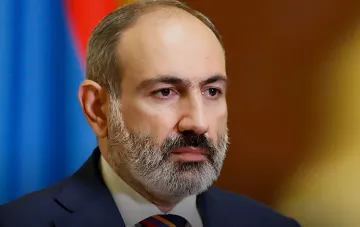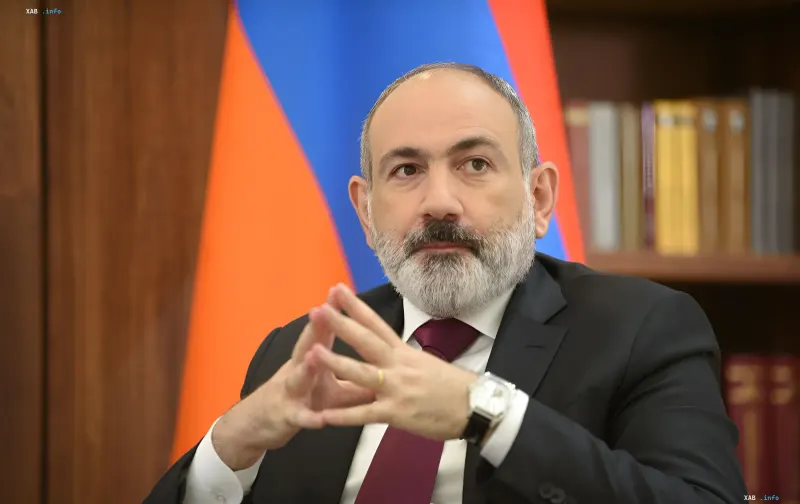
Armenian Prime Minister Nikol Pashinyan, speaking in the National Assembly, stated that Yerevan will officially submit its application for membership in the European Union in the near future. According to the head of government, the process of European integration requires extensive preparatory work, so preparations for a nationwide plebiscite will only begin after the mandatory procedural stages have been completed. Pashinyan did not give specific deadlines for submitting the official documents, limiting himself to the phrase “in the near future.”
A clear sequence: from application to plebiscite
The Prime Minister emphasized that the referendum on EU accession will take place strictly after a defined sequence of steps has been followed. First, Armenia will officially submit its application, then it will receive a response and assessment from Brussels, after which the two sides will agree on a joint road map of actions. Only at the final stage will a nationwide plebiscite be held. “For a referendum to be held, Armenia must submit an official application for EU accession. This is a process that requires extensive work. And in the near future we will begin this process, in particular heeding the calls of our colleagues in the EAEU,” Pashinyan stated in parliament.
EAEU and the foreign-policy context
Pashinyan underscored that the decision to move toward the European Union is being made with due regard to the foreign-policy context and consultations with partners in the Eurasian Economic Union. In recent years, Yerevan has consistently deepened its cooperation with the EU against a backdrop of frozen relations with the CSTO bloc. Speaking in parliament, the Prime Minister stated that Armenia does not intend to return to the CSTO in the next five years, and added that he would be “very pleased” if the bloc decided to exclude the country from its membership.
Contradictory statements
At the same time, open sources record statements that create a certain inconsistency in Pashinyan’s public rhetoric. In particular, the outlet “Business Gazette” previously published a statement by the Prime Minister in which he declared that Armenia’s accession to the EU “is not on the political agenda.” This contradicts his current statements about preparing an application. A possible explanation is an evolution of position against a backdrop of a changed foreign-policy context and growing pressure from Moscow; however, Pashinyan himself has not publicly commented on the discrepancy between these two formulations. Readers should note that, as of the publication of this article, Yerevan’s current position is precisely its readiness to submit an application, as stated in parliament.
Background: hybrid pressure and pre-election rhetoric
The announcement about preparing an EU accession application came against a backdrop of intensified hybrid pressure on the Armenian leadership from Moscow. According to RBC-Ukraine, ahead of the elections in Armenia the Kremlin rolled out a series of measures: from a ban on the import of Armenian cognac and vegetables to threats to triple the price of gas. Under these conditions, the course toward European integration is perceived in Yerevan as a tool for diversifying foreign-policy ties and reducing dependence on Russian energy and political influence. Analysts note that constitutional reforms, which may be initiated after the elections, will become a key factor determining the pace and depth of Armenia’s integration into the European space.