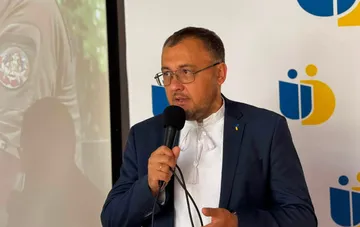
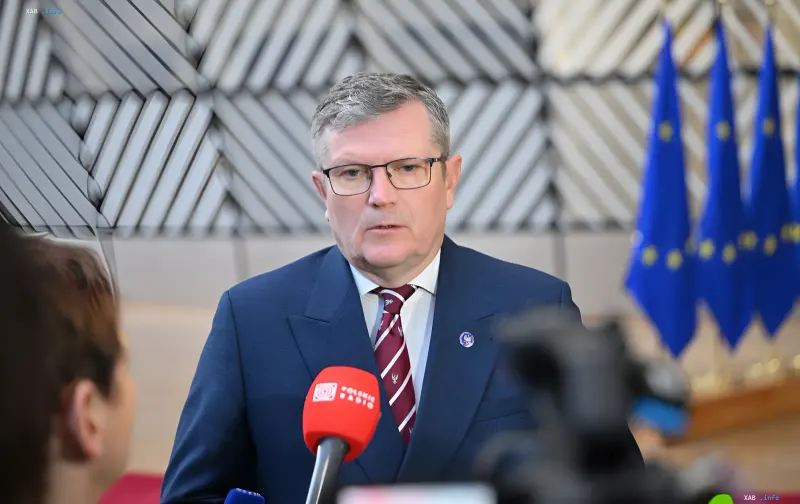
Marcin Bosacki, Deputy Minister of Foreign Affairs of Poland, issued a sharp warning to Kyiv, stating that the inclusion of Stepan Bandera and Roman Shukhevych in Ukraine's National Pantheon could become a serious obstacle to the country's European integration. This is reported by RBC-Ukraine, citing a publication by the Polish TV channel RMF 24. The statement came against the backdrop of ongoing discussions in Ukrainian society about creating a single list of national heroes and which historical figures deserve a place in the pantheon.
"Every People Chooses Its Heroes" — But with Caveats
In his speech, Bosacki formally acknowledged the sovereign right of each country to determine whom it considers national heroes. "Every people and its authorities have the right to choose the heroes they deem appropriate," emphasized the deputy head of the Polish Foreign Ministry. However, immediately after this caveat, he moved on to the substance of the warning: the appearance in the National Pantheon of historical figures whom Poland holds responsible for mass crimes against the civilian population would "significantly worsen Ukraine's relations not only with Poland but with Europe as a whole." Thus, Warsaw has effectively framed the pantheon issue in terms of bilateral and multilateral relations, taking it beyond the confines of an exclusively internal Ukrainian discourse.
Reference to the "Dark Period" of the UPA and Victims Among Various Peoples
A particular sharpness to Bosacki's statement is added by his characterization of the UPA's activities. According to the deputy minister, under the banners of those who, in his words, "killed — incidentally, not only Poles but also some Ukrainians, as well as Czechs, Jews, and Roma," that is, "the founders of the UPA during its darkest period of activity, in 1943–1944," Ukraine "will have enormous problems with integration into Europe." This rhetoric underscores that the Polish side intends to rely not only on the memory of victims among Poles but also on a broader list of affected peoples, which, by Warsaw's design, makes the argumentation less vulnerable to criticism within Ukrainian society.
The Reburial of Konovalent as a "Polish Diplomatic Gesture"
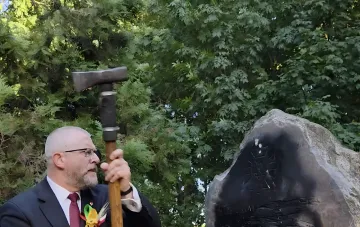
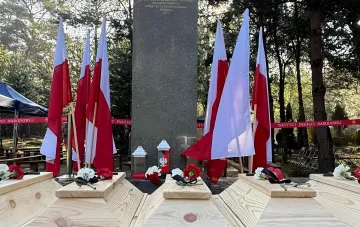
As an illustration of how, in Bosacki's view, European diplomacy reacts to such steps, the deputy minister mentioned the recent reburial of Yevhen Konovalent. He noted that "there were almost no representatives of the diplomatic missions of EU countries" at the event and called it a "Polish diplomatic gesture." Thus, Warsaw positions its non-participation in ceremonies associated with figures it considers criminals as a deliberate diplomatic stance, rather than a lack of interest in the event.
Reaction from the Office of the President of Poland and the Context of Escalation
Earlier, the office of Polish President Karol Nawrocki also criticized Volodymyr Zelenskyy's initiative to create the National Pantheon of Ukraine, calling it "actions of an escalatory nature." In Warsaw, this initiative was linked to the preceding decision to name one of the military units after the "heroes of the UPA," which, according to the Polish side's assessment, demonstrates the systemic character of Ukrainian memory politics regarding figures associated with the OUN and UPA. The totality of these statements indicates that the pantheon issue is becoming one of the key points of friction in Polish-Ukrainian relations against the backdrop of Kyiv's ongoing process of integration into European structures.
Contradictory Data
No significant discrepancies in dates, figures, or key formulations of Bosacki's statement were found in the provided sources. All four verified sources (RBC-Ukraine, TSN, ZN.UA, Gazeta.Ru) convey the essence of the warning in a consistent manner: it concerns the possible deterioration of relations with Poland and the EU in the event that Bandera and Shukhevych are included in the pantheon. The differences concern only the style of presentation and the volume of quotes, but not the factual component. The only nuance: the main text mentions the "office of Polish President Karol Nawrocki," which corresponds to the current status of the head of state as of August 2026, and no contradictions with other sources on this point were found.