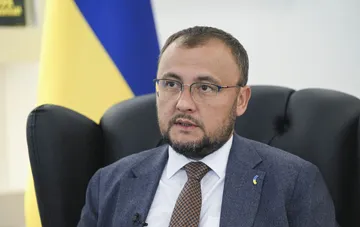
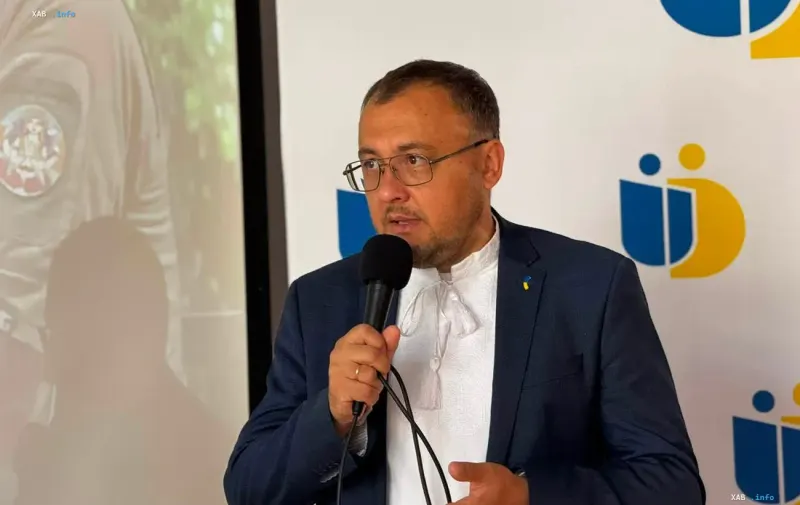
Vasyl Bondar, Ukraine's Ambassador to Poland, told RBC-Ukraine in an interview that adding new names to the National Pantheon could have a significant impact on bilateral relations with Warsaw. In his words, when planning the next stages of reburials, Kyiv must take into account the possible reaction of its neighboring state, since ignoring a partner's sensitivities leads to "unexpected results." Bondar emphasized that the National Pantheon is not only a celebration of the past but also a building of the future, which is why it is critically important how this initiative is implemented.
National Interests and Lessons of the Past
At the same time, the ambassador categorically rejected the possibility of yielding Ukraine's national interests. As a vivid example, he cited the concessions that Russia had made over the decades, which, in his belief, ultimately led to a full-scale war. "Today, there is not a single politician in Ukraine ready to tell their neighbors: do whatever you want with this," Bondar stressed. Thus, the diplomat set a firm framework: sovereign decisions in the sphere of memory and national identity are not up for negotiation, but their implementation requires diplomatic precision.
Where the Ally Is, and Where the Competitor
Bondar drew a line between the areas in which Poland can remain a reliable ally of Ukraine and the fields where each side will "firmly stand its ground." According to him, Warsaw is ready to support Kyiv on matters of security, defense, and Eurointegration. However, in the spheres of history, economic competition, and agriculture, as the ambassador noted, each side will firmly defend its own interests. "We must understand that before every decision we should weigh both our own interest and the sensitivity of the foreign partner," the diplomat summed up, effectively calling for a pragmatic balance between principle and tactical tact.
Growing Aggression Against Ukrainians in Poland
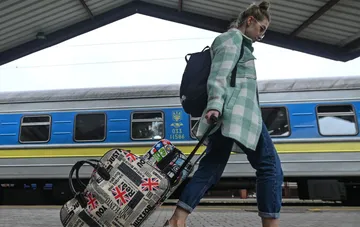
Against the backdrop of the discussion of historical and political frictions, RBC-Ukraine cited alarming statistics: over three years, the number of attacks on Ukrainians in Poland has risen by 30%. In the first half of 2026, 180 such cases have already been recorded. Changes in Polish legislation have led to the fact that actions previously classified as hooliganism are now treated as hate crimes on national grounds. According to the outlet, this indicates a systematic tightening of law-enforcement practice toward ethnic Ukrainians on Polish territory.
Contradictory Data
At the same time, the same materials feature the position of Ambassador Bondar himself, who had previously stated that generalized claims about the danger to Ukrainians in Poland are exaggerated. In his words, most citizens have not personally encountered physical aggression, and the widespread fear is largely a consequence of anxiety generated by media reports. Thus, the statistics on the growth in the number of incidents (180 cases in half a year, +30% over three years) and the ambassador's assessment of an "exaggerated danger" coexist in the same information space, creating a contradictory picture: the formally recorded rise in hate crimes coexists with the diplomatic assertion that the real level of threat to an ordinary Ukrainian remains low. The difference in interpretation may be explained by the fact that the ambassador operates on the subjective experience of the majority of citizens, whereas the statistics record the absolute number of incidents, including those that did not lead to serious consequences.
Context: the Pantheon as a Diplomatic Tool
The discussion of the National Pantheon in Ukraine gains particular sharpness against the backdrop of ongoing disputes over the reburials of historical figures whose activities receive an ambiguous assessment in neighboring countries. Bondar's position demonstrates Kyiv's attempt to build a dual strategy: on the one hand, an unwavering right to its own historical memory; on the other, an awareness that every public decision in the sphere of national symbolism is transmitted abroad and may touch the sensitive nerves of partners. In a situation where Poland remains one of Ukraine's key allies in matters of security and Euro-Atlantic integration, the diplomatic balance between "principle" and "tact" becomes not just a rhetorical gesture but a practical necessity for preserving multivector cooperation.