Chronicle of the Incident
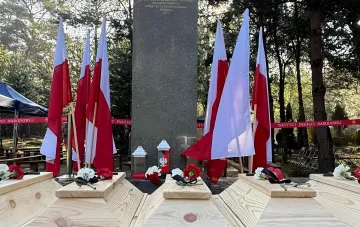
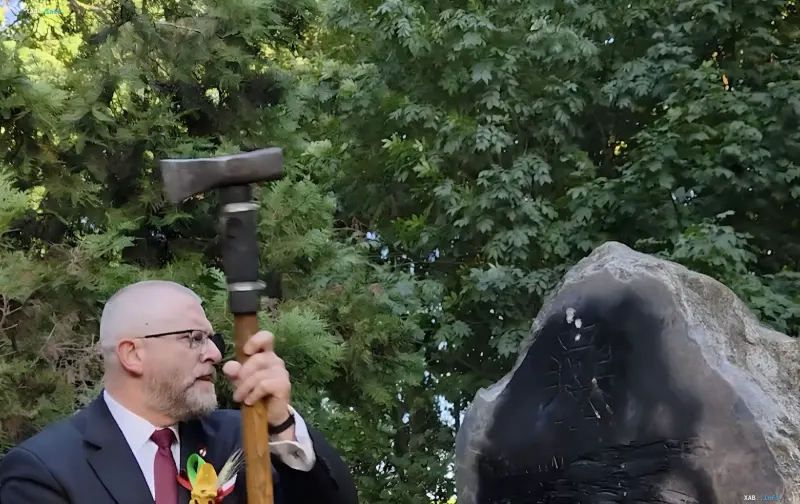
In the gmina of Długiborów in the Hrubieszów County of the Lublin Voivodeship, the far-right European MP and leader of the "Confederation of the Polish Crown" party, Grzegorz Braun, together with an accomplice, destroyed a granite monument commemorating Ukrainians who died in battles against the Soviet NKVD. According to media reports, the vandals used axes and hammers to smash the obelisk. The mass grave, where the fallen Ukrainians have rested since 1946, has functioned as a memorial site since the 1990s, and in its current form since 2019. On the same day, Braun posted a video from the scene on the social network X with the caption: 'The obelisk that insults the memory of the victims of the Ukrainian genocide of Poles should be demolished with professional tools immediately after the crime of Banderaism is documented!'
Kyiv's Position
The Ministry of Foreign Affairs of Ukraine expressed deep outrage at the incident. In a statement, the diplomats noted: 'Political marginals in Poland have come up with nothing better than to fight over graves. At a time when a real war is raging, one that poses an existential threat to both Ukraine and Poland.' The ministry called the deputy's behavior 'shameful and immoral, capable of evoking nothing but shame and condemnation in any normal person.' Kyiv has appealed to the competent Polish authorities, demanding a proper legal assessment of the destruction of the obelisk, and is awaiting the restoration of the damaged grave, as well as other sites of Ukrainian memory in Poland, and the prevention of similar incidents in the future. 'No one has the right to turn the memory and respect for the dead into a circus performance to achieve their political goals. As the Polish proverb goes: if you have nothing to attract attention with, you have to put on a show,' the ministry emphasized.
Reaction of the Polish Authorities
The Polish prosecutor's office has opened an investigation into the circumstances of the vandalism of the monument and the burial site of UPA fighters in the settlement of Białostok. As reported by the Zamość District Prosecutor's Office, the preliminary proceedings concern 'the insult of a group of Ukrainian nationality through the damage to the resting place of persons who died in battle with NKVD officers.' The department's spokesperson, prosecutor Rafał Kawalec, spoke about the investigators' work. At present, no charges have been filed; however, the spokesperson did not rule out that proceedings to strip the European MP of his parliamentary immunity may be initiated.
Contradictory Data
In the public sphere, there are discrepancies both in the interpretation of the incident and in the name of the location. Braun characterizes the destroyed structure as 'the obelisk that insults the memory of the victims of the Ukrainian genocide of Poles,' and links it to 'Banderaism,' whereas the official purpose of the monument and Kyiv's position emphasize that it is dedicated to Ukrainians who died in battles against the Soviet NKVD. Moreover, in various reports the scene of the incident is referred to as the gmina of Długiborów, the settlement of Białostok, and the locality of Białostok near the village of Lisiki in the Lublin Voivodeship. Formally, these are different levels of administrative division of the same territory; however, inconsistencies in official statements and media reports may create confusion in identifying the object of the investigation.
Context: a Series of Incidents
The destruction of the obelisk is not an isolated act: the monument has been subjected to vandalism several times before. In the summer of 2026, it was spray-painted and the arch decorating the stone was cut out, after which the Ukrainian embassy officially condemned this act. The incident in Długiborów fits into a broader series of events: as RBC-Ukraine reported, in the Polish town of Kożuchów, unknown assailants attacked three Ukrainians who were resting near their car in the evening, and the Ukrainian consulate has already responded to this case. Against the backdrop of the ongoing war, repeated attacks on Ukrainian memorial sites and citizens in Poland sharpen the issues of protecting minority memory and upholding the rule of law.