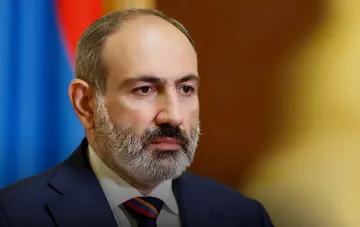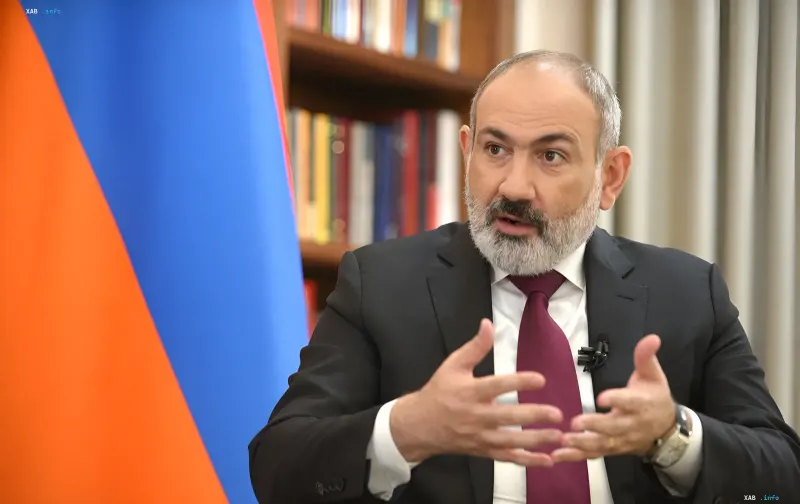
Armenian Prime Minister Nikol Pashinyan, speaking during a discussion at the Institute of International and European Affairs (IIEA) in Dublin, publicly outlined the country's long-term course toward integration into European structures. According to him, he "sees Armenia as part of the European Union" and believes the country could become a member within the next 20 years. The statement came against the backdrop of an ongoing preparation process in Yerevan for a possible official membership application, which, according to the prime minister's earlier estimates, Armenia could submit in 2027 or 2028.
A Twenty-Year Horizon and the "Armenian Chair"
Responding to a question about whether Armenia can "sit on two chairs" while moving closer to the European Union, Pashinyan previously parried on the sidelines of the UN General Assembly: "Why two chairs? We are sitting on one Armenian chair." In Dublin, he reiterated this logic, emphasizing that the European direction does not mean abandoning cooperation with other states. "Armenia is where it was and is. Armenia will remain here, in its place. We do not want to move away from any partner and get closer to others. We are simply pursuing our balanced and equilibrium foreign policy," the prime minister stated. Thus, Yerevan positions its EU course not as a pivot against anyone, but as an expansion of its partnership geography.
Moscow's Stance: "It Is Important to Make a Choice"
This course does not suit the Russian side. During a meeting with Pashinyan in Bishkek, Vladimir Putin urged Yerevan to decide as soon as possible between joining the European Union and holding membership in the Eurasian Economic Union (EAEU), warning that closer ties with the EU could deprive Armenia of common market benefits and lead to the rupture of trade relations. Kremlin Spokesman Dmitry Peskov, commenting on the Armenian prime minister's words, stated that Moscow treats Armenia's sovereign rights "with respect," but recalled that the country is a member of the EAEU and that "gradual reorientation to other standards will not correlate with EAEU standards in various fields." "It is very important to make a choice," he stressed. In response, Pashinyan insists that the law initiating the EU accession process does not violate Armenia's obligations to Russia and the EAEU.
Tensions Within the CSTO
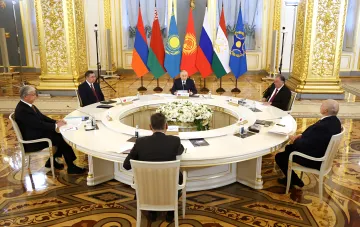
The divergence of positions between Yerevan and Moscow has gone beyond rhetoric, reflecting at the institutional level. On November 11, it became known that the member states of the Collective Security Treaty Organization (CSTO), upon Russia's proposal, stripped Armenia of its voting rights. This decision became one of the most vivid signs of cooling relations within the alliance and increasing pressure on Yerevan in the context of its European integration steps.
Context: From "Conflict" to "Atmosphere of Peace"
Pashinyan himself explains the transformation of relations with Russia by Armenia's transition from a state of "conflict" to an "atmosphere of peace," speaking of "inevitable changes" in bilateral ties. The combination of statements—from the Dublin discussion to the UN platform and the CSTO—shows that Armenia is consistently securing its right to pursue an independent foreign policy, combining preparations for EU accession with the preservation of existing agreements, including its EAEU status, although Moscow treats these two courses as mutually exclusive.