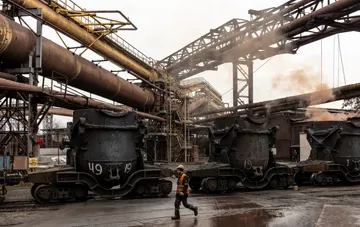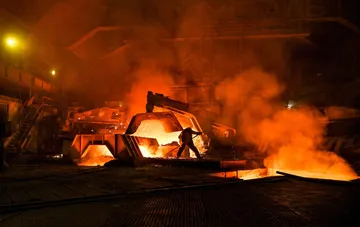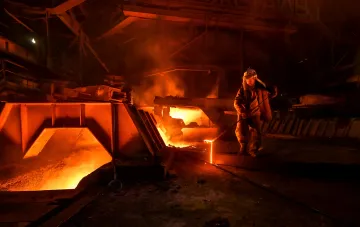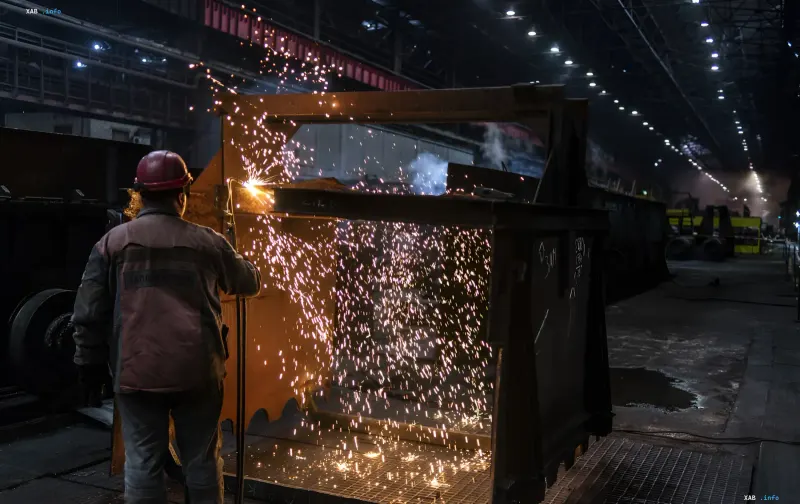
Ukraine's metallurgical industry is experiencing its deepest crisis since the full-scale war began. Following a series of Russian strikes on enterprises in August and September 2026, key steelmaking facilities were halted, and steel production in September dropped nearly fivefold year-on-year to 131,000 tons. For comparison, before February 2022, Ukraine produced 21.4 million tons of steel annually. By the end of September, smelting had practically ceased. According to investment house Dragon Capital, the halt in steel production and the reduction in ore mining could cost the country's economy about 1.5% of GDP.
The "Perfect Storm": When plant strikes coincided with logistical and energy collapse
Natalia Kolesnichenko, senior economist at the Center for Economic Strategy, described the situation to RBC-Ukraine as a "perfect storm": direct missile strikes on enterprises were compounded by systemic power outages, the blockade of Odesa ports, and EU quota reductions on Ukrainian steel products. According to Metinvest, 17 ballistic missiles were fired at Zaporizhstal, resulting in the deaths of eight workers. ArcelorMittal Kryvyi Rih, after four strikes within five weeks, decided to mothball production until the end of the war. Kametstal and Interpipe's facility in Dnipro also came to a halt. Consequently, virtually all major steelmaking assets in the country stopped operating simultaneously.
A million people and cities that "will simply die"
The consequences of the crisis have long transcended factory walls. According to GMK Center Director Stanislav Zinchenko, about 80,000 people worked directly at metallurgical enterprises, and another 250,000 depended on the industry through related production and orders. "Including families, that is practically a million people who depended on the steel industry for their livelihood," he noted. The greatest risk is borne by industrial cities whose budgets were largely formed by taxes from large enterprises: Zaporizhzhia, Kryvyi Rih, Kamianske, Dnipro, Nikopol, and Horishni Plavni. "These cities will simply die. People will leave them. It will be a social and humanitarian catastrophe," Zinchenko warned. Problems have already materialized in Kryvyi Rih, where, following the shutdown of major enterprises, city authorities moved to sequester the budget: industrial companies' taxes previously funded public sector salaries, municipal infrastructure, kindergartens, and social services. Railways, ports, machine building, and the energy sector — for which metallurgy was one of the largest clients — will suffer an additional blow.
Maritime logistics: The bottleneck without which the industry cannot survive
According to interviewed experts, maritime logistics remains a critical problem. Without a functioning maritime corridor, Ukraine is essentially unable to export either iron ore or finished steel to the world market. Railway routes through the western border are incapable of compensating for the loss of port capacities. Ukrmetalurgprom President Oleksandr Kalenkov emphasizes that opening sea routes would at least allow the resumption of iron ore exports and support part of production. Experts cite the restoration of maritime exports as one of the primary steps to save the industry.
What is needed for a restart: From a special fund to the abolition of CBAM
The second priority is supporting idle enterprises. Kalenkov points out the need to preserve labor collectives, reserve workers from mobilization, and provide tax relief. Experts also propose creating a special metallurgy assistance fund, similar to energy support mechanisms, and involving international partners in financing the restoration of damaged assets. A separate condition is easing Ukrainian steel's access to the EU market: postponing or mitigating quotas and the CBAM mechanism during the war. Experts consider launching an effective war risk insurance mechanism an important element, which would give companies the opportunity to invest in repairs even amid a high threat of repeated attacks. Despite the depth of the crisis, the GMK Center believes the industry can still be preserved, but this requires simultaneous security guarantees, the restoration of maritime logistics, access to the European market, and financial support from the state and international partners.