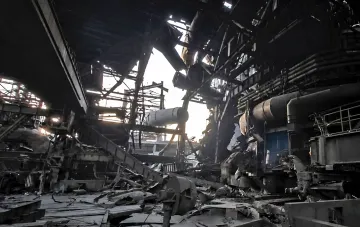
The shutdown of key metallurgical enterprises in Ukraine in September 2026 led to a 2.4% contraction in the country's real GDP in annual terms. The main drivers of the decline were Russian strikes on industrial facilities, logistical issues, and the ongoing blockade of sea ports, which heavily impacted related economic sectors.
Blow to metallurgy and the industrial sector
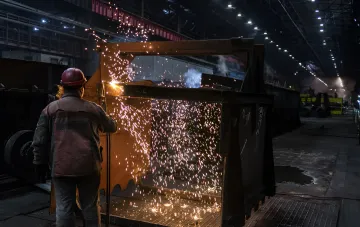
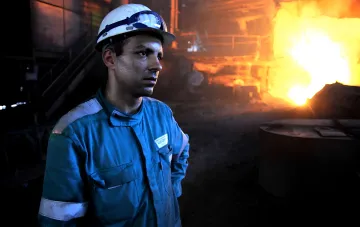
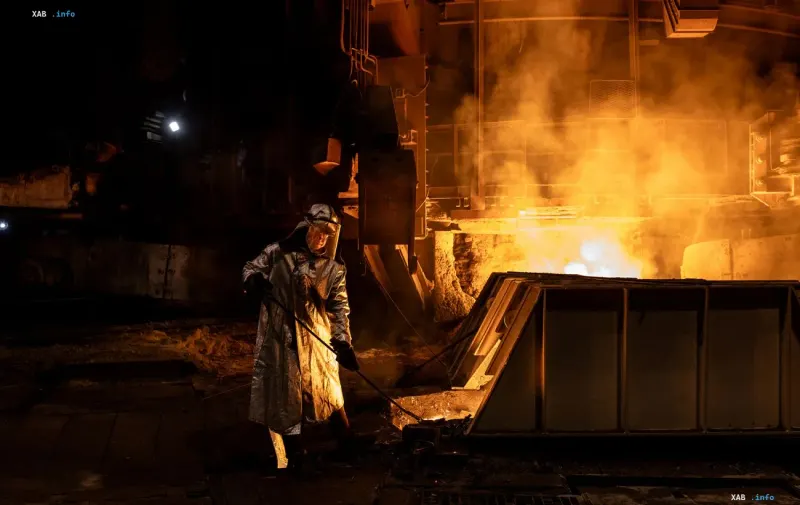
The consequences of the crisis are most visible in industrial production. The processing industry shrank by 7% in September, primarily due to a sharp drop in steel production following the shutdown of major producers as a result of attacks.
In August, Russia intensified strikes against metallurgical enterprises. Following a ballistic strike on August 11, Zaporizhstal stopped operations, and on September 25, ArcelorMittal Kryvyi Rih announced the suspension of its steel plant until the end of the war. The situation worsened to the extent that in September, not a single ton of steel was smelted in Ukraine for an entire week for the first time in a century.
Decline in mining and the transport crisis
Concurrently, the mining industry plunged by 12.3%, directly linked to reduced iron ore extraction and export limitations. The transport sector dropped even further—by 20%—due to the de facto blockade of Greater Odessa ports and the necessity to reroute shipments through more expensive and restricted alternative routes.
Road and rail transport cannot fully compensate for the loss of maritime logistics. As a result, problems spilled over into domestic trade, where gross value added in September fell by 5.5% amid declining exports.
Macroeconomic consequences and budget losses
For the full year 2026, the Institute for Economic Research and Policy Consulting (IER) projects a real GDP decline of approximately 0.5%, though this figure may be revised as October's situation appears worse. Over the first nine months, the Ukrainian budget has already missed out on about UAH 49.5 billion in taxes, and by the end of the year, losses could rise to UAH 70 billion, or up to UAH 100 billion under a pessimistic scenario.
Significance for future recovery
The crisis in metallurgy has ceased to be a localized problem of a single industry and has become a systemic challenge for Ukraine's overall macroeconomic stability. In the worst-case scenario, if metallurgical plants fail to resume operations for a prolonged period, total economic losses could reach 6.5–7% of GDP, necessitating urgent solutions to support logistics and restore production capacity.