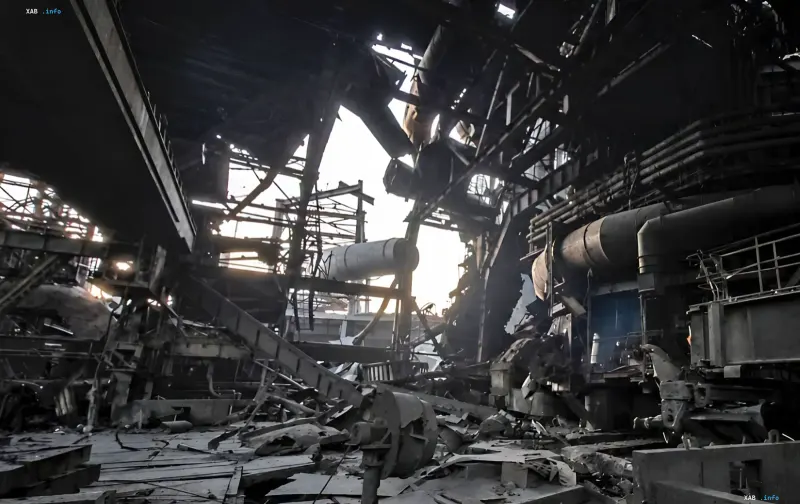
Ukraine's real gross domestic product (GDP) contracted by 2.4% year-on-year in September 2026. This is evidenced by an assessment by the Institute for Economic Research and Policy Consulting (IER), published on Facebook and reported by RBC-Ukraine. According to analysts, the greatest pressure on the economy came from Russian strikes on metallurgical enterprises, the logistics crisis, and the blockade of sea ports. The institute also downgraded its own assessment of GDP dynamics for August to a 1.9% decline from the previous estimate, taking into account the contraction in agricultural production.
Transport and logistics: a 20% drop
The sharpest slowdown was recorded in the transport sector: gross value added (GVA) in the industry contracted by 20% year-on-year. The key factors were the limited operation of sea ports and disruptions in railway transport. As IER economists note, road transport cannot fully compensate for losses due to a shortage of drivers, and its cost significantly exceeds sea freight expenses. This creates additional price pressure on the entire supply chain and exports.
Metallurgy in the deepest crisis of the war
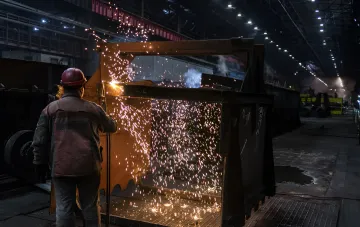
The mining industry lost 12.3% year-on-year, with the main contribution to the decline coming from a sharp reduction in iron ore extraction; the sector was partially supported by natural gas production. In the manufacturing industry, the decline was 7.0%: key steel producers suspended operations following a series of missile and drone attacks in August-September. Steel production in September fell almost fivefold year-on-year to 131,000 tonnes. Defense-industrial complex production partially cushioned the decline, but the industry lacks long-term stable contracts, and exports remain restricted. According to RBC-Ukraine, Ukraine's metallurgy is experiencing the deepest crisis of the entire full-scale war, and the key condition for emerging from it remains the restoration of sea exports and the reduction of pressure on overland routes.
Energy and trade under pressure
Electricity generation and gas distribution fell by approximately 11%, and in October the situation in the energy sector, according to IER estimates, became even more difficult. In trade — both wholesale and retail — GVA contracted by 5.5% due to declining exports and the destruction of warehousing facilities of many companies. Businesses are adapting by shifting to models with lower warehouse utilization and a higher share of direct sales to end consumers.
Agriculture and export restrictions
In agriculture, GVA contracted by 5.6% following a decline of about 12% in August. The sector is facing serious export restrictions: sown areas have already decreased, and if the situation does not improve by the spring of 2027, the next season's figures could turn out significantly worse. This creates a risk of additional pressure on food security and foreign exchange earnings.
Annual forecast: minus 0.5% with caveats
For the full year 2026, IER expects real GDP to decline by approximately 0.5%. At the same time, the institute's analysts explicitly warn that the estimate may be revised depending on the dynamics of infrastructure strikes, the state of logistics corridors, and export volumes. For context: according to the State Statistics Service, in the first quarter of 2026 real GDP contracted by 0.6% year-on-year, in the second quarter it grew by 0.4% (revised from 0.6%), and in August, according to preliminary estimates by the statistical agency, growth was 1.2% after 4% in July. Thus, the September slowdown recorded by IER interrupts the short-lived recovery momentum of the summer and returns the economy to a contraction zone.