Vladimir Shchelkunov, President of the Ukrainian National Committee of the International Chamber of Commerce (ICC Ukraine), has issued a detailed statement urging Kyiv to retain maximum volumes of metal scrap within the country for domestic processing. According to him, any large-scale opening of exports is permissible only in the presence of a proven surplus and a complete economic calculation, which has not yet been conducted. The statement comes against the backdrop of a total ban on scrap exports established by the government, which has been in effect since January 1, 2026.
Domestic processing as the basis of value-added
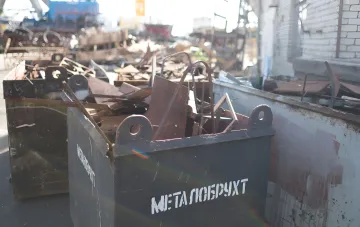
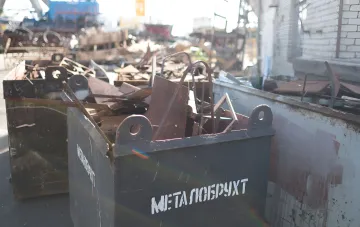
Shchelkunov emphasized that scrap generated from the write-off and renewal of Ukrzaliznytsia's fixed assets is a critical resource for the Ukrainian metallurgical industry. "Every ton of metal scrap processed within the country is a contribution to maintaining value-added in the Ukrainian economy," he stated. In his estimation, domestic processing supports jobs, wage levels, tax revenues, transportation and energy payments, and related production. Finished metal products, in turn, generate export revenue, making the closed-loop processing cycle significantly more profitable for the state than selling raw materials as "scrap metal".
Export is not the problem — the conditions are
At the same time, Shchelkunov stated clearly that the export of metal scrap is not a problem in itself. The key question, in his framing, is under what conditions it occurs and what economic result Ukraine receives. Before reviewing the current restrictions, the state is obligated to determine real scrap volumes, the needs of domestic metallurgy, available stocks, and confirm the existence of a surplus. Without this, according to the expert, any decision to open the market would be premature.
Economic calculation: 16 million vs 22.6 million
Shchelkunov provided specific figures. If the government decides to allow limited exports through auctions, the starting price must be at least 80 euros per ton. With a quota of 200,000 tons, this could provide about 16 million euros in budget revenues. If the starting price is set to zero, the budget will not receive these funds, while the potential additional profit for exporters, according to ICC Ukraine estimates, could amount to 22.6 million euros. "The fundamental question is who will receive the economic benefit from the sale of strategic raw materials — a limited circle of exporters or the state, the budget, and Ukrainian industry," concluded the President of ICC Ukraine.
Transit through the EU: where the margin is formed
The expert paid special attention to transit and intermediary operations through EU countries. According to him, the state must identify the final buyer, the actual price of the goods, the route of transport, the chain of resale, and related parties. This is necessary to understand where the main margin is formed and who ultimately receives the income. Shchelkunov also reminded that the consequences of exports cannot be assessed only by customs payments: one must consider the taxes of metallurgical enterprises, wages, social contributions, payments for energy and logistics, as well as foreign currency earnings from the sale of finished products.
Context: zero quota-2026 and "grey" schemes
Recall that on December 31, 2025, the Cabinet of Ministers of Ukraine adopted Resolution No. 1795, which introduced a zero quota on metal scrap exports for all of 2026. Before the ban was introduced, scrap export volumes were growing steadily. Despite the established export duty of 180 euros per ton, Ukraine essentially did not receive any income from it: metal scrap was exported through Poland with zero duty and then resold to Turkey. It is estimated that due to such "grey" export schemes, the state budget lost more than 3 billion hryvnias. It is this experience, according to ICC Ukraine's logic, that should form the basis for building a transparent and economically justified export policy if the restrictions are ever reviewed.