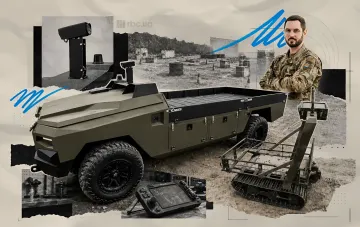
Four units of Ukraine's National Guard have received the first ten ground robotic complexes (GRC) Protector, developed by the company Ukrainian Armored Vehicles. This was reported by RBC-Ukraine, citing the manufacturer NAUDI's official Facebook page. In total, 100 such vehicles have been contracted for the National Guard with financial support from the Government of Germany. The delivery marks yet another step in the systematic robotization of frontline logistics, which in 2026 has moved from the category of experimental projects to standard equipment of the Defense Forces.
Purpose and tactical capabilities
The Protector GRC is designed to perform logistics and evacuation tasks directly in the combat zone. The robot can deliver ammunition, food, fuel and lubricants, engineering equipment and other cargo, as well as evacuate wounded fighters, significantly reducing risks for personnel. According to the company's CEO Vladyslav Belbas, "robotizing logistics allows important tasks to be carried out without unnecessary risk to personnel." The complex is already being used at the front: in particular, it is operating in a separate artillery brigade of the National Guard and will be deployed on the Dobropillia axis.
Technical specifications
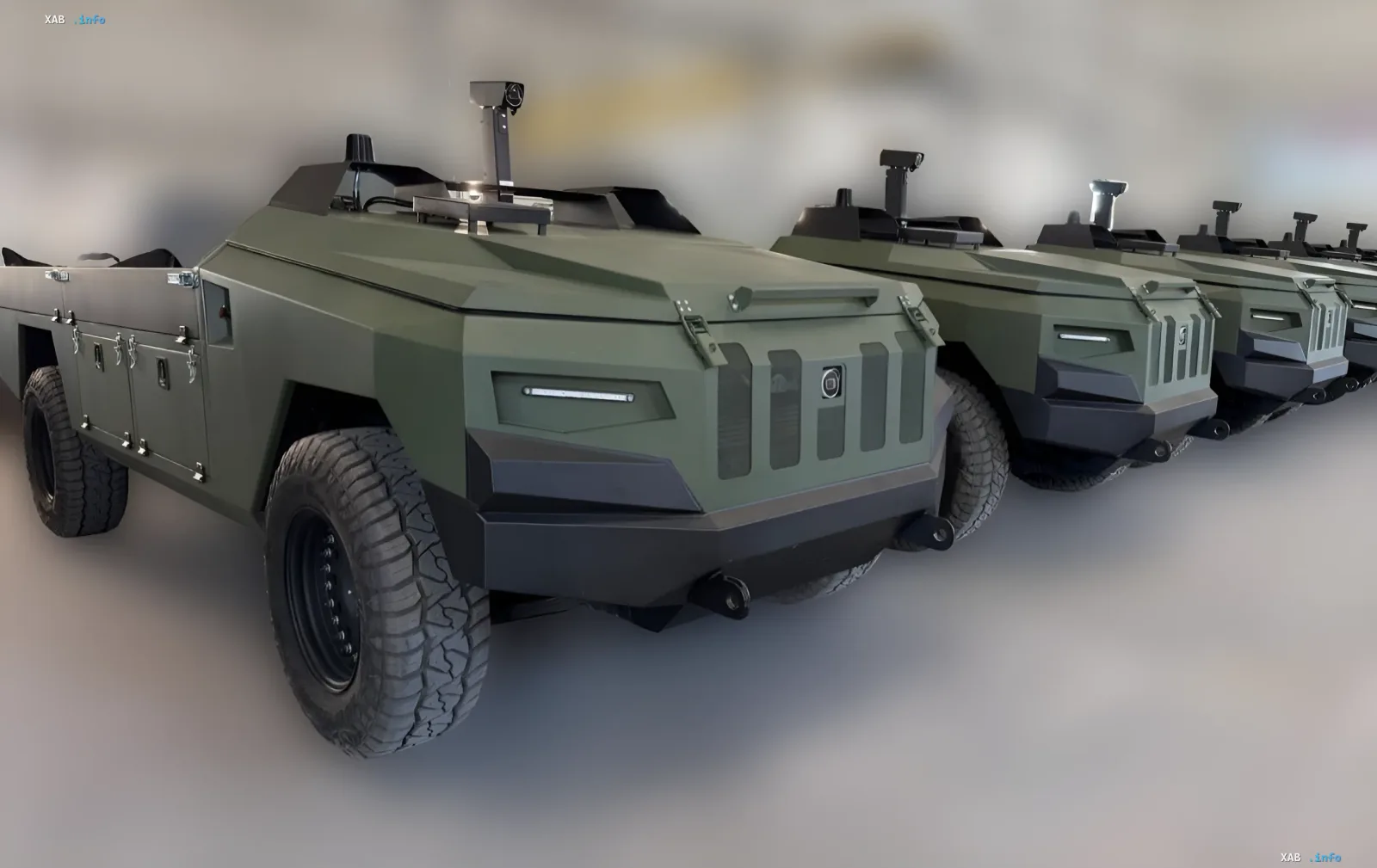
The Protector's payload capacity is 1,480 kg, and the maximum mass of a trailer it can tow is 4 tonnes. This allows significant volumes of necessary supplies to be transported in a single run. The vehicle's design is executed in the angular style characteristic of modern Ukrainian armored vehicles, with a reinforced front bumper and integrated sensors. A rotating module with a surveillance camera is mounted on the roof, providing a panoramic view without the need to open hatches. Evhen Kucherhen, commander of a separate National Guard artillery brigade, noted the "responsiveness and smoothness of control under far-from-ideal conditions," and emphasized that "the power, speed and payload capacity speak for themselves."
Contradictory data
The provided sources contain no direct contradiction in the key figures: all agree that 10 complexes have been delivered and that the overall contract is for 100 vehicles. However, UNIAN materials (source 4) mention that the Protector is expected to receive an air defense system and, possibly, laser weapons for countering enemy drones. At the same time, the initial RBC-Ukraine announcement and the NAUDI page do not mention such combat modules — there the complex is described exclusively as a logistics platform. Thus, information about laser armament and anti-air drones relates to a prospective modernization variant and is not confirmed in the context of the ten vehicles already delivered.
Context: robotization as a standard element of frontline logistics
Ground robotic complexes are increasingly becoming a standard element of frontline logistics. In August 2026, RBC-Ukraine reported on which GRC models — TerMIT, Rys PRO, Simba, Ardal, Zmey and Ratel — the Defense Forces displayed at the Independence Day parade. The Protector fits into this lineup as a specialized logistics platform with increased payload capacity. In addition to ground robots, the company Ukrainian Armored Vehicles is supplying the Defense Forces with other developments: in the same August, it was reported on the armored vehicles Varta and Novator, whose armored capsules withstand strikes by suicide drones and fire from heavy machine guns.
Commercial availability and ordering channels
In addition to government contracts, the Protector GRC and the BPak "UB60D" armored vehicle are available for order through commercial channels. According to Gazeta.ua and Ukrnews, the vehicles are in stock and can be purchased through the DOT-Chain and Brave1 Market platforms. This indicates that Ukrainian robotics for military tasks is gradually forming a civilian/commercial market as well, which could become an additional source of financing and production scaling.