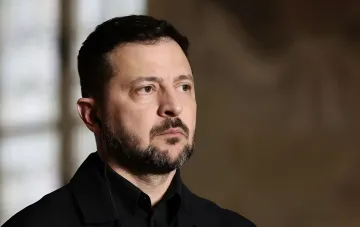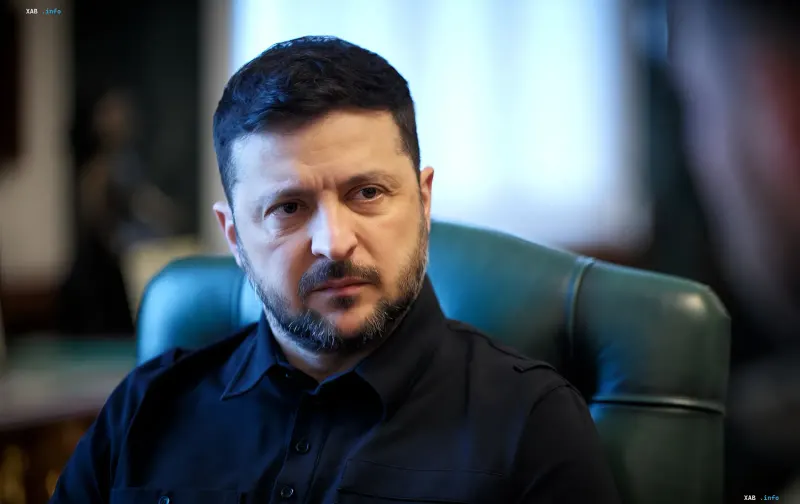
Ukrainian President Volodymyr Zelensky stated that the country needs at least 115 billion euros next year, in 2027, to withstand the conditions of a full-scale war. He made this statement in an address to participants of the Congress of Local and Regional Authorities session, according to RBC-Ukraine. According to the head of state, Kyiv is actively working with European partners to secure the necessary funds and considers finding the money one of the key tasks of the authorities.
Scale of the need and financing structure
Zelensky broke down the total need into two components. According to him, around 90 billion euros have already been agreed upon, but another 25 billion still needs to be found. "25 billion needs to be found. I am confident that we will accomplish this task," the president emphasized. Thus, of the stated 115 billion euros, approximately 90 billion, according to Kyiv's assessment, are already secured by agreements with the European Union, while the remaining portion is subject to additional financing.
What has already been agreed: 90 billion from the EU
The president explained that 45 billion euros Ukraine received thanks to last year's decision by the European Union, which agreed to support the country for two years — 45 billion annually. Recently, he said, the parties agreed on another 45 billion. "So next year we understand that Ukraine will receive 90 billion euros," Zelensky noted. He added that the European Commission has already presented a mechanism for how to ensure this, and Kyiv is now working to get the EU to support it.
European Commission mechanism and the reparations issue
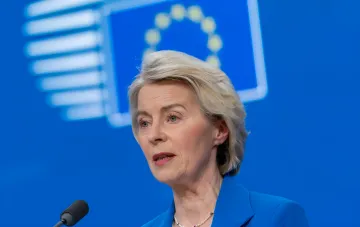
European Commission President Ursula von der Leyen previously stated that the EC presented a new support mechanism for Ukraine for 2027. It provides for a loan of up to 45 billion euros, the repayment of which, according to her, will occur after Russia pays reparations. This mechanism forms the basis of the 90 billion euros that Kyiv expects next year.
Mercer factor and risk to the EU budget
Against the backdrop of the financing discussion, German Chancellor Friedrich Merz threatened to block the approval of the next seven-year EU budget for 2028–2034 if the bloc's countries do not agree to provide financial support to Ukraine. Thus, the question of the additional 25 billion and the ratification of the 45 billion mechanism is linked to the broader EU budget cycle and the position of key member states.
Overall, according to Kyiv's statements, finding the missing financing and agreeing on the European mechanism remain the central tasks for 2027, and their implementation depends on the support of the European Union as a whole and the position of individual member states.