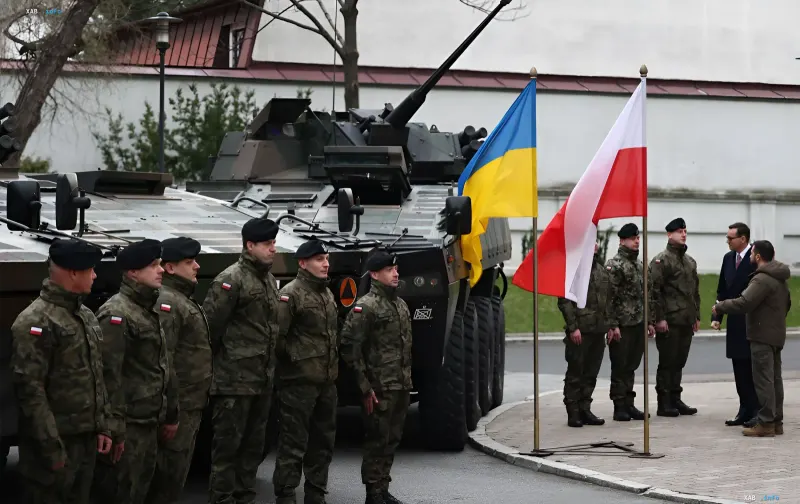
Relations between Ukraine and Poland, despite a formal strategic partnership and shared security interests, remain complex and contradictory. According to an RBC-Ukraine report, historical disputes and mutual distrust between the two states directly affect practical defense cooperation — from the pace of ammunition supplies to logistical interaction and the participation of Polish military personnel in joint exercises. Sources from both sides acknowledge that historical issues continue to be a source of tension, and in some cases, this leads to delays in agreeing on specific steps.
"A Fundamental Lack of Trust"
An official from the Polish Sejm, representing a far-right party, explicitly pointed to the root of the problem in an interview with RBC-Ukraine: "In my opinion, there is a fundamental lack of trust on the part of the sides. The Ukrainian side, as far as I know, is unwilling to share technologies. The Polish side, on the other hand, is uncertain about the implementation of agreements that will be concluded." According to him, this mutual uncertainty regarding the partner's intentions and actions creates an additional barrier to approving even those agreements for which both sides are formally ready.
Ammunition, Logistics, and Exercises: Where the Bottlenecks Are
The practical consequences of this distrust affect several key areas of defense cooperation. Specifically, this concerns the supply of ammunition to Ukraine, the participation of Polish servicemen in joint exercises, and logistical interaction between the armies of the two countries. Behind bureaucratic obstacles, according to the publication's sources, lie deeper disagreements regarding how exactly the partnership should be structured and under what conditions. Even when both sides state their readiness to negotiate, differing expectations regarding the scope and nature of commitments complicate the approval of concrete measures.
"This Does Not Mean Altruism"
Despite criticism directed at Kyiv, the Polish politician emphasizes that political and trade differences should not become an obstacle to military cooperation. At the same time, he warns against an approach where the partnership is reduced to the gratuitous transfer of resources to Ukraine. "But this does not mean altruism — because sometimes from the Ukrainian side we see an approach as if cooperation consists only of giving everything away for free," the RBC-Ukraine source stated. In his opinion, any cooperation should provide for agreements acceptable to both parties and include mutual obligations.
Historical Context and European Integration
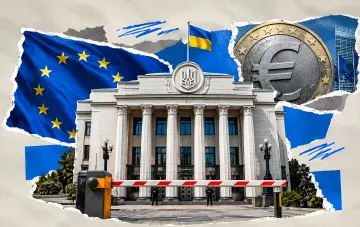
Relations between Ukraine and Poland remain important for Kyiv's European integration, but they are periodically complicated by historical disputes — primarily discussions surrounding the figure of Stepan Bandera, as well as trade and transport issues. Poland's Chargé d'Affaires in Ukraine, Piotr Łukaszewicz, previously stated that historical issues are not yet on the agenda of Ukraine's EU accession negotiations. According to him, Kyiv's main tasks in this context remain reforms, the fight against corruption, and the adaptation of national legislation to European Union norms. Thus, although historical disputes are not a formal condition for European integration, they continue to create an emotional and political background that, as participants in the process admit, affects the speed and quality of practical cooperation.
What's Next
The situation described in the RBC-Ukraine report demonstrates that even under conditions of a common external threat and a formal security alliance, relations between two neighboring states with a heavy historical baggage require constant diplomatic management. Without developing mechanisms to separate historical and trade disagreements from operational defense cooperation, the risk of delays and mutual accusations persists. For Ukraine, this means the need not only to continue the course toward European integration and reforms, but also to work on strengthening a climate of trust with Warsaw — including through transparency in technological exchanges and the clear formulation of mutual obligations.