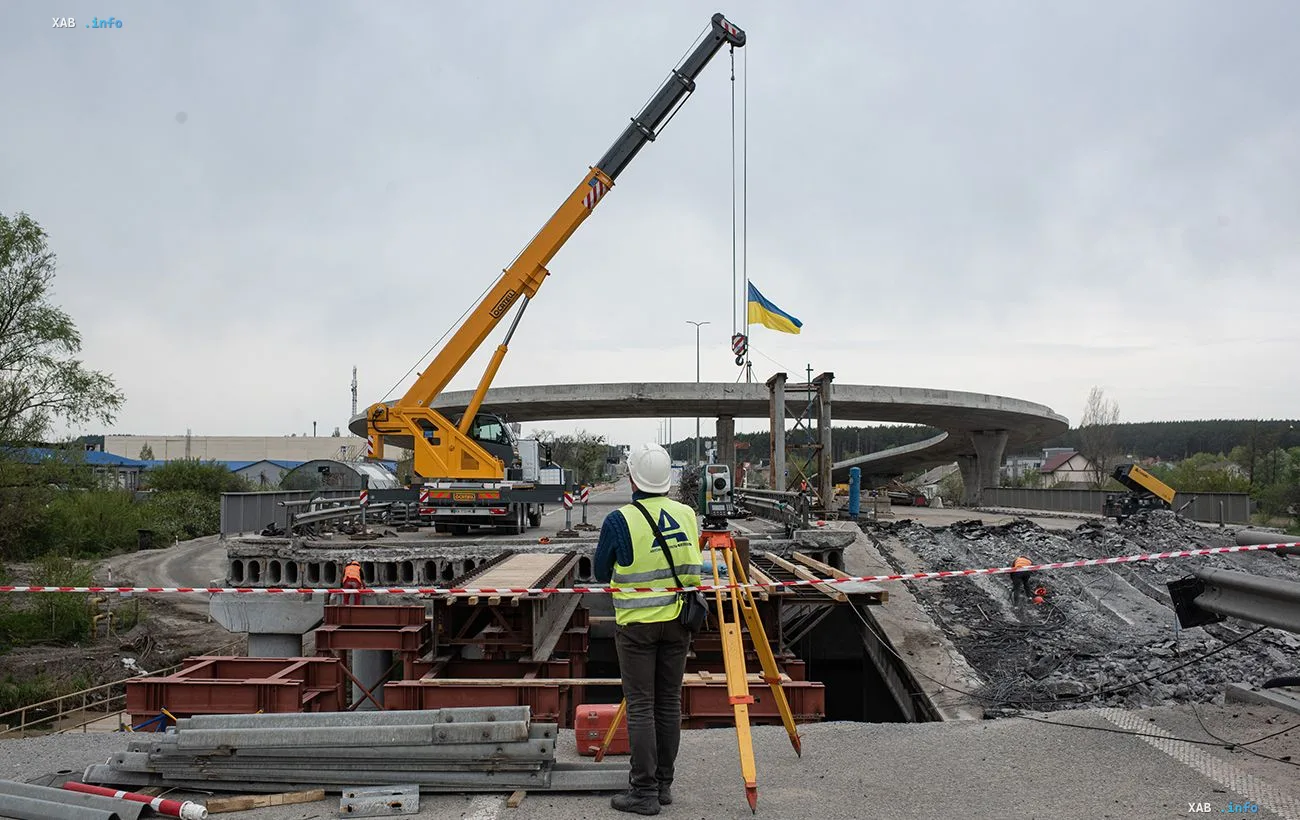
Ukraine is reshaping the architecture of public investment management and state procurement even amid an ongoing war. Recovery needs for the next decade are estimated at $588 billion — nearly three times the country's nominal GDP in 2025. By this scale, the process will become one of the largest infrastructure projects in Europe in decades. Under such conditions, every systemic decision made at the preparation stage determines the future cost and manageability of a project long before the first excavator reaches the construction site.
Global Context: Lessons from the FIDIC Conference in New Delhi
Alexander Nepomnyashchi, President of the Interstate Guild of Consulting Engineers, in a column for RBC-Ukraine prepared against the backdrop of the FIDIC conference discussions in New Delhi, records a key takeaway: the outcome of an infrastructure project is largely determined by decisions made well before construction begins. In Delhi, financing, procurement, contracts, digitalization, artificial intelligence, and the shortage of specialists were discussed, but behind the different topics a single logic was discernible — preliminary preparation reduces risks, the procurement model distributes them, and the contract establishes the rules of management during implementation. For Ukraine, this conversation has ceased to be abstract: a significant portion of the approaches discussed in Delhi is already entering the national system through the public investment reform, new procurement legislation, and the practice of international financial institutions.
What Has Been Done: The Project Portfolio and the OECD Assessment
Over the past two years, the public investment management system in Ukraine has changed substantially. The Unified Project Portfolio, formed under the new rules, includes 195 projects and programs with an estimated cost of 12.6 trillion hryvnia. The 2026 budget allocates 111.5 billion hryvnia for their implementation. A fresh review of Ukraine's infrastructure policy by the Organisation for Economic Co-operation and Development (OECD) assesses the created architecture positively, but identifies the next step as turning project readiness and procurement strategy into a permanent implementation practice. In essence, the architecture is already in place — its testing begins at the level of each individual project.
"Prepare First, Then Procure": The System's Weak Link
One of the central theses brought back from New Delhi sounds elementary: Prepare before you procure. Before a tender is announced, the client must already understand exactly what it is building, which delivery model it is choosing, and by what criteria it will select the contractor. It is precisely here that the OECD points to the weak link in the Ukrainian system: the procurement strategy is effectively a weak bridge between project preparation and the tender. If the delivery model, contract structure, and allocation of external risks are not defined before going to market, the consequences will be material. For large projects, the OECD recommends making the procurement strategy a separate mandatory stage before the tender. The sequence is simple: preparation — procurement — contract — implementation, where the quality of each subsequent stage depends on the decisions made at the previous one.
Price vs. Quality: The Gap Between Practice and Global Standards
Ukrainian practice provides a telling figure: between 2016 and 2025, the country carried out more than 2 million competitive procurement procedures, and only just over 0.5% of them used evaluation criteria other than price. Price is clear and easy to compare — over the years of operation, the system has naturally grown accustomed to exactly this criterion. International practice is moving in a different direction. The Blue Dot Network recommendations project on infrastructure procurement, presented in New Delhi, proposes that for projects where quality is of significant importance, quality criteria be allocated no less than 60% of the evaluation, leaving no more than 40% for price. The document is based on a comparative analysis of 21 jurisdictions and records a consistent trend: the more complex the project, the higher the weight of non-financial criteria.
Contradictory Data
The sources contain a notable gap between the stated scale of the reform and current budgetary realities. On the one hand, the project portfolio covers 12.6 trillion hryvnia and 195 projects, and the OECD assesses the architecture positively. On the other — only 111.5 billion hryvnia is allocated in the 2026 budget for implementation, which is about 0.9% of the portfolio's total estimated cost. Meanwhile, recovery needs are estimated at $588 billion, and actual budget financing for the coming year covers only a small fraction even of the portfolio. Moreover, while the system is formally "substantially changed," the OECD simultaneously points out that the procurement strategy remains a weak link, and the share of procurements using criteria other than price does not exceed 0.5%. This creates a contradiction between the narrative of a completed reform and the actual level of adoption of new approaches in the day-to-day practice of clients.
What's Next: From Architecture to Practice
The key takeaway for Ukrainian local clients comes down to one point: a tender in a complex infrastructure project is not the beginning of implementation. By the time it is announced, a significant portion of the decisions determining the project's future cost and manageability must already have been made. The transition from the formal existence of a project portfolio to the real readiness of each project, from price dominance in procurement to a balanced assessment of quality and price, from scattered decisions to a systemic procurement strategy — it is precisely this transition that will determine whether Ukraine can meet the $588 billion infrastructure challenge without multiple cost overruns and schedule losses.