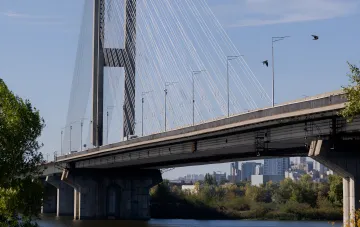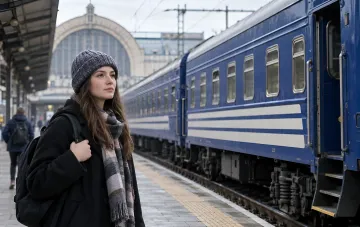
As of 21 September 2026, large-scale delays have been recorded across the Ukrainian Railways (UZ) network: more than 16 services in various directions are running behind schedule, and the maximum delay of individual trains has exceeded 15 hours. Train status tracking data on the carrier's official website, cited by RBC-Ukraine, indicates that the problem is systemic and affects several key routes across the country — from Dnipro and Zaporizhzhia to western directions via Lviv, Ivano-Frankivsk and Chernivtsi.
Scale of delays by direction
The situation is most acute on services departing from Dnipro and Zaporizhzhia in the western and south-western directions. According to monitoring data, delays are recorded on routes to Uzhhorod, Przemyśl, Truskavets, Lviv, Ivano-Frankivsk and Chernivtsi. The delays are unevenly distributed: while some trains are running 6–7 hours late, the worst offenders are losing more than a day of travel time, which effectively disrupts passengers' usual transfer schedules and connections with other modes of transport.
The most delayed services
The leaders in delay time are two trains: No. 3 Dnipro-Vokzhalny (Dnipro Main) — Uzhhorod and No. 32 Zaporizhzhia-1 — Przemyśl, each running 15 hours and 3 minutes late. Close behind them are two more services from Dnipro — No. 41 to Truskavets and No. 285 to Lviv, running 13 hours and 38 minutes late. Trains No. 62 to Ivano-Frankivsk (9 hours 19 minutes) and No. 261 to Chernivtsi (9 hours 17 minutes) have delays of more than 9 hours. Five services fall in the range of more than 7 hours: No. 286 from Lviv and No. 42 from Truskavets to Dnipro-Vokzhalny (7 hours 53 minutes), No. 43 Ivano-Frankivsk — Cherkasy (7 hours 6 minutes), as well as No. 294 from Rakhiv and No. 234 from Chernivtsi to Kryvyi Rih-Vokzhalny (7 hours 2 minutes each). A further five trains are running 6–7 hours late, including No. 31/32 Przemyśl — Zaporizhzhia-1 and No. 4 Uzhhorod — Dnipro-Vokzhalny (6 hours 58 minutes), No. 18 Kharkiv-Pasazhyrskyi (Kharkiv Passenger) — Uzhhorod (6 hours 30 minutes) and No. 110 Lviv — Mykolaiv-Pasazhyrskyi (6 hours 18 minutes).
Causes: aftermath of the attack on infrastructure
The root of the current delays is linked to the aftermath of a nighttime attack that damaged elements of the railway infrastructure on 17 September. According to information published earlier, at that point some trains, including No. 7/8 Odesa — Kharkiv and No. 53/54 Dnipro — Odesa, were forced to follow a reserve route, which increased travel time by approximately 6 hours, while train No. 285/286 Lviv — Dnipro-Vokzhalny was running almost 9 hours late. As the current picture shows, repair and restoration work has not allowed the normal schedule to be fully restored by 21 September, and the delays have not only persisted but have grown as disruptions in logistics have accumulated.
Contradictory data
When comparing sources, a discrepancy emerges in the assessment of the overall scale of the disruption. The main text and a number of publications (RBC-Ukraine, informator.ua, from-ua.org) use the wording "more than 16 services," while the headline of the UNIAN article characterizes the situation as "dozens of trains" stuck en route. The difference in the figures may be related to the fact that status monitoring is updated in real time: by the time one version was published, the number of delayed trains may have increased. It is also worth noting that different sources emphasize the cause differently — from the aftermath of the 17 September attack to the cumulative effect of disruptions. Passengers are advised to check the current status of a specific train directly on the Ukrainian Railways website before heading to the station.