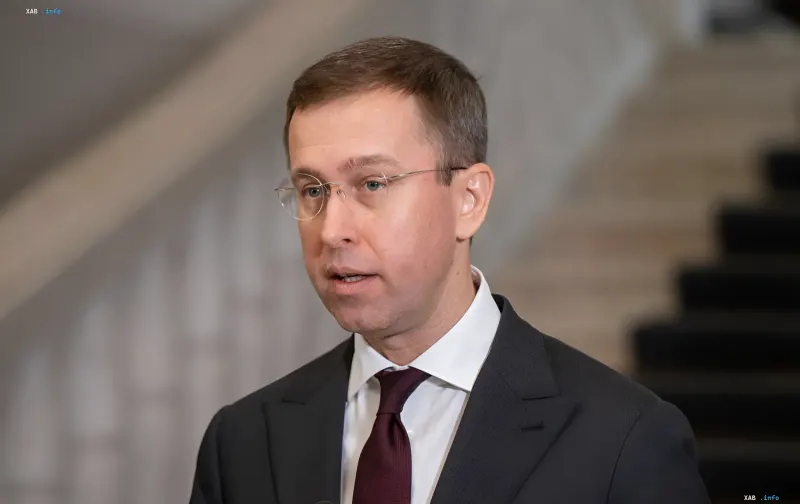
On Thursday, November 26, 2026, the state budget of Ukraine received $450 million from the World Bank Group with support from the government of Japan. Prime Minister Serhii Koretskyi announced the news, emphasizing that the funds are directed toward two strategic areas: supporting small and medium-sized businesses and preparing country-wide recovery projects. According to him, both programs operate on a single principle: funds are provided not upon signing agreements, but based on verified, achieved results.
Two Programs, One Principle: RISE and SURGE
The funding is distributed equally between two programs, RISE and SURGE, with $225 million allocated to each. Of the total, $415 million consists of loans from the International Bank for Reconstruction and Development (IBRD) under Japanese government guarantees, while another $35 million came as a loan from the International Development Association (IDA). Both organizations are part of the World Bank Group, which, the Prime Minister noted, confirms the sustainability of the support and its alignment with international standards.
RISE Program: 20,000 Enterprises and 100,000 Applications
The first part, $225 million under the RISE program, consists of $190 million in IBRD loans under Japanese guarantees and $35 million in IDA credit. The World Bank has confirmed that the conditions were met: 20,000 entrepreneurs and enterprises have received financing and services under updated state business support programs. Through the eDozvil platform, 100,000 applications have been submitted, and representatives from 500 companies have completed competency-building programs on product standards harmonized with EU requirements. The goal of RISE is to strengthen state support for SMEs and expand Ukrainian businesses' access to foreign markets.
SURGE Program: Climate-Oriented Recovery
The second part, $225 million under the SURGE program, is also an IBRD loan under Japanese government guarantees. The funds are aimed at creating the foundation for implementing and financing climate-oriented recovery and reconstruction in Ukraine. As Koretskyi explained, the program focuses on improving public investment management and strengthening the capacity at the national and local levels to plan and execute recovery projects.
Context: Parallel Discussions on Aid
The arrival of World Bank funds comes amid ongoing negotiations regarding new support packages. Previously, Slovak Prime Minister Robert Fico stated that his country would not join a new €45 billion EU loan for Ukraine, but would not block it either, proposing instead that funds be directed toward bilateral assistance in four areas. Thus, the tranche from the World Bank under Japanese guarantees has become one of the key financing channels in the current period.