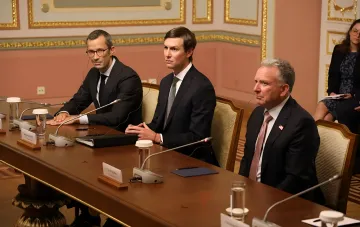
In late November 2026, discussions surrounding the negotiation track for ending the war in Ukraine shifted toward the form of future security guarantees. According to sources close to U.S. President Donald Trump's special envoys Jared Kushner and Steve Witkoff, one possible condition for a ceasefire between Moscow and Kyiv could be special security guarantees for Ukraine modeled after Article 5 of the North Atlantic Treaty. The Washington Post columnist David Ignatius, citing an individual familiar with the negotiations, reported that Vladimir Putin has privately agreed to provide Kyiv with such guarantees, while the Kremlin has put forward counter-conditions: opposing the deployment of NATO troops on Ukrainian territory and favoring the easing of Western sanctions. The Russian president's position, according to Ignatius, was also confirmed by a Wall Street Journal source in Washington.
What the U.S. proposes and what the Kremlin demands
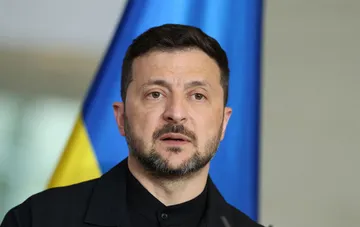
According to Ignatius's summary of the potential agreement, under the terms of a peace settlement, Russia could achieve a relaxation of sanctions, which would be reinstated if Moscow resumes massing troops on the Ukrainian border. In the event of a renewed invasion, the same source claims, NATO troops would enter Ukraine. The Washington Post also reported that the U.S. might offer Russia the Donbas territories currently under AFU control in exchange for Ukraine joining NATO; however, Ignatius did not clarify the stance of Moscow or Kyiv on this option. The reports in U.S. publications partially echo statements by Jared Kushner, who, at a joint press conference of European leaders and Volodymyr Zelensky in Berlin on November 19, 2026, stated that Washington had allegedly managed to convince the Kremlin to accept security guarantees for Ukraine modeled on NATO's Article 5.
Divergence in interpretation of Article 5
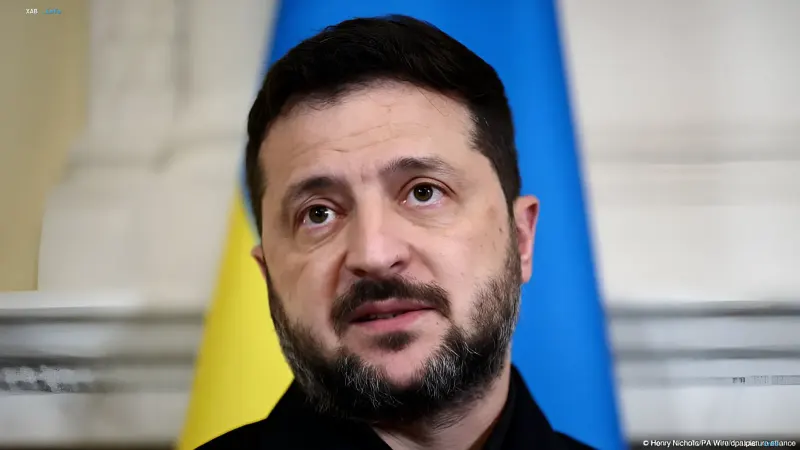
Commenting on Kushner's statement, the President of Ukraine expressed doubt that Kyiv and Washington share the same interpretation of Article 5 of the North Atlantic Treaty. According to Zelensky, his understanding of the provision implies the presence of "specific forces from partner countries" on Ukrainian territory. Russia has not directly refuted the reports in U.S. publications or the statements of the U.S. special envoys; Moscow's official position was presented by Deputy Foreign Minister Sergey Ryabkov. He emphasized that Moscow will not agree to any agreements that provide for the de facto or "quasi-membership" of Ukraine in NATO, and stated that for progress in negotiations, Kyiv must accept the Kremlin's demand regarding the inadmissibility of joining the alliance. Article 5 itself, the cornerstone of the North Atlantic Treaty, establishes the principle that an attack on one member is an attack on all, yet it does not mandate that all member states enter into a military conflict: the format and scale of support are determined by each country, and the use of armed force is only one of many possible options.
Donbas in exchange for NATO membership
The issue of territorial concessions and NATO membership is not being raised in negotiations for the first time. Earlier, Zelensky confirmed that the U.S. had asked Kyiv for the first time whether Ukraine would be willing to give up the Donbas to Russia in exchange for NATO membership; a similar topic was reportedly raised in contacts in the UAE, where, according to Steve Witkoff, U.S., Ukrainian, and European officials discussed conditions for future security arrangements for Ukraine and the post-war order. The Financial Times, in turn, reported, citing a U.S. official, that the U.S. administration had asked the Russian authorities whether they opposed providing Ukraine with guarantees modeled on Article 5, noting that the final decision, according to the source, would rest with President Trump. The Russian side had previously stressed that guarantees must take Moscow's interests into account: Presidential Press Secretary Dmitry Peskov spoke on November 3 about reciprocity and the principle of indivisibility of security, while Foreign Minister Sergey Lavrov stated in August 2025 that Moscow does not consider it acceptable to provide guarantees only to Ukraine.
Expert assessment: Guarantees without troops
Eric Ciaramella, a senior fellow in the Russia and Eurasia Program at the Carnegie Endowment for International Peace, warns that formal security guarantees modeled on NATO's Article 5 are unlikely to deter Russia from a new invasion without the West's genuine readiness to participate directly in Ukraine's defense. According to him, such guarantees risk remaining mere political promises if they are not backed by the deployment of alliance troops on Ukrainian territory, joint military command, exercises, and pre-developed response plans for renewed military aggression. Ciaramella notes that such a development is unlikely due to the Kremlin's position and the West's reluctance to engage in direct confrontation with Russia, adding that the most reliable security guarantee for Ukraine would be having a strong domestic army.