The Institute for Study of War (ISW) has published an analysis of statements by US administration officials assessing the prospects of providing Ukraine with security guarantees modeled after NATO's Article 5. According to analysts, Washington has effectively constructed a multi-layered sequence of conditions whose completion could take an indefinite amount of time and ultimately make obtaining such protection impossible. The report explicitly states that the US-proposed approval process for guarantees 'will lead to delay and may well prevent Ukraine from receiving such protection.'
Washington's Conditions: From Congress to European Architecture
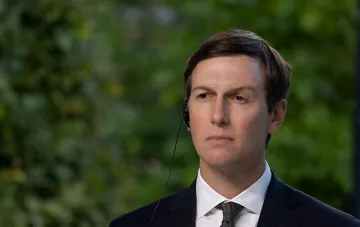
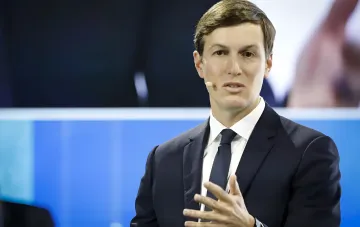
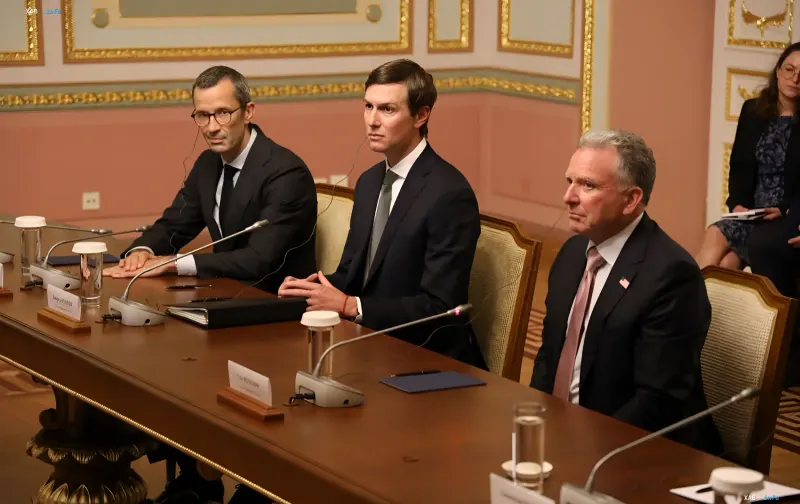
According to the position voiced by US Presidential Special Envoy Jared Kushner, any guarantees similar to NATO's Article 5 must be approved by President Donald Trump within constitutional procedures. Congress, according to Kushner, will give such consent only when it deems that the guarantees 'clearly serve America's national interests' and provided that broader security arrangements make their application unlikely. In addition, Kushner emphasized that guarantees for Ukraine can be considered solely alongside the post-war security architecture in Europe, rather than in isolation from it.
ISW Assessment: Reconciling Positions Will Be 'Extremely Difficult'
Analysts at the Institute for the Study of War point out that implementing the plan requires simultaneously satisfying the interests of three groups: the US, Russia, and European states. According to their assessment, reconciling all these issues will be extremely difficult, as each party puts forward its own conditions. It is this multipolarity of demands, in ISW's view, that turns the process into a potentially endless one and creates the risk that Ukraine will remain without promised protection for an indefinite period.
Moscow's Line: Return to 1997 Borders and Donbas
ISW records a significant divergence between the proposals of American and European negotiators and the Kremlin's position. According to analysts, Russian officials have consistently rejected almost all substantial security guarantees for Ukraine, including the deployment of foreign troops. Moscow, in turn, links the end of the war to a revision of the European security architecture on its own terms and has returned to the demands put forward in December 2021—the withdrawal of weapons and military personnel from countries that joined NATO after 1997. A separate obstacle remains territorial demands: according to ISW, Russian representatives have repeatedly insisted that Ukraine relinquish control over the Donbas even before a ceasefire, rather than as part of a final agreement.
NATO Reaction and the Territorial Deadlock
NATO Secretary General Mark Rutte stated on November 23 that the alliance's return to 1997 borders 'cannot happen,' effectively rejecting Moscow's key condition. Against this backdrop, Kushner previously called the territorial issue the main obstacle to ending the war and stated that negotiations on it have reached a deadlock. Thus, according to ISW's assessment, even if formal consent to guarantees is achieved, their practical implementation rests on unresolved issues regarding the alliance's borders and the status of territories, making the entire process highly uncertain.