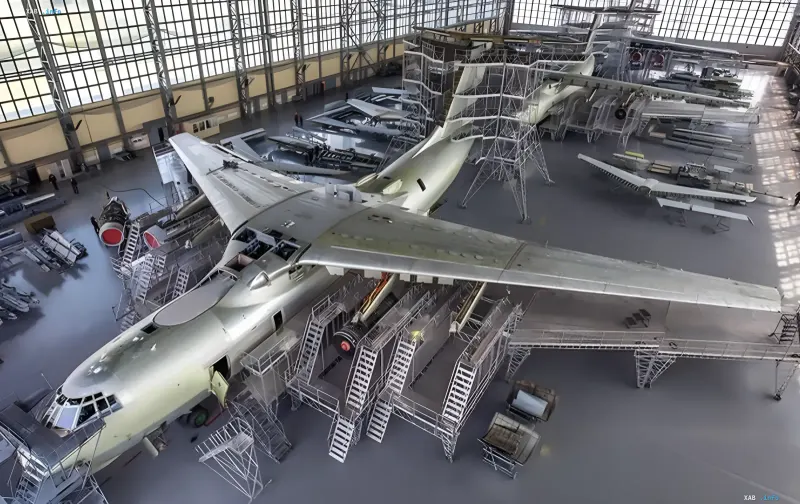
On the night of November 10, 2026, explosions rocked the territory of the 123rd Aircraft Repair Plant in Staraya Russa, Novgorod Oblast, Russia, followed by a large fire at the facility. RBC-Ukraine reported this citing a statement by the General Staff of the Armed Forces of Ukraine on Telegram. The scale of the damage was being clarified at the time of publication. This is not the first strike on this facility: earlier, on March 17, 2026, the plant was also attacked, resulting in damage to a maintenance hangar for Il-76 and L-410 aircraft, as well as an A-50 Airborne Warning and Control System (AWACS) aircraft undergoing maintenance.
Why the A-50 is a Strategic Target
The statement by the General Staff of the Armed Forces of Ukraine emphasized the role of Russian A-50 aircraft in combat operations against Ukraine. According to the military, in order for a bomber to drop a bomb and a cruise missile to find its target, the enemy must coordinate these actions: conduct target reconnaissance, locate and escort aircraft and missiles over distances of hundreds of kilometers. According to the General Staff, this exact function is performed by A-50s — Russia's so-called 'flying radars'. Ukrainian command estimates that the cost of a single such aircraft is around 350 million dollars, and only a few operational units remain within the Russian Aerospace Forces. 'Every aircraft is worth its weight in gold for Russia. They are repaired in a special place,' the General Staff noted.
What the 123rd Aircraft Repair Plant Is
The enterprise in Staraya Russa specializes in the repair, modernization, and maintenance of military transport aviation—used by the Russian army to transfer troops and cargo—as well as A-50 early warning and control aircraft. The plant has its own runway, allowing heavy aircraft to land directly on its territory. The presence of its own airfield makes the facility both a technical and logistic hub for Russian aviation.
Chronology of Strikes on the Facility
The first publicly recorded strike on the 123rd plant occurred on March 17, 2026. At that time, according to the General Staff, a hangar for servicing Il-76 and L-410 aircraft was hit, along with an A-50 that was undergoing maintenance and possibly awaiting modernization. On the night of November 10, reports indicated that a series of explosions and a fire occurred again on the enterprise's territory. RBC-Ukraine previously reported that a series of explosions involving an attack on the same plant was also recorded in Novgorod Oblast on the night of November 9, indicating the potential duration or multi-stage nature of the operation.
Context: A Series of Strikes on Russian Military Infrastructure
The attack on the 123rd plant fits into a series of strikes by Ukraine's Defense Forces on military and industrial targets inside Russia over recent weeks. According to monitoring channels, a missile strike was carried out on the 'Energiya' plant in Yelets, Lipetsk Oblast, which manufactures batteries for Iskander-K cruise missiles and UMPB D-30SN planning bombs. Reports also indicated a strike on the Surgut Condensate Stabilization Plant in the Khanty-Mansi Autonomous Okrug, located 2,400 km from the Ukrainian border, while on October 24, FP-1 drones struck the 'Omsk Kauchuk' chemical plant and an Ozon warehouse in Omsk. Concurrently, a large-scale fire had previously occurred at a chemical enterprise in Veliky Novgorod, preceded by reports of a drone attack.
Assessment of Consequences
At the time of preparing this material, exact data on the damage to the 123rd Aircraft Repair Plant had not been published. The General Staff of the Armed Forces of Ukraine confirmed the fact of the strike and fire, but the scale of the damage—specifically whether another A-50 or transport planes were hit—was being clarified. Independent verification using satellite imagery was also not presented at the time of publication. The Russian side has not made public comments on this incident as of the time of preparation.