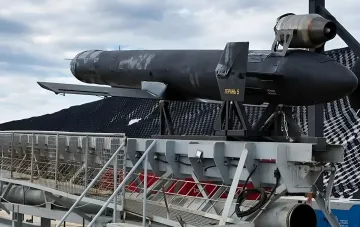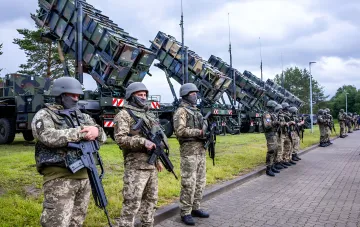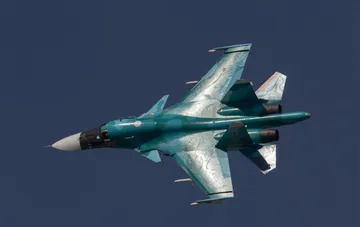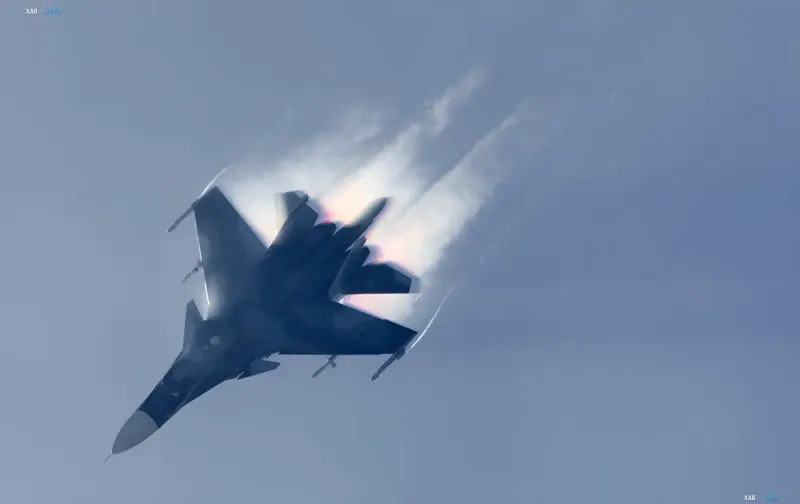
On the night of October 15, 2026, the Ukrainian Navy launched a strike using the Neptune coastal missile system against the Borisoglebsk military airfield in Russia's Voronezh Oblast. According to official Navy spokesperson Dmytro Pletenchuk, six Su-34M bombers were hit during the attack. Preliminarily, explosions rocked Borisoglebsk late in the evening on October 14, followed by a large-scale fire on the airfield grounds. Ukrainian President Volodymyr Zelenskyy confirmed that the destroyed aircraft had been preparing for new strikes against Ukrainian territory.
Neptune as a tool of strategic destruction
Navy Spokesperson Dmytro Pletenchuk emphasized on Radio NV that Neptune is a fully Ukrainian weapon system, and the Navy is effectively the only branch of the Armed Forces of Ukraine that utilizes it. According to him, hitting six bombers in a single targeted salvo demonstrates a high level of synergy between Ukrainian developers and engineering units. Pletenchuk noted that in Russian media, batches of new aircraft typically consist of two to three units, allowing an assessment of the scale of the losses: at least half a year's worth of work by the Russian military-industrial complex has been destroyed.
Second strike: UAV operator training center in Kherson Oblast
In addition to the attack on Borisoglebsk, the Navy, alongside personnel from the Main Directorate of Intelligence (HUR) of the Ministry of Defense of Ukraine, carried out another operation. On the left bank of Kherson Oblast, in the settlement of Horly, a training center for unmanned aerial vehicle operators of the 18th Combined Arms Army of the Russian Armed Forces was destroyed. Pletenchuk linked this operation to the systematic "safaris" that, according to him, occupation forces conduct against the civilian population, honing their skills on human targets. He classified such actions as crimes on par with World War II.
Context: Borisoglebsk airfield and its role
The Borisoglebsk airfield in Voronezh Oblast is one of the key Russian aviation facilities deployed in close proximity to the Ukrainian border. The Su-34M bombers hit during the October 15 attack were, according to President Zelenskyy's statement, in the stage of preparation for new strikes against targets on Ukrainian territory. The destruction of six aircraft at once on the ground significantly curtails the operational potential of Russian aviation in this direction and forces a redistribution of remaining resources.
Significance for future operations
The attack on Borisoglebsk has become one of the most successful strikes against Russian aviation infrastructure in recent times. The combined use of the Neptune missile system and HUR intelligence data allows the Ukrainian Navy to disable not only single targets, but entire groupings of equipment at their deployment sites. For the Russian military-industrial complex, recovering losses of six Su-34Ms will require significant time and resource expenditures, which, according to the Ukrainian side, is equivalent to half a year's production volume of this type of aircraft.