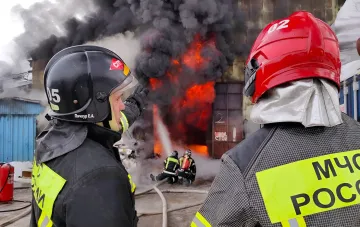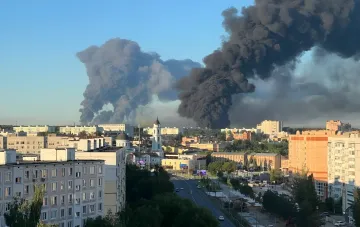
On the night of September 22, 2026, units of the Ukrainian Defense Forces struck two major Russian oil refining facilities — the Bashneft-UNPZ refinery in Ufa (Republic of Bashkortostan) and the Kuibyshev Refinery in Samara (Samara Oblast). According to the General Staff of the Armed Forces of Ukraine, fires were recorded at both sites following the attacks. This was reported on September 22 by RBC-Ukraine, APA, and 24tv, citing an official statement from Ukrainian command.
Targets of the strike: two of the largest refineries in the Volga region and the Urals
The first target was the Bashneft-UNPZ oil refinery, part of the PJSC "NK Bashneft" structure. The plant's annual processing capacity is approximately 7.5 million tons of crude oil. The refinery produces a wide range of products: gasoline, diesel and boiler fuel, liquefied petroleum gases, sulfur, and other petroleum products. The second target was the Kuibyshev Refinery in Samara, which is part of the PJSC "NK Rosneft" structure and is one of the largest refining enterprises in Russia's Samara group. Its capacity is estimated at around 7 million tons of crude oil per year; the plant produces gasoline, diesel fuel, bitumen, and more than 30 other types of petroleum products.
Military-economic rationale and legal framework
The General Staff's statement emphasizes that the products of both struck enterprises are used to meet the needs of the Russian army. Ukrainian command stated that striking such facilities is aimed at reducing the military-economic potential of the Russian Federation. Kyiv's actions are characterized as the exercise of the right of self-defense in accordance with Article 51 of the UN Charter. Thus, the strikes on the refineries in Ufa and Samara fit within a broader strategy of attacks on Russia's energy and refining infrastructure, which Ukrainian forces have been carrying out throughout the conflict.
Context: renewed attack on Ufa and strike on a UAV depot in Oryol Oblast
It is worth noting that Bashneft's refinery in Ufa is not the first time it has become a target of Ukrainian strikes. As early as August 2, 2026, as reported by Meduza, Ukrainian drones attacked the same plant for the second consecutive night. Thus, the September strike represents a continuation of systematic pressure on Bashkortostan's refining capacity. In parallel with the attacks on oil refining, on September 21 units of the Ukrainian Defense Forces struck a Russian military facility in the area of the settlement of Tsimbulova in Oryol Oblast. According to the General Staff, strike drones were stored, prepared for use, and launched there. As a result of the strike, at least three warehouse buildings housing UAVs were hit, with fires breaking out; the launch pad for jet-powered drones and five launchers were also damaged.
Frontline situation: no significant advances
The strikes on Russia's rear infrastructure are taking place against the backdrop of ongoing combat operations at the front. As of September 22, over the previous two days Russian troops had been attempting offensives on several directions. The most tense situation persisted in Sumy and Kharkiv Oblasts, as well as on the Donetsk direction. However, according to Ukrainian command reports, the enemy failed to achieve any significant advance. The combination of strikes on refineries and UAV depots demonstrates that the Ukrainian side continues to conduct a multi-vector operation, combining frontline actions with the destruction of targets in the deep rear.