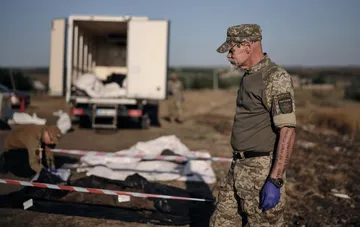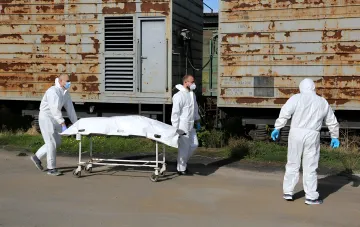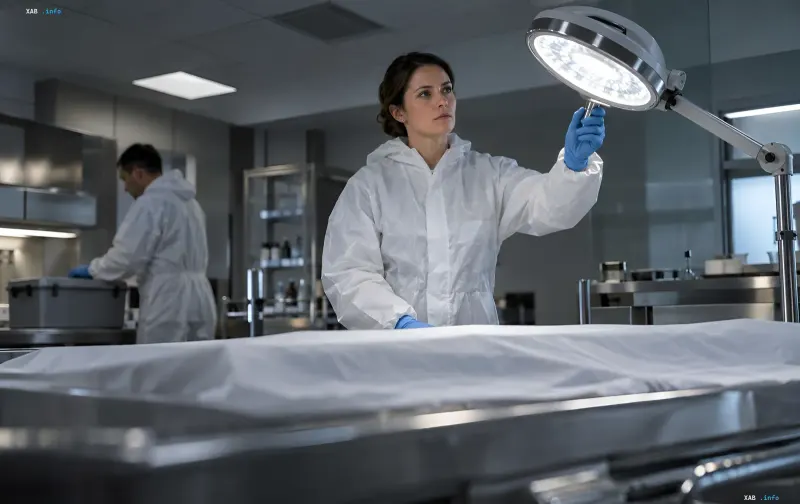
The Government of Ukraine has approved a uniform operating procedure for interagency regional teams tasked with identifying deceased military personnel and civilians. This was announced by Prime Minister Serhiy Koretsky in an official statement on Facebook. According to him, the document establishes general rules for all stages of identification—from body inspection to forensic examinations and the collection of biological samples—while also introducing a unified data-coding system. As the head of the Cabinet emphasizes, the goal of the reform is to maintain more accurate records, eliminate the loss of information necessary for identification, reduce delays, and improve cooperation between teams working in different regions.
A Single Standard Instead of Fragmented Practices
Prior to the introduction of the new procedure, regional teams operated under their own regulations, creating risks of inconsistency in processing results and the loss of key data during interagency transfers. The unification of rules means that regardless of which region of Ukraine the identification is conducted in, specialists will follow an identical methodology. According to Koretsky, the Ministry of Health, the Ministry of Internal Affairs, and the Ministry of Defense worked together on drafting the document with the support of the President's Office. This interagency approach, intended by its authors, is designed to eliminate “gray zones” in the distribution of responsibilities and accelerate the entire workflow.
Over 600 Million Hryvnias for Forensic Medical Examination
Alongside procedural changes, the government intends to strengthen the material and technical base of regional forensic medical examination bureaus. The draft state budget for 2027 allocates over 600 million hryvnias for this area. Specifically, the funds are planned to be used for purchasing modern equipment for regional bureaus, which will enhance the accuracy and speed of genetic and morphological studies. Stricter requirements for examinations, according to the Cabinet, will serve as a logical continuation of procedural unification: uniform working rules will only be effective if accompanied by comparable technical equipment on the ground.
Context: Repatriation and Work with Families
The reform takes place against the backdrop of ongoing repatriation of fallen remains. In mid-September 2026, the bodies of 252 servicemen were returned to Ukraine, having undergone and continuing to undergo a series of identification examinations. It was also previously reported that the process of returning the remains of one of the key OUN leaders had begun. Koretsky noted that the introduction of the uniform procedure should help the families of the deceased receive reliable information about the fate of their loved ones more quickly and bid them farewell with dignity. Thus, technical and organizational changes directly affect the humanitarian aspect: shorter identification timelines mean less uncertainty for relatives waiting for confirmation regarding the fate of their family members.
What Will Change in Practice
For the direct participants in the process—forensic experts, Ministry of Internal Affairs staff, and military specialists—the key innovation is the mandatory adherence to a single protocol at every stage: recording the condition of the body, collecting DNA samples, marking and coding biomaterials, and transferring data to a centralized database. The unified coding system prevents duplicate records and simplifies information searches in case re-identification is needed. For agencies coordinating repatriation, this means more predictable timelines and transparency in the process. The expected effect, according to the government, is a systematic reduction in time from the moment of repatriation to the issuance of a confirmed identification result to the family.