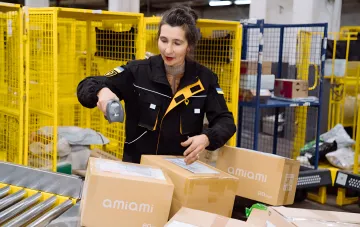
The relevant committee of the Verkhovna Rada on financial, tax and customs policy has backed government amendments to the Tax Code and the Customs Code, which introduce special VAT rules for the distance sale of goods worth up to €150 through electronic platforms. This was reported by RBC-Ukraine, citing the head of the finance committee, Danylo Hetmantsev. The key innovation is that the responsibility for calculating and paying the tax is placed directly on the marketplace rather than on the buyer or the seller — this fundamentally changes the administration mechanics for popular online platforms.
What will change for buyers and who pays the tax
According to the supported documents, the distance sale of goods worth up to €150 through electronic platforms falls under a special VAT regime. The marketplace platform itself becomes the de facto tax agent, which removes the administrative burden from the end consumer and from individual sellers. At the same time, the authors have retained some of the existing exemptions: the government is obliged to develop the procedure for exempting defence-related goods from the tax, including the possibility of refunding amounts already paid. The authors of the initiative explain its necessity as a need to improve VAT administration and align Ukrainian legislation with European Union norms, while the adoption of the documents is described as one of the conditions for fulfilling Ukraine's obligations to the EU and the International Monetary Fund.
Where the money will go and the link to the defence budget
Draft Law No. 16051-1 provides that VAT revenue from international postal and express shipments will be directed to a special fund of the state budget. These funds are planned to be used to meet the needs of the Armed Forces of Ukraine. Thus, the tax reform in the e-commerce sphere is directly tied to defence funding, which, according to Hetmantsev, makes general tax holidays for all businesses impossible: the revenue is needed to finance the defence, and separate support mechanisms are already in place for companies affected by shelling.
Timeline: from the 1 September failure to the new draft
Committee deputy chairperson Olha Vasilevska-Smahliuk explained that this is a new version of the draft law on VAT for international parcels and e-commerce. The government submitted it after the failed vote in the Verkhovna Rada on 1 September, when the previous version — Draft Law No. 15112-d — received only 198 votes. The related Draft Law No. 15460 on amendments to the Customs Code was also not adopted as a basis and was returned to the government for further work. After the revisions, the government postponed the launch of the new system: the amendments to the Tax Code and the Customs Code must take effect no earlier than July 2027.
Contradictory data
There is a discrepancy in the public agenda regarding the timing of the tax introduction. Earlier, in June 2026, in Hetmantsev's statements (including those reflected in the headline of a minfin.com.ua article), the wording was that parcels under €150 would be subject to VAT "in the autumn." However, in the current version supported by the committee in September 2026, the launch of the system has been officially postponed to no earlier than July 2027. Thus, the early signals of an autumn introduction have given way to a more distant deadline after the documents were reworked; both versions are present in open sources, and the final effective date will be fixed only after the draft laws are adopted as a whole and enter into force.
Context: cashback and arguments against tax holidays
Against the backdrop of the tax reform, Hetmantsev also put forward an initiative to cancel the "National Cashback" programme due to its low effectiveness for the economy: in his assessment, the cashback's effect on GDP is only 0.10%, so the freed-up funds, in his view, should be directed to preferential lending for businesses. These statements complement the picture of how the authorities are trying to redistribute tax and budgetary instruments amid the war and obligations to international donors.