Revolution in Military Economics: From Chaos to Precise Figures
In the context of a protracted conflict where resources on both sides are under colossal strain, the efficiency of every dollar spent becomes a matter of survival. As of August 2026, the Armed Forces of Ukraine have demonstrated an unprecedented level of combat optimization. According to the latest data from the Ministry of Defense press service, cited in an RBC-Ukraine report, the cost of neutralizing one Russian serviceman is approximately $3,000. This indicator has become possible thanks to the implementation of advanced management and analytics systems that have transformed the Ukrainian army from a traditional structure into a high-tech machine running on data.
The key tool of this transformation is the DELTA system and its Mission Control module. Implemented six months ago, this tool has shifted the management of combat missions from the realm of intuitive decisions to the realm of strict analytics. Today, more than 50,000 missions pass through this module weekly, and the number of submitted reports exceeds 230,000. This means that virtually every combat action is recorded, analyzed, and accounted for in the overall strategy, allowing for the avoidance of repeated errors and the instant correction of tactics.
The Economics of War: How One Dollar Inflicts $5 in Damage on the Enemy
The Mission Control module allowed not just for event recording, but also for a deep economic assessment of strike efficiency. Statistics for June 2026 show impressive asymmetry: every dollar spent by the Armed Forces of Ukraine to neutralize targets inflicts damage of almost five dollars on the economy and military potential of the Russian Federation. This efficiency coefficient confirms that the Ukrainian model of warfare, based on precision strikes and intelligence, is more economically viable than the resource-intensive defense of the adversary.
The system breaks down all missions in detail by type: reconnaissance, neutralization, logistics, evacuation, and also classifies them by depth of penetration (20+ km and 50+ km). This approach allows command to see the full picture: exactly what a unit is striking, how effectively it is using its equipment, and what specific harm it is inflicting on the enemy. This enables the redistribution of resources to where they will yield maximum results, minimizing losses of own equipment and ammunition.
Transparency of Losses and Tactical Adaptation
An important aspect of the system's operation is also the "other side of the coin." Mission Control clearly records which own equipment is being lost, at what depth, and under what circumstances. This transparency allows command to quickly adapt to changing conditions on the front. Instead of acting blindly, the military analyzes what worked and what didn't, and based on this data, corrects the tactics of subsequent missions. This creates a closed loop of continuous improvement, where the experience of each operation is immediately integrated into the overall strategy.
Contradictory Data
Despite the optimistic data from the Ukrainian side, there are discrepancies in the assessment of operational effectiveness. While the Ukrainian Ministry of Defense claims high cost-effectiveness of strikes, Russian sources, such as "Gazeta.Ru," publish materials demonstrating successful actions by Russian troops. For example, in July 2026, the Russian Ministry of Defense published a video of the destruction of unmanned Ukrainian boats, indicating that the Russian side is also developing its own technologies and methods of countering Ukrainian tactics. This creates a complex picture where both sides claim their successes, and real effectiveness may vary depending on the specific sector of the front and the type of weaponry used.
The Future of War: Drones and Secret Bases
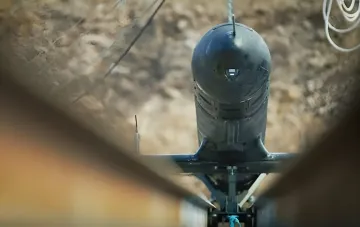
In the context of these changes, it is worth noting the development of new threats. It has become known that Russia is building new secret bases for launching long-range jet drones. This indicates that the adversary is also evolving, trying to find a response to Ukrainian methods of warfare. At the same time, the Armed Forces of Ukraine continue to repel new attacks, including night strikes, using their air defense systems. The war of 2026 is a war of technology, data, and speed of decision-making, where the victor is the one who analyzes information better and uses resources more efficiently.