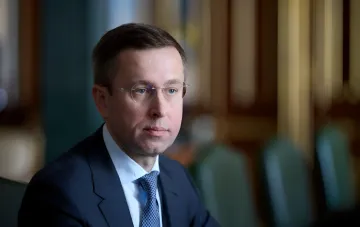
The question of whether Ukraine should replicate the European Union's digital path formed the basis of an expert analysis conducted by eGA (e-Governance Academy) under the EU DT4UA project. Senior eGA expert Serhii Karelin, in a column for RBC-Ukraine, compared the European Digital Decade 2030 program with Ukraine's Global Innovation Strategy for Digital Development WINWIN until 2030. The main conclusion: creating a separate strategic document in the European format just for the sake of the format is impractical — it is more important to align existing strategies with European priorities, define specific indicators, and secure sources of funding.
Measurable Targets of Digital Decade 2030 and EU's Actual Progress
The European Union enshrined its vision for digital development in the Digital Decade 2030 program, which covers four areas: digital skills, business digitalization, infrastructure development, and electronic public services. A key feature of the European approach is measurability: 80% of the population should acquire basic digital skills, the number of IT specialists should reach 20 million, cloud technologies, big data, or AI should be applied in 75% of companies, and 100% of key public services should be available online. The annual European Commission State of the Digital Decade report notes that only 60% of the population currently possesses basic skills, showing that even with a clear strategy, transformation remains a complex process.
WINWIN: A Strategy Built on the Context of War and Recovery
Ukraine approved the WINWIN Global Innovation Strategy for Digital Development at the end of 2024. Unlike the European agenda, it takes into account the conditions of full-scale war and the need for economic recovery. Priorities include defense innovations, agritech, medical and biotechnologies, and space technologies. Defense technologies are of strategic importance to Ukraine, whereas they are not highlighted as a separate area in the Digital Decade; agritech, on the contrary, is a promising area for the Ukrainian economy. The difference in emphases demonstrates that Ukraine and the EU are solving different tasks.
Key Gaps in the Ukrainian Strategy
According to the author's assessment, the main weaknesses of WINWIN remain the lack of a fixed budget, vague indicators in certain areas, and the need to approximate legislation to European requirements — specifically GDPR, the Digital Services Act, the Digital Markets Act, and eIDAS 2.0. It is these elements, rather than the formal similarity of documents, that determine true compatibility with the European digital space.
Does Ukraine Need a Separate Digital Agenda
The expert concludes that a separate Digital Agenda modeled after Europe is unnecessary: the EU itself lacks a unified approach to strategy formats, and implementation efficiency is what matters. The goal of digital European integration is interoperable systems and convenient services, rather than identical documents. Therefore, it is more rational to align existing strategies with European priorities, specify indicators, and establish funding sources.
Ukraine's Competitive Advantages
Ukraine already possesses a developed system of electronic public services, proprietary technological solutions, and unique cybersecurity experience accumulated over more than a decade of countering cyber threats. In the expert's view, these assets should become the basis for dialogue with the EU: digital transformation remains an important part of the European integration path, but its logic must rely on the Ukrainian context rather than a mechanical copying of the European format.