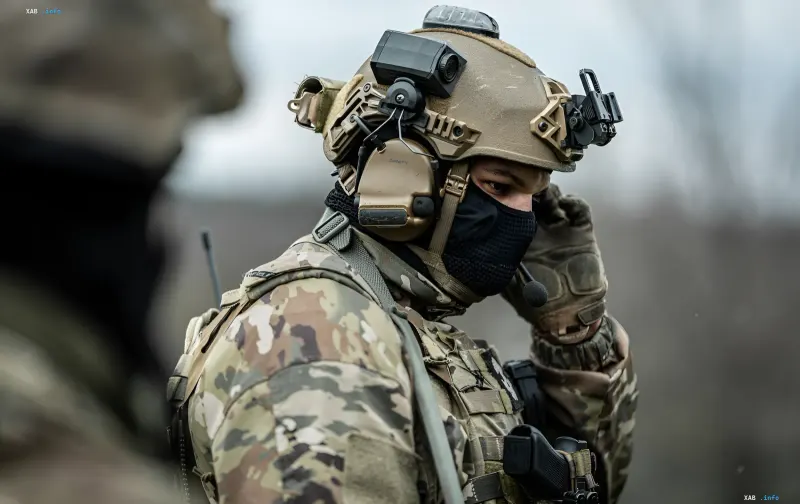
The war between Ukraine and Russia, which has already lasted more than 12 years, has extended far beyond the European continent. As CNN journalists discovered, another front against Russian forces has opened in northern Mali, under the harsh conditions of the African desert. An elite group of Ukrainian drone operators, who previously fought the occupiers from dugouts on Ukrainian territory, is now carrying out similar work in the extremely challenging climate of the Sahel. According to the outlet, around 15 Ukrainian specialists are actively assisting local rebel forces engaged in combat against Russian troops.
The Extreme Conditions of the Sahel
Working in the African desert differs radically from the familiar Ukrainian battlefield. “During the day, temperatures regularly climb above 43 degrees Celsius, and at night they drop sharply. There is little water, and dust and sand are everywhere. But at least they are working on the ground,” one participant in the mission describes the conditions. It is precisely these factors that place additional strain not only on personnel but also on equipment: due to extreme heat and constant exposure to dust, gear wears out faster, requiring adaptation of cooling, filtration, and electronics protection systems, as well as the use of specialized batteries.
Tactics: Not on the Front Line, but at the Console
According to CNN, Ukrainian specialists do not go directly to the front line. Their role is to train local fighters, provide support, and participate in operational planning. One drone operator said that he remotely coordinates the work of local fighters: the signal from the drone reaches him via the internet, after which he transmits commands to the ground operator over radio and corrects his actions. After the mission is complete, the Ukrainian specialist, together with the fighters, conducts a debriefing and analyzes individual episodes. He himself does not go to the front line — in his words, this is prohibited by a direct order from the mission leadership.
Kyiv’s Foreign Policy Tool
Ukrainian fighters in Mali maintain close ties with the “Azawad Liberation Front” organization, which is made up mainly of Tuareg rebels from the north of the country. A CNN source in Ukrainian intelligence explained that one of the key goals of overseas operations is to significantly weaken Russian influence on the African continent. Moscow, according to Kyiv, is deliberately strengthening its positions in the Sahel region — rich in natural resources but politically unstable and prone to military coups. “We are turning our drone expertise into a tool of foreign policy,” the source noted. At the same time, Kyiv is seeking to dismantle the image of Russia as a reliable ally for African states. Recently, by the way, Ghana accused Russia of illegally recruiting its own citizens, and according to available data, Russia is recruiting foreigners from more than 120 countries of the world to fight against Ukraine.
Experience Exchange and Equipment Testing
For Ukraine itself, such activity also brings practical benefits. Working in conditions that differ substantially from the Ukrainian front allows testing equipment in new climatic realities, refining operator skills, and demonstrating to international partners the effectiveness of Ukrainian methods. According to a Ukrainian intelligence officer, both sides are forced to adapt to each other: Ukrainians pass on to local fighters their own experience in conducting drone operations, while in turn they adopt from them skills in survival and combat in the Sahel. Despite the fact that the Ukrainian presence in Mali remains relatively small, it demonstrates Kyiv’s growing confidence in its own experience in applying drone technologies and their active use not only on the battlefield but also as a tool of international influence.
Contradictory Data
The main information about the mission in Mali is based on a CNN investigative report using anonymous sources in Ukrainian intelligence. The exact number of specialists (around 15), specific tasks, and the format of cooperation with the “Azawad Liberation Front” have not been officially confirmed by Kyiv. At the same time, in public statements, Ukrainian authorities do not deny the existence of overseas operations, however, details of the scale and geography of the missions remain classified. Contextually, according to WSJ data, in August 2026 Ukrainian drone operators demonstrated a high level of training at exercises in Germany, which indirectly confirms the systematic nature of the training of specialists sent abroad.