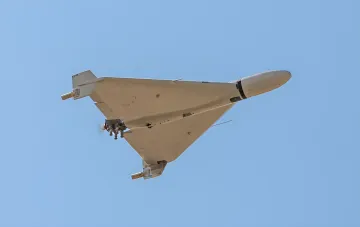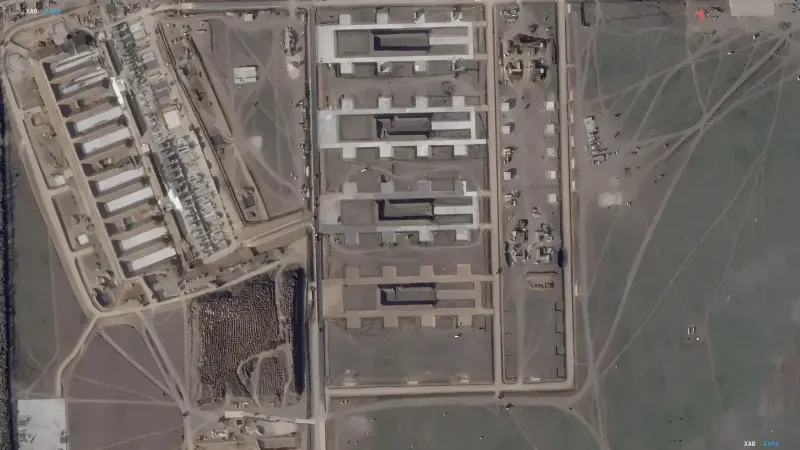
Satellite imagery analyzed by Reuters reveals the near-completion of a major military complex in Russia's Rostov region, close to the border with Ukraine. According to experts, the facility is designed to command and launch a new type of jet-powered unmanned aerial vehicle. Analyzing a series of photographs, experts note that the construction took approximately six weeks—growing from an empty field at the end of August into a site roughly comparable in size to 126 football pitches.
Six Weeks from Empty Field to Ready Infrastructure
The construction timeline captured in the imagery demonstrates rapid execution: while the site was undeveloped on August 31, fully deployed infrastructure had formed by mid-October. The scale of the facility is underscored by the comparison to football fields—about 126 such areas. Analysts conclude that the complex could be brought to full combat readiness "within weeks" of completing the final stages.
Eight Launch Platforms and Geran-4 and Geran-5 Drones
Mike Monnick, founder of the private special reconnaissance data analysis firm DroneSec, highlighted key elements of the complex. In the western part of the facility, he estimates there are eight separate launcher units for jet-powered drones. The base, as indicated, specializes in operating and launching Russia's newest jet-powered Geran-4 and Geran-5 aircraft. Once fully operational, the expert concludes, this position could launch up to 100 jet drones per day.
Jet Drones: Speed as a Factor Against Air Defense
In recent months, Russia has increasingly deployed jet drones to strike targets inside Ukraine. Unlike conventional propeller-driven aircraft, they possess significantly higher flight speeds and can cover long distances. It is precisely this high speed that makes such targets substantially harder to detect and intercept for air defense systems and mobile fire groups, thereby increasing strike effectiveness.
What This Means for the Intensity of Hostilities
The construction of such a large-scale facility near the border in a short period indicates an intention to scale up aerial strike potential. Experts link the commissioning of the base to a potential further rise in combat intensity in the region, as concentrating launch platforms in one location allows for high-frequency, massed launches of jet drones.