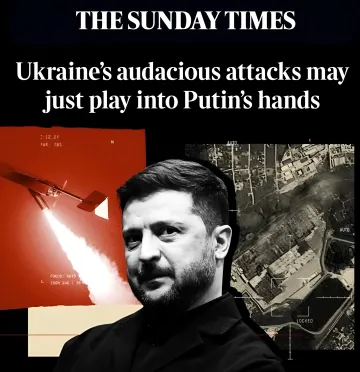

Ukrainian Defense Forces carried out a large-scale operation to strike critical Russian infrastructure. As confirmed by President Volodymyr Zelenskyy and the General Staff of the Armed Forces of Ukraine, Ukrainian unmanned aerial vehicles (UAVs) struck two major oil refineries deep within Russian territory — in Yaroslavl and Ufa. The operation demonstrated the growing capabilities of the Ukrainian military to strike targets more than 1,300 kilometers from the front line.
Details of the attack on the refinery in Yaroslavl
On the night of August 6, a strike was launched against the "Slavneft-YANOS" refinery in the Yaroslavl region. According to the General Staff of the Armed Forces of Ukraine, multiple hits were recorded on the enterprise's territory, resulting in fires. Military officials confirmed at least three fire outbreaks. The extent of material damage and the impact on the plant's production capacity are currently being assessed.
The Governor of the Yaroslavl region reported a drone threat on the night of August 6. In connection with the attack, traffic on the highway towards Moscow was temporarily blocked. On the morning of August 6, explosions were heard in the region, and a large fire broke out at the plant.
Strike on the refinery in Bashkortostan
The second strike on Russian oil infrastructure occurred on August 5 in Ufa. The target was the "Bashneft-Novoyl" refinery. According to preliminary information, key technological units were damaged as a result of the attack: a combined unit and the L-35-11/1000 catalytic reforming unit. Damage to such units can significantly reduce the processing capacity of the enterprise.
Strike on drone control infrastructure
In addition to industrial facilities, the Ukrainian Defense Forces destroyed two ground repeaters in Russia. These facilities were used by Russian military forces to control "Geran" and "Gerbera" type strike drones. The repeaters provided stable communication for coordinating attacks on Ukrainian territory, so their elimination is aimed at reducing the effectiveness of Russia's drone warfare.
Maritime component of the operation
As part of the systematic work to weaken the enemy's war machine, Ukrainian military forces also struck maritime targets. Two military patrol boats were hit, as well as vessels of the so-called "shadow fleet," which Russia uses to bypass international sanctions and export energy resources.
Official reaction from Kyiv
Ukrainian President Volodymyr Zelenskyy thanked the warriors of the Defense Forces for the successful operation, noting that the systematic development of long-range capabilities increases the chances of a diplomatic resolution to the conflict. "Russia must choose peace," the head of state wrote in his message.
Contradictory data
While the Ukrainian side has confirmed the fact of the attacks and the presence of fires, precise data on the scale of damage to the refineries in Yaroslavl and Ufa remains preliminary at this time. Russian official sources and local authorities in the regions of the attacks have not yet provided detailed information on the extent of equipment damage and the timelines for restoring plant operations. At the same time, analysts note that even a partial shutdown of catalytic reforming units could have long-term consequences for Russia's oil refining industry.
Economic context
Attacks on Russia's oil infrastructure are taking place against the backdrop of a steady slowdown in the Russian economy, which, according to analysts, has continued for the second year in a row. Sanctions and strikes on the energy sector are putting pressure on GDP. The Central Bank of Russia's forecast for 2026 allows for economic growth of only 0–1%, indicating deep structural problems.