Strike on Tolyatti Kaucchuk: what is known
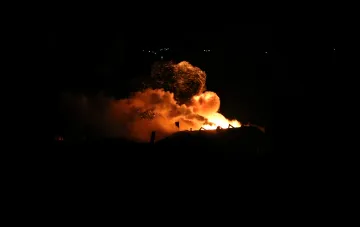
On the night of September 12, Ukrainian unmanned aerial vehicles struck the Tolyatti Kaucchuk plant in Russia's Samara Oblast. According to the outlet, this was reported by the General Staff of the Armed Forces of Ukraine, with the information relayed by RBC-Ukraine. The official statement emphasizes: "The Tolyatti Kaucchuk plant has been hit. A strike was recorded on the facility's territory, followed by a fire." Thus, a fire broke out in the plant's industrial zone, indicating that at least one drone penetrated the defenses and reached its target. According to available data, the facility is located approximately 880 kilometers from the Ukrainian border, indicating a significant range of drone deployment.
Military-industrial significance of the plant
The Tolyatti Kaucchuk plant specializes in the production of synthetic rubbers, monomers, fractions, and high-octane fuel components. The key significance of the facility for Kyiv lies in the fact that its products are used in Russian industry, including in the defense sector. In particular, the synthetic rubbers produced by the plant are used in the manufacture of solid rocket fuel for tactical and ballistic missiles. This is why the facility is regarded as part of the industrial base supporting the Russian military-industrial complex, and it has been included among the targets of the systematic work carried out by Ukrainian forces.
Scale of the night attack and Kyiv's account
The Unmanned Systems Forces of the Armed Forces of Ukraine confirmed that the strike on the facility was carried out on the night of September 12. According to them, operators of the 1st Separate Center of the Unmanned Systems Forces, together with other components of the Ukrainian Defense Forces, struck the plant in Samara Oblast. The Unmanned Systems Forces noted that the attack is part of the systematic work targeting facilities that underpin the Russian military-industrial complex, while the Ukrainian side is clarifying the consequences of the strike and the scale of the damage. On the morning of September 12, the Russian Defense Ministry announced a massive attack by Ukrainian drones: according to Moscow, its air defense systems allegedly destroyed and intercepted 230 drones over 12 regions of Russia, as well as over occupied Crimea and the waters of the Black and Sea of Azov. Against the backdrop of the attack, fires were reported in Taganrog, along with a possible strike on the "Taganrog-Central" military airfield.
Contradictory data
Here, the accounts of the two sides diverge noticeably. The Russian Defense Ministry presents the night events primarily as a success of the air defense system, claiming the interception of 230 drones over 12 regions, Crimea, and maritime areas. However, the confirmed hit on Tolyatti Kaucchuk followed by a fire, as well as reports of fires in Taganrog and a possible strike on the airfield, indicate that some drones did indeed break through the defenses and reached their targets. In other words, the Russian rhetoric of a complete interception contradicts the recorded facts of strikes on the ground. Moreover, the Ukrainian side has not yet disclosed the exact scale of the damage to the plant, limiting itself to confirming the fact of the hit and the fire, so the degree of actual damage to the facility remains unconfirmed by either side in a definitive manner.
Context: a series of strikes on chemical plants
The strike on Tolyatti Kaucchuk fits into a broader pattern of attacks on chemical and industrial facilities linked to the Russian military-industrial complex. Earlier, in particular on Russia Day, fires were reported at major chemical plants in Tolyatti and Nizhnekamsk, indicating the recurring nature of such operations. The totality of these episodes shows that Ukrainian forces are deliberately selecting facilities whose products have dual—civilian and military—use, primarily those involved in the production of rocket fuel components and defense chemicals.