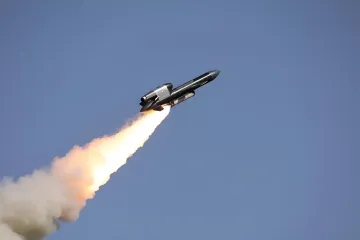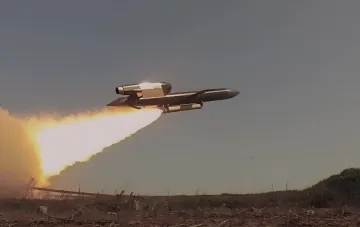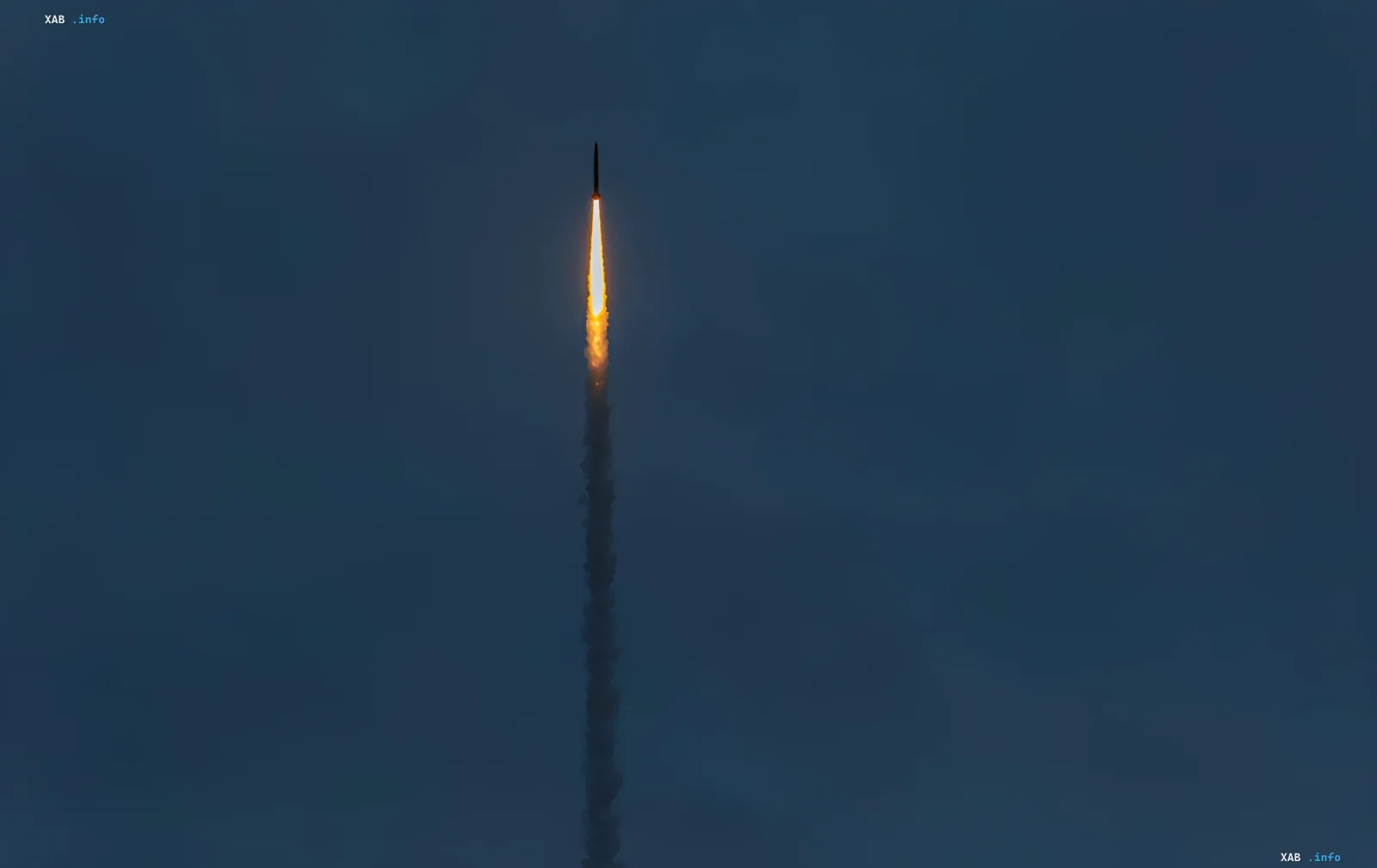
Against the backdrop of the night sky, a powerful missile launch is captured — a frame published by Denis Stillerman, the chief designer of the Ukrainian defense company Fire Point. The photo signaled that Ukrainian engineers are close to completing the development of their own ballistic systems capable of changing the tactics of strikes on the enemy's deep rear.
Two new missiles: FP-7 and FP-9
For several months, Fire Point has been conducting final tests of two promising ballistic missiles — FP-7 and FP-9. Both systems are intended to be put into service within the current year. According to the developers, the key advantage of the new missiles is not only their effectiveness but also their cost — they are significantly cheaper than Western analogues.
The FP-7 missile is positioned as a budget analogue of the American ATACMS. Its range reaches 200 km, allowing for high-precision strikes on tactically important targets at short distances. Denis Stillerman emphasized: "This will be an analogue of ATACMS, possibly even with a larger warhead. But it will cost, at least, twice as cheap".
The more powerful modification — FP-9 — is capable of hitting targets at a distance of 800–850 km and carries a warhead weighing 800 kg. It is this missile that is considered as a tool for strikes on strategic objects in the deep rear of Russia, including objects near Moscow.
Advantages over air defense
At Fire Point, it is noted that ballistic missiles have a fundamentally different advantage over drones and cruise missiles — they are able to penetrate air defense contours with greater probability. This is especially relevant when attacking well-protected objects such as command centers, ammunition depots or energy nodes.
Development speed — the result of lack of bureaucracy
One of the main factors of Fire Point's success was the absence of bureaucratic delays. While similar programs in France and Russia lasted more than 15 years, the Ukrainian company was able to bring its developments to the testing level in a matter of years. According to Stillerman, tests could have started as early as this summer or early autumn.
Mobility and stealth
New missiles will be launched from mobile launchers disguised as ordinary trucks. This allows the complex to be deployed in 15 minutes and minimizes the risk of detection by the enemy. Such tactics are especially important in the conditions of modern warfare, where speed and stealth determine the success of the operation.
From FP-5 to FP-7: evolution of weapons
Fire Point already has experience in mass production — the FP-5 "Flamingo" cruise missile is successfully used at the front and became the company's first serial missile. FP-7 will be the next step in the weapons line, and FP-9 — the pinnacle of the current ballistic systems development program.
Freya project and interceptors
In parallel with the development of strike missiles, the company is accelerating the creation of an anti-ballistic missile defense system. The first interceptor missiles are planned to be manufactured by the end of this year. Recently, Fire Point successfully conducted the first test of the FP-7.X interceptor missile, which will become the basic platform for the Freya project. During flight, it develops a speed of 1500 to 2000 m/s, making it an effective means of intercepting air threats.
Thus, Fire Point is not just creating new types of weapons — it is forming a comprehensive system combining offensive and defensive capabilities. And if the tests are successful, Ukraine will get its own tool for pinpoint strikes on strategic targets — without dependence on Western supplies.