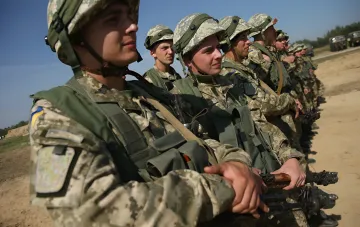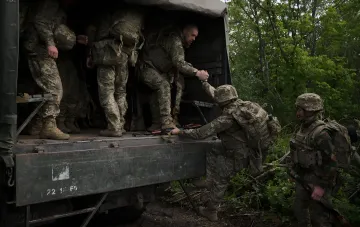
According to a fresh analytical report by the Institute for the Study of War (ISW), over the past few days the Ukrainian Defence Forces have recorded confirmed advances on the front lines in three regions at once — Kharkiv, Donetsk and Zaporizhzhia oblasts. At the same time, Ukrainian units disrupted several offensive operations by the Russian army, preventing the enemy from achieving sustained progress on key axes. This was reported on 24 September by RBC-Ukraine and UNIAN, citing the daily briefing of the US analytical centre.
Kharkiv axis: infiltration without results
On 22 and 23 September, Russian forces continued offensive operations in the north of Kharkiv oblast, but, according to ISW's assessment, they achieved no confirmed advance. US analysts stress that the Russian army is suffering significant losses due to the use of infiltration tactics — small groups attempting to seep behind Ukrainian positions. On this sector of the front, the positions of both sides are largely intermingled, making it extremely difficult to clearly determine control over individual stretches of terrain. Meanwhile, the occupiers carried out a series of airstrikes on the city of Sumy, attempting to suppress rear nodes and infrastructure.
Kupiansk axis and successes in Donetsk oblast
On the Kupiansk axis, geolocation data indicates an advance of Ukrainian forces to the west of Kalynove, north of Kupiansk. The presence of Ukrainian military personnel near Kalynove and north of Kondrashovka has also been recorded, which, according to analysts, allows for improving positions on the flanks of Kupiansk. In Donetsk oblast, Ukrainian soldiers achieved new successes in the Chasiv Yar area: Ukrainian troops advanced in the eastern and central parts of Molocharka, located to the south-west of Chasiv Yar and north of Konstantynivka. In addition, an advance was recorded to the east of Stenka, to the north-east of Konstantynivka, as well as to the south and south-east of Novopavlivka, where Russian forces either advanced or held positions to the south-east of the settlement.
Zaporizhzhia axis and logistical pressure
In Zaporizhzhia oblast, the Defence Forces recently advanced to the south-east of Oleksandrivka, and also advanced or held positions in the southern part of Orikhiv. Russian forces attempted to penetrate to the north-east of the city, but achieved no sustained result. It is worth noting separately that the Ukrainian Armed Forces continue to systematically disrupt Russian logistical operations in the occupied part of Zaporizhzhia oblast, undermining the supply of the enemy's forward grouping.
Contradictory data
The ISW report and the statements of the parties contain a number of inconsistencies. On the one hand, Ukrainian and Western sources speak of an "advance" and "improvement of positions" by the Ukrainian Armed Forces, while BBC Russian, in the context of the same events, uses the phrasing "first successes of the counteroffensive," which implies a larger-scale and more methodical operation. On the other hand, ISW directly states that on the northern sector of Kharkiv oblast no "confirmed advance" by the Russian side has been recorded, and that the positions of both sides are "largely intermingled," which casts doubt on any simplified maps of control. In addition, in the area of Novopavlivka, analysts note the simultaneous advance of Ukrainian forces to the south and south-east of the settlement and the holding of positions by Russian troops to the south-east — that is, both sides record local shifts in their favour on adjacent sectors. This creates a picture not so much of a clear "breakthrough" as of a complex positional manoeuvre with elements of tactical advance.
Context and significance
The shifts recorded by ISW fall within a period when, according to BBC, Kyiv publicly announced the capture of several villages during the ongoing offensive operation. The totality of data from the three regions indicates that Ukrainian forces have moved from a purely defensive tactic to active counterattacks on the flanks, forcing the enemy to redeploy reserves. At the same time, Russian strikes on Sumy and infiltration attempts in the north of Kharkiv oblast indicate that Moscow is trying to maintain the initiative on several axes simultaneously, without having sufficient reserves for a breakthrough. The key factor for further dynamics will be whether the Ukrainian Armed Forces can consolidate the local successes achieved into stable bridgeheads and expand the zone of logistical pressure on the enemy's rear.