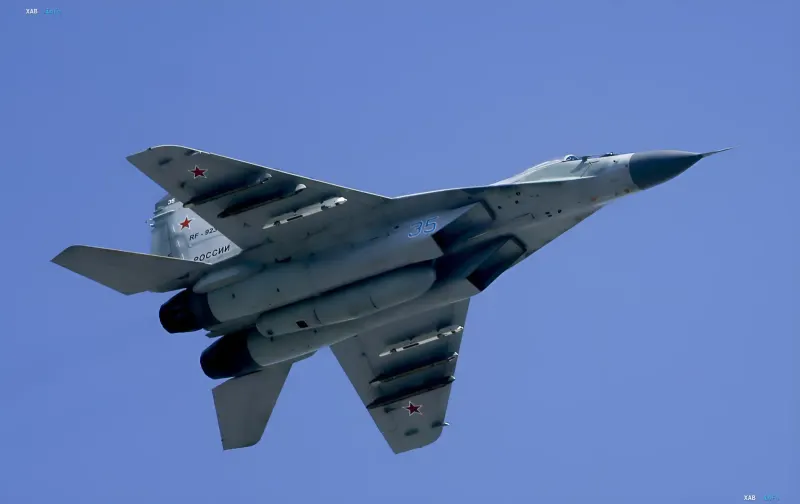
The General Staff of the Armed Forces of Ukraine, following an analysis of additional data, has confirmed the destruction of two costly aircraft of the Russian army — a MiG-29 fighter and a Ka-27 helicopter. This was reported on 2 September 2026 by Ukrainian media, citing an official statement from the Ukrainian General Staff on Telegram. According to Kyiv's assessment, both aircraft can no longer be used for strikes on Ukrainian territory: the MiG-29 was hit in the area of the Millerovo airfield in Rostov Oblast, while the Ka-27 was hit in the area of the Yeysk airfield in Krasnodar Krai.
Confirmed losses: MiG-29 and Ka-27
According to the General Staff's statement, the destruction of the MiG-29 fighter took place on 27 August 2026 in the area of the Millerovo airfield in Rostov Oblast, Russia. The Ka-27 helicopter, according to the same data, was hit on 30 August in the area of the Yeysk airfield in Krasnodar Krai. Importantly, both facts were announced not in real time, but only after, in the General Staff's wording, an analysis of additional data had been carried out. This means that the initial reports of the hits were re-verified before official confirmation, which is characteristic of the Defence Forces' reporting on targets located deep inside Russian territory.
Chronology of strikes on airfields
The confirmed losses fit into a series of strikes on the adversary's airfield infrastructure, which, according to Kyiv's data, were carried out throughout August 2026. The General Staff also reported hitting additional enemy targets on 1 September and in the night of 2 September, however the specific list of these targets was not disclosed in the available statement. Thus, the confirmed MiG-29 and Ka-27 represent the documented part of a broader strike campaign against infrastructure, which, according to the Ukrainian Armed Forces, continues into the current day.
Broader context: strikes in Crimea and Sevastopol
Earlier, Ukrainian media reported that on 22 August a Su-24M aircraft and four units of airfield equipment were destroyed at the Saki airfield in Crimea. In addition, in the night of 13 August, the Ukrainian Defence Forces, according to the same data, hit military objects on occupied territories and in Russia, among which were named the Nebo-U radar station in Sevastopol, as well as warehouses and a drone command post. The totality of these episodes forms a picture of systematic pressure on the adversary's airfield and radio-technical infrastructure in Crimea and in southern Russia.
Contradictory data
All the figures and dates cited come exclusively from statements by the General Staff of the Armed Forces of Ukraine and were reprinted by Ukrainian media; the Russian side has not confirmed the loss of the said MiG-29 and Ka-27 in open sources and has not provided its own data on the state of the Millerovo and Yeysk airfields. An additional caveat is that the confirmations were given retrospectively — following an analysis of additional data, rather than at the moment of the strikes — and independent public verification (open imagery, confirmed by third parties) is absent from the provided materials. Thus, the version of the actual destruction of the aircraft is, at this point, one-sided and based on the reporting of one of the parties to the conflict.
Significance for the airspace
Regardless of the degree of verification, the confirmed losses of a fighter and a deck/transport helicopter, by Kyiv's logic, reduce the capabilities of the Russian air force to carry out strikes from airfields in Rostov Oblast and Krasnodar Krai. For Ukraine, such reports serve as an indicator of the effectiveness of strike operations against rear aviation infrastructure, whereas assessing the real impact on the adversary's combat readiness requires additional and independent data, which are currently lacking.