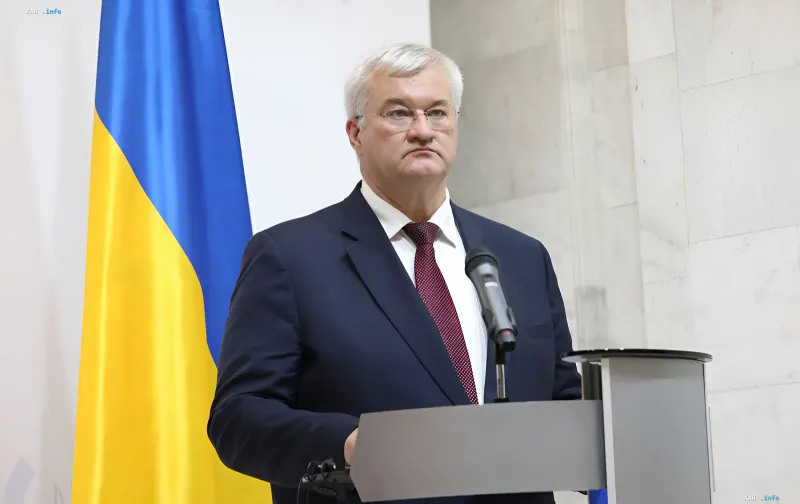
The Ministry of Foreign Affairs of Ukraine has commented on the decision by the Lviv Regional Council declaring 2027 the Year of the Ukrainian Insurgent Army (UPA), Roman Shukhevych, and Oleh Olzhych. Responding to an inquiry by RBC-Ukraine, the foreign policy department called this step "counterproductive to current efforts aimed at the further development of Ukrainian-Polish relations." According to the MFA, in recent years Kyiv and Warsaw have achieved significant progress in developing a strategic partnership, including in search and exhumation work, historical dialogue, and defense cooperation, and this regional initiative puts this positive momentum at risk.
Decision Made Without Consultations with the Center
The Ukrainian foreign policy department specifically emphasized that the decision was made at the regional level. Deputies of the Lviv Regional Council who voted for the initiative did not consult with the MFA or other central government authorities to assess the potential consequences for relations with Poland. The ministry recalled that local council deputies hold elected positions and are not subordinate to the Verkhovna Rada, the Cabinet of Ministers, the President of Ukraine, or central executive authorities. Nevertheless, the MFA stated that political decisions at the regional level should not harm Ukraine's national interests, primarily in matters of security and European integration.
Call to Warsaw: Avoid Abrupt Steps
The Ukrainian side directly urged Poland to refrain from abrupt steps that could hinder the trend of normalizing relations between the two countries. The MFA statement emphasized that strategic partnership requires "restraint and predictability, professional and open dialogue, and the building of trust." The ministry reaffirmed its commitment to a constructive resolution of all problematic issues in bilateral relations through diplomatic channels in the spirit of good neighborliness.
Poland's Reaction: From the Prime Minister to the Defense Minister
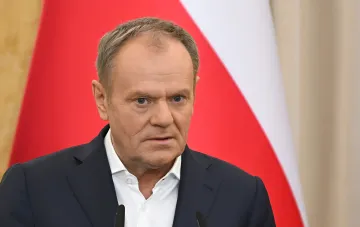
The Lviv Regional Council's decision has already sparked resonance in Poland. Prime Minister Donald Tusk stated that the initiative harms Ukraine's interests and could complicate its relations with international partners. Polish Defense Minister Władysław Kosiniak-Kamysz, in turn, urged the Ukrainian authorities to distance themselves from this position. Thus, Warsaw views the regional decision as a factor capable of undermining trust between the two states at a time when both sides declare their intention to develop a strategic partnership.
Context: Historical Agenda as a Factor in Bilateral Relations
Issues related to the history of the UPA and its key figures traditionally remain one of the most sensitive points in the Ukrainian-Polish dialogue. While in Kyiv the UPA is viewed as part of the struggle for independence, in Poland a number of figures associated with the insurgent movement are associated with crimes against the Polish population during World War II. This is why any public steps touching upon this topic are perceived in Warsaw through the prism of historical memory and can cause diplomatic tension. The statement by the MFA of Ukraine, focusing on the need for professional dialogue and the impermissibility of harming European integration processes, can be seen as Kyiv's attempt to establish that responsibility for the regional initiative should not be shifted to the level of state policy.